
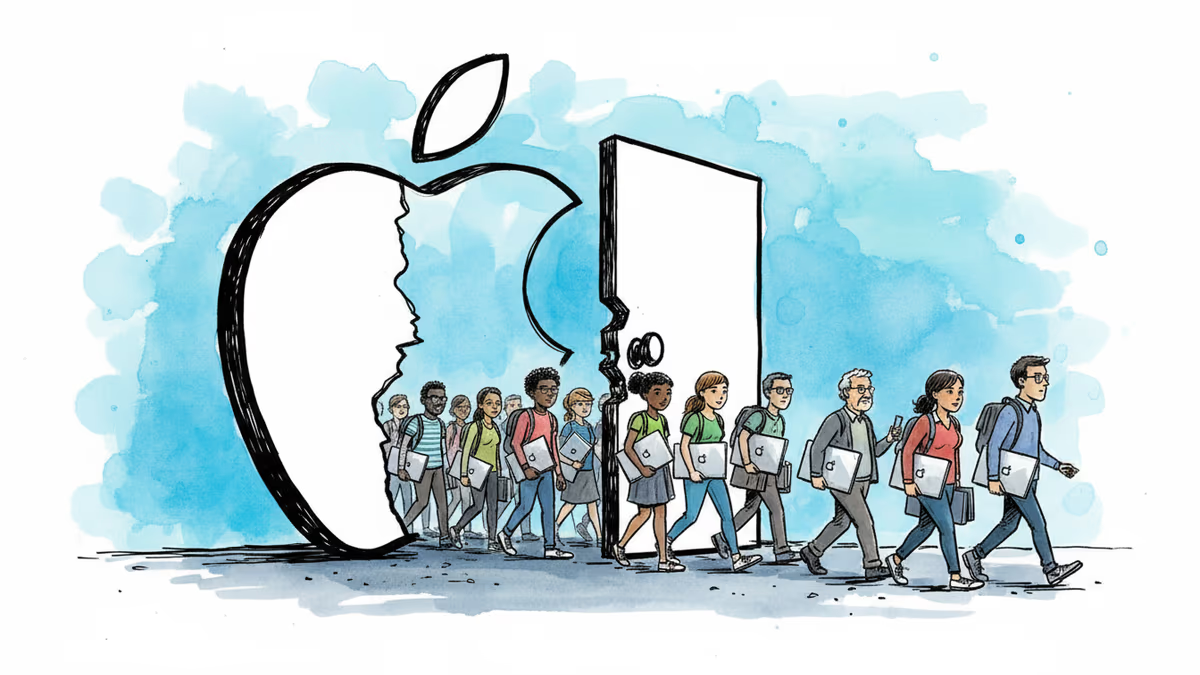
Apple's $599 MacBook Neo Rewrites the Budget Laptop Playbook
Apple launches MacBook Neo at $599, undercutting MacBook Air by $500. New entry-level laptop targets students and budget-conscious consumers with four color options.
$599 Just Changed Everything
Apple saved its biggest surprise for last. The MacBook Neo, unveiled today, isn't just another laptop—it's Apple's boldest move into budget territory in years. At $599, it undercuts the M5 MacBook Air by a whopping $500, making it the cheapest Mac laptop ever.
This isn't a clearance sale. The MacBook Neo officially replaces the 13-inch MacBook Air as Apple's entry-level laptop, available for preorder today and hitting shelves March 11. It comes in four colors: silver, indigo, blush (pinkish), and citrus (yellowish).
Why Apple Blinked First
For years, Apple held the premium line. "Want a Mac? Pay premium prices." But the laptop landscape shifted underneath them.
Chromebooks and Windows laptops in the $300-500 range got surprisingly good. The pandemic accelerated demand for "good enough" machines as students and remote workers needed functional laptops, not status symbols. Apple watched market share slip to competitors who offered 80% of the experience at 50% of the price.
The company already tested these waters, selling M1 MacBook Airs through Walmart at $599. Now they're making it official.
Winners and Losers Emerge

Students and parents are celebrating. That MacBook they couldn't justify at $1,100? Suddenly within reach. For families already in Apple's ecosystem with iPhones and iPads, the seamless integration becomes affordable.
Existing MacBook Air owners might feel differently. They paid double for what newcomers can now get at half price. It's the classic early adopter's dilemma, amplified.
PC manufacturers face their nightmare scenario. Lenovo, HP, and Dell built their strategies around "Apple's too expensive." That argument just got much harder to make. When a MacBook costs the same as a decent Windows laptop, which would you choose?
The Ecosystem Play
This isn't just about laptops. Apple's betting that once you're in their ecosystem with an affordable Mac, you'll stay. The MacBook Neo becomes a gateway drug to higher-margin products: AirPods, Apple Watch, iPhone upgrades, iCloud storage subscriptions.
It's the classic razor-and-blades model, tech style. Lose money on hardware, make it back on services and accessories.
What Competitors Can't Copy
Here's Apple's advantage: they control the entire stack. Microsoft makes Windows but not the hardware. Intel makes chips but not the software. Apple makes it all, allowing them to optimize costs in ways competitors can't match.
The M-series chips, manufactured at scale, give Apple semiconductor economics that traditional PC makers can't replicate. They're not just competing on price—they're competing with a fundamentally different business model.
Authors
Related Articles
After 15 years of fragmented mobile messaging, Apple and Google are rolling out end-to-end encrypted RCS messaging between iPhones and Android devices. Here's what changed, why it took so long, and what it means for your privacy.
Apple agreed to pay $250 million to settle claims it misled iPhone 16 buyers about Apple Intelligence features. What this means for consumers, Big Tech marketing, and the AI industry.
Apple quietly removed the entry-level $599 Mac Mini, raising the starting price to $799 — just one day after Tim Cook warned of chip supply constraints on the earnings call.
Apple names John Ternus, its hardware engineering chief, as the next CEO. The shift from operator to product person signals where Apple thinks its next decade of growth will come from — and raises real questions about what comes next.
After 15 years of fragmented mobile messaging, Apple and Google are rolling out end-to-end encrypted RCS messaging between iPhones and Android devices. Here's what changed, why it took so long, and what it means for your privacy.
Apple agreed to pay $250 million to settle claims it misled iPhone 16 buyers about Apple Intelligence features. What this means for consumers, Big Tech marketing, and the AI industry.
Apple quietly removed the entry-level $599 Mac Mini, raising the starting price to $799 — just one day after Tim Cook warned of chip supply constraints on the earnings call.
Apple names John Ternus, its hardware engineering chief, as the next CEO. The shift from operator to product person signals where Apple thinks its next decade of growth will come from — and raises real questions about what comes next.
Thoughts
Share your thoughts on this article
Sign in to join the conversation