

Siri Delayed Again: Is Apple's AI Strategy Cracking?
Apple postpones Siri's major upgrade featuring personal context understanding and on-screen actions from iOS 18.4 to later versions. Fresh software problems emerge during testing.
One Year Later, Siri's Revolution Hits Another Wall
Apple's most ambitious Siri overhaul just got pushed back again. The personal context understanding and on-screen action features, originally promised for March's iOS 18.4 release, are now sliding to iOS 18.5 in May or even later, Bloomberg reported Tuesday.
This isn't just a routine delay. Internal testing revealed "fresh problems with the software," suggesting Apple's engineers are grappling with more complex technical challenges than anticipated. The features that would let Siri understand what's on your screen and take actions across apps are proving harder to perfect than expected.
The promised capabilities sound transformative: Siri would analyze your calendar, messages, and emails to answer questions like "What do I need to do before tomorrow's meeting?" It would also perform cross-app actions, like sending a photo to your mom just by voice command while you're browsing your camera roll.
The Competition Isn't Waiting
While Apple fine-tunes, rivals are shipping. Google's Gemini already handles multimodal queries, processing images and text simultaneously. OpenAI's ChatGPT delivers natural conversational AI that understands context across lengthy exchanges. Even Samsung's Galaxy AI offers practical features like live translation and call summarization.
Meanwhile, Siri remains stuck in "Hey Siri, what's the weather?" territory. The gap isn't just about features—it's about user expectations. iPhone users increasingly turn to ChatGPT or Google Assistant for complex queries, relegating Siri to basic tasks.

Apple's Privacy-First Approach: Blessing or Burden?
Behind the delays lies Apple's fundamental AI philosophy. While competitors leverage cloud computing for rapid feature deployment, Apple insists on on-device processing and privacy protection. No user data leaves your iPhone—a admirable stance that creates enormous technical constraints.
Processing complex AI tasks on mobile hardware requires extreme optimization. Apple's engineers must squeeze desktop-class AI performance into a phone-sized chip while maintaining battery life and real-time responsiveness. It's like fitting a race car engine into a bicycle frame.
Industry analysts suggest this perfectionist approach may be backfiring. "Apple's privacy-first strategy is commendable, but users are already adapting to alternatives," notes one AI researcher. "Every month of delay means more iPhone users discovering they don't actually need Siri."
The Bigger Question: What Do Users Really Want?
Apple's internal communications reveal engineers are now targeting iOS 18.5, iOS 19, or potentially even later releases. Some features may arrive piecemeal rather than as the comprehensive overhaul originally envisioned.
This scattered timeline raises questions about Apple's AI strategy. The company built its reputation on seamless, integrated experiences. But in AI, that integration is proving elusive. Users might prefer a capable-but-imperfect assistant today over a perfect one that arrives next year.
Authors
Related Articles
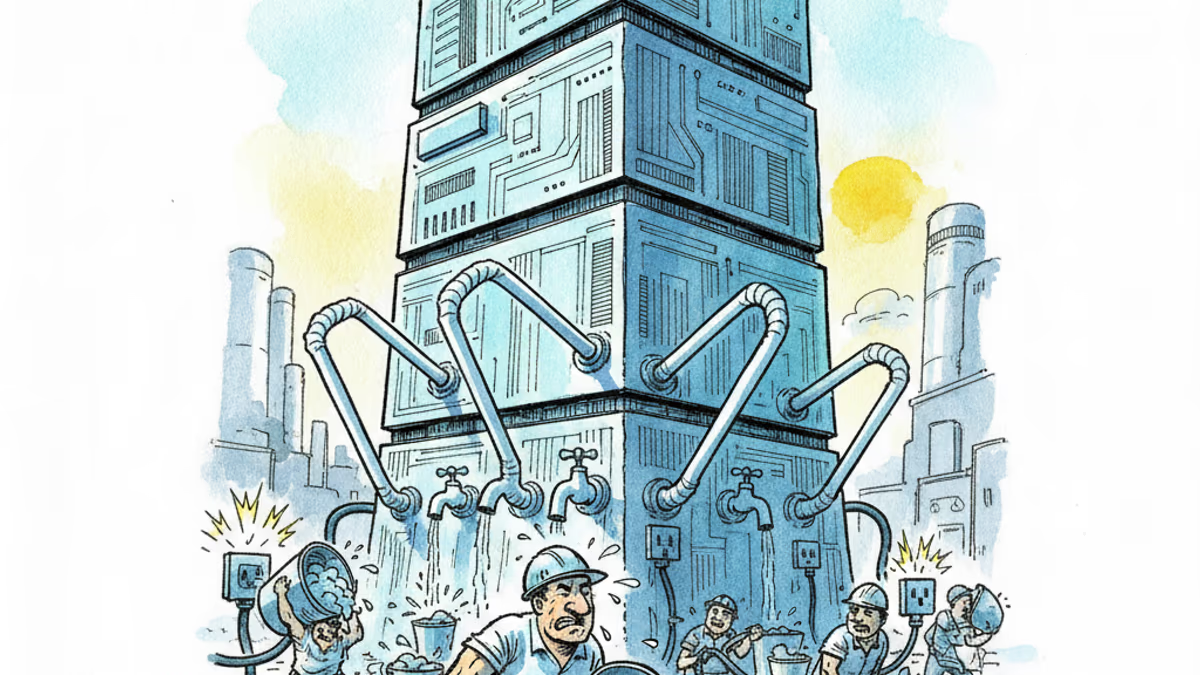
Samsung and SK unveiled a chip and AI investment package worth thousands of trillions of won on June 29. The headline number swings wildly by outlet, but the real contest isn't capital — it's water and power.
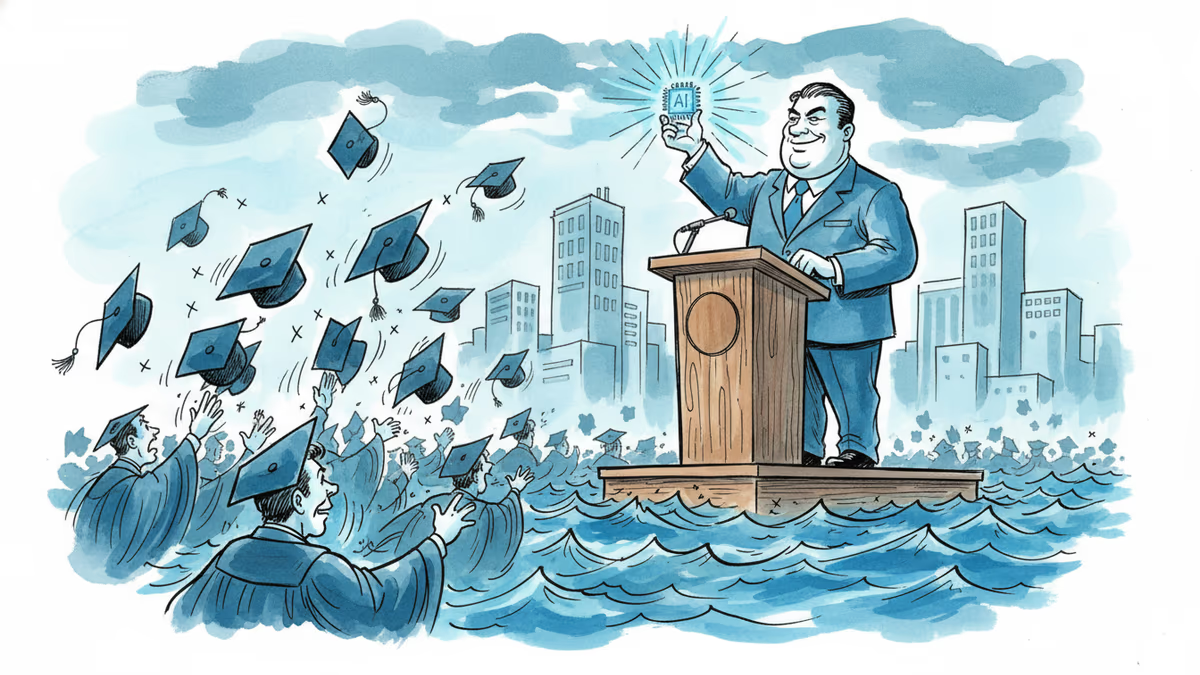
Viral videos show 2026 graduates jeering executives who praise AI at commencement ceremonies. It's not just rudeness — it's a signal about who pays for technological optimism.
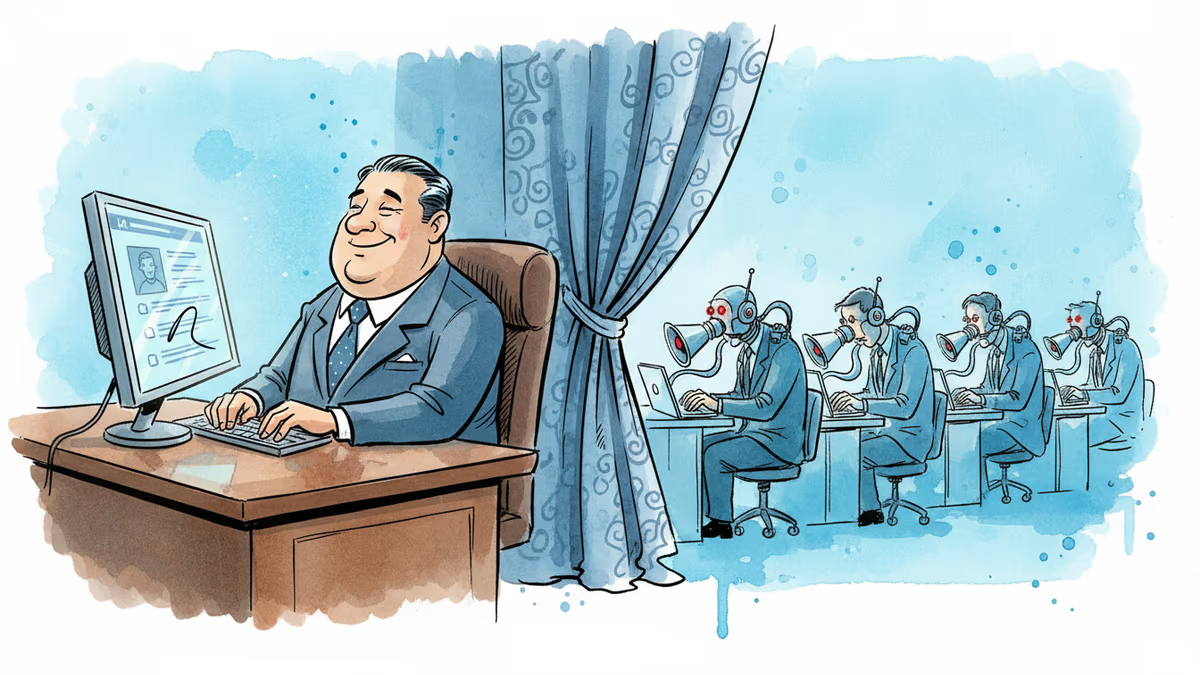
Filipino virtual assistants using AI to ghost-manage LinkedIn profiles for executives is now a structured industry. 30 comments a day, fake engagement rings, and a platform struggling to tell real from fabricated.
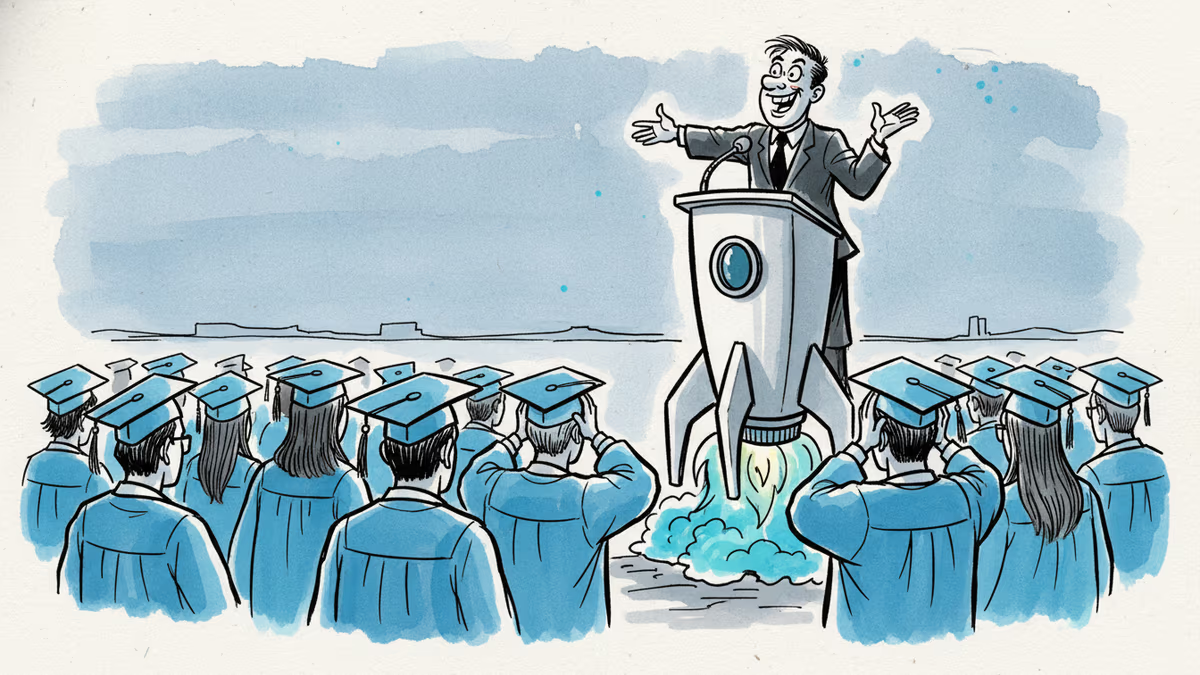
Two commencement speakers learned the hard way that AI enthusiasm doesn't land well with today's graduates. The backlash reveals a widening gap between tech optimism and Gen Z's economic reality.
Samsung and SK unveiled a chip and AI investment package worth thousands of trillions of won on June 29. The headline number swings wildly by outlet, but the real contest isn't capital — it's water and power.
Viral videos show 2026 graduates jeering executives who praise AI at commencement ceremonies. It's not just rudeness — it's a signal about who pays for technological optimism.
Filipino virtual assistants using AI to ghost-manage LinkedIn profiles for executives is now a structured industry. 30 comments a day, fake engagement rings, and a platform struggling to tell real from fabricated.
Two commencement speakers learned the hard way that AI enthusiasm doesn't land well with today's graduates. The backlash reveals a widening gap between tech optimism and Gen Z's economic reality.
Thoughts
Share your thoughts on this article
Sign in to join the conversation