
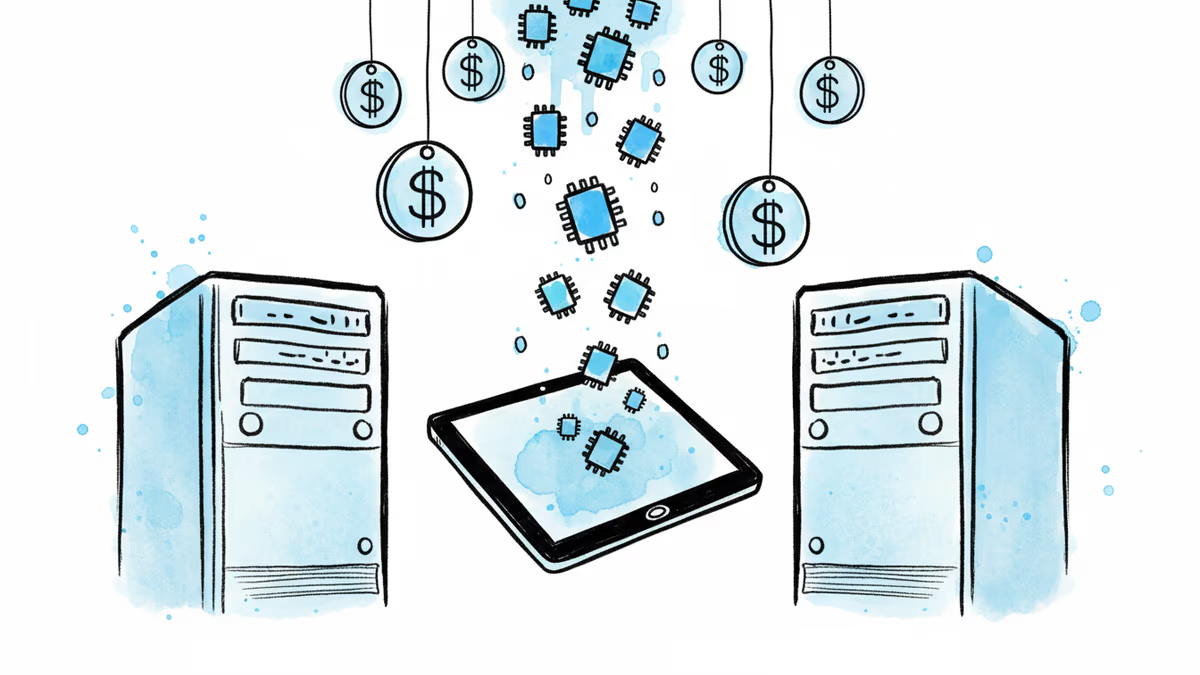
Apple's iPad Air Gets M4, But Why Now?
Apple quietly updates iPad Air with M4 chip and 12GB RAM while keeping prices unchanged during a global memory shortage. What's the real strategy here?
12GB RAM at $599: A Memory Shortage Paradox
Apple just dropped a quiet bombshell. The iPad Air now runs on the M4 chip with 12GB of unified memory, up from 8GB, while keeping the same $599 starting price for the 11-inch model. This happened during a global memory shortage that's driving up costs across the tech industry.
The design? Identical to last year's model. Same 11-inch and 13-inch sizes, same look, same feel. Only the internals changed. So why update now, and why this particular configuration?
Performance Isn't the Whole Story
The M4 iPad Air is still one generation behind the M5 iPad Pro. But it delivers 30% faster performance than the M3 version and 4x better 3D rendering with ray tracing support. Those are solid gains, but not revolutionary.

The more interesting upgrade is Apple's N1 networking chip. This homegrown Wi-Fi 7 and Bluetooth 6 chip also supports Thread for smart home connectivity. Cellular models get the C1X modem for more efficient 5G. These aren't just spec bumps—they're ecosystem plays.
Apple is positioning the iPad Air as the sweet spot for users who want Pro-level connectivity without Pro-level prices. It's a calculated move in a market where the middle ground often gets squeezed out.
The Competitive Landscape Shifts
This puts pressure on competitors differently than previous updates. Samsung's Galaxy Tab series has been gaining ground with S Pen integration and Android flexibility. Microsoft's Surface lineup targets the laptop-replacement crowd. But Apple just made the value proposition more complex.
For enterprise buyers, that extra 4GB of RAM matters more than raw processing power. Video calls run smoother, multitasking feels more natural, and the 12-megapixel Center Stage camera positioned on the landscape edge finally makes sense for hybrid work.
Education markets are watching too. The unchanged pricing during a memory shortage suggests Apple is willing to absorb costs to maintain market share in schools and universities.
Authors
Related Articles
After 15 years of fragmented mobile messaging, Apple and Google are rolling out end-to-end encrypted RCS messaging between iPhones and Android devices. Here's what changed, why it took so long, and what it means for your privacy.
Apple agreed to pay $250 million to settle claims it misled iPhone 16 buyers about Apple Intelligence features. What this means for consumers, Big Tech marketing, and the AI industry.
Apple quietly removed the entry-level $599 Mac Mini, raising the starting price to $799 — just one day after Tim Cook warned of chip supply constraints on the earnings call.
Apple names John Ternus, its hardware engineering chief, as the next CEO. The shift from operator to product person signals where Apple thinks its next decade of growth will come from — and raises real questions about what comes next.
After 15 years of fragmented mobile messaging, Apple and Google are rolling out end-to-end encrypted RCS messaging between iPhones and Android devices. Here's what changed, why it took so long, and what it means for your privacy.
Apple agreed to pay $250 million to settle claims it misled iPhone 16 buyers about Apple Intelligence features. What this means for consumers, Big Tech marketing, and the AI industry.
Apple quietly removed the entry-level $599 Mac Mini, raising the starting price to $799 — just one day after Tim Cook warned of chip supply constraints on the earnings call.
Apple names John Ternus, its hardware engineering chief, as the next CEO. The shift from operator to product person signals where Apple thinks its next decade of growth will come from — and raises real questions about what comes next.
Thoughts
Share your thoughts on this article
Sign in to join the conversation