
Apple Forces MacBook Pro Buyers Into Expensive Storage Tiers
Apple's new M5 Pro and Max MacBook Pros double base storage but eliminate cheaper options, raising entry prices by $200-300 across the lineup.
$200 More, Whether You Need It or Not
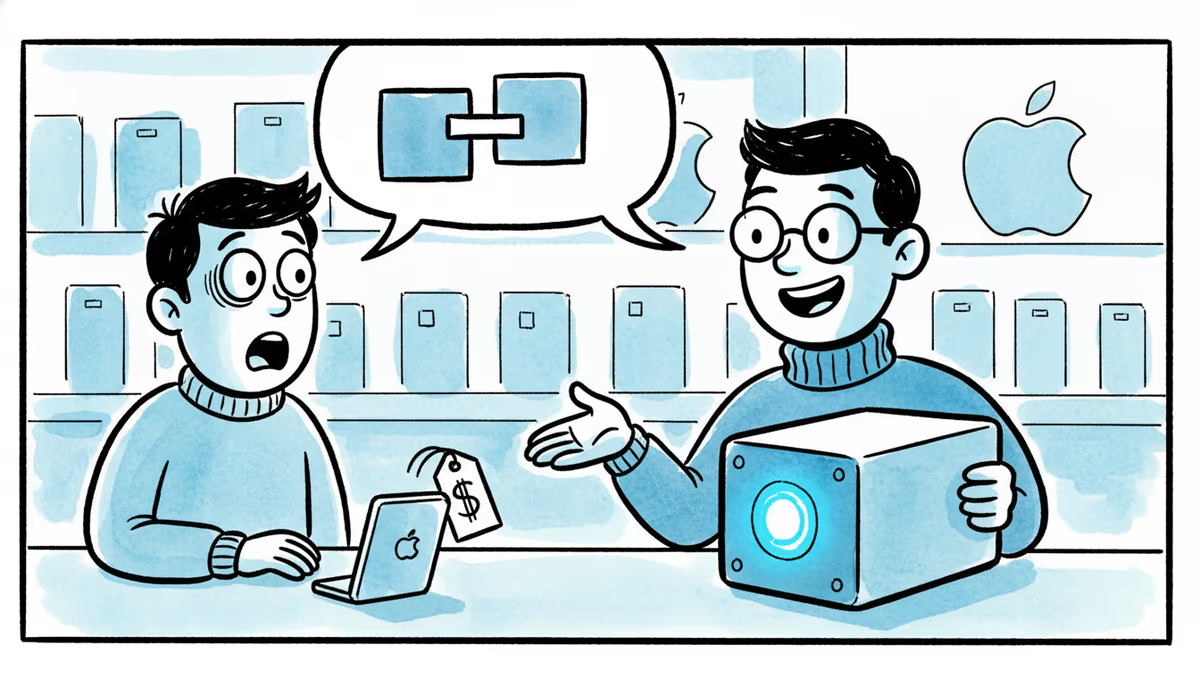
Apple just made its MacBook Pro lineup more expensive—and there's no way around it. The 14-inch MacBook Pro with M5 Pro now starts at $2,199 instead of $1,999, while the 16-inch model jumps from $2,499 to $2,699. Even the base M5 MacBook Pro climbed from $1,599 to $1,699.
The culprit? Storage upgrades that nobody asked for. Apple doubled the base storage across the board: M5 Pro models now start with 1TB instead of 512GB, M5 Max models get 2TB instead of 1TB, and the basic M5 gets 1TB instead of 512GB. Apple claims the internal storage is "up to 2x faster" than previous generations.
The Choice You No Longer Have
Here's the catch: you can't opt for less storage to save money anymore. Students, casual users, and budget-conscious buyers who were perfectly fine with 512GB are now forced into the 1TB tier—and forced to pay for it.
This move effectively eliminates the sub-$1,600 MacBook Pro from Apple's lineup, pushing more buyers toward either the MacBook Air or significantly more expensive Pro models. For many consumers, this feels less like an upgrade and more like a tax on wanting professional-grade performance.

'Super Cores' and Marketing Muscle
Both M5 Pro and M5 Max pack 18-core CPUs with six high-performance cores and 12 efficiency cores. But Apple's making a linguistic shift: those high-performance cores are now called "super cores"—a change that retroactively applies to the basic M5's four high-performance cores too.
The rebrand isn't just cosmetic. As Intel and AMD continue pushing their own performance narratives, Apple's doubling down on terminology that sounds more impressive in marketing materials and benchmark comparisons. "Super" cores sound faster than "performance" cores, even if the underlying technology hasn't fundamentally changed.
The Premium Laptop Dilemma
Apple's strategy reflects a broader shift in the premium laptop market. With fewer people buying computers overall, manufacturers are focusing on higher-margin products rather than volume sales. Microsoft's Surface lineup and premium Windows laptops from Dell and HP have followed similar trajectories, pushing base configurations upmarket.
But this approach risks alienating the very professionals and students who made MacBooks popular in the first place. When a "pro" laptop starts at $2,199, it's no longer accessible to many of the creative professionals and developers it's supposedly designed for.
Authors
Related Articles
After 15 years of fragmented mobile messaging, Apple and Google are rolling out end-to-end encrypted RCS messaging between iPhones and Android devices. Here's what changed, why it took so long, and what it means for your privacy.
Apple agreed to pay $250 million to settle claims it misled iPhone 16 buyers about Apple Intelligence features. What this means for consumers, Big Tech marketing, and the AI industry.
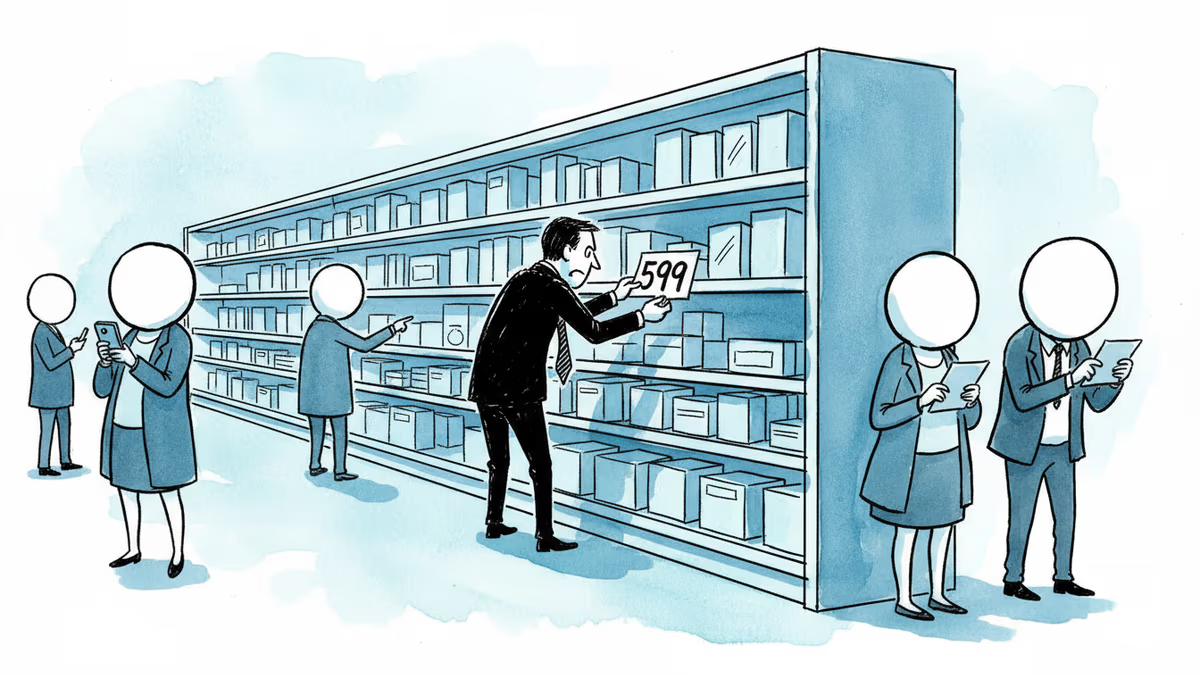
Apple quietly removed the entry-level $599 Mac Mini, raising the starting price to $799 — just one day after Tim Cook warned of chip supply constraints on the earnings call.
Apple names John Ternus, its hardware engineering chief, as the next CEO. The shift from operator to product person signals where Apple thinks its next decade of growth will come from — and raises real questions about what comes next.
After 15 years of fragmented mobile messaging, Apple and Google are rolling out end-to-end encrypted RCS messaging between iPhones and Android devices. Here's what changed, why it took so long, and what it means for your privacy.
Apple agreed to pay $250 million to settle claims it misled iPhone 16 buyers about Apple Intelligence features. What this means for consumers, Big Tech marketing, and the AI industry.
Apple quietly removed the entry-level $599 Mac Mini, raising the starting price to $799 — just one day after Tim Cook warned of chip supply constraints on the earnings call.
Apple names John Ternus, its hardware engineering chief, as the next CEO. The shift from operator to product person signals where Apple thinks its next decade of growth will come from — and raises real questions about what comes next.
Thoughts
Share your thoughts on this article
Sign in to join the conversation