

Apple Gets Hit With $116M Fine in Italy Over 'Excessively Burdensome' App Tracking Rules
Apple gets a €98 million fine from Italy's antitrust regulator over its App Tracking Transparency (ATT) policy, which allegedly imposes unfair burdens on third-party developers.
Italy's antitrust regulator has fined Apple more than $116 million, ruling the tech giant abused its dominant App Store position by imposing unfair privacy rules on third-party developers.
The Italian Competition Authority (AGCM) claims Apple's terms for data collection are "disproportionate" and more burdensome for other companies than for its own native App Store apps. The fine specifically targets Apple's ATT policy, which launched in 2021.
The Double-Prompt Dilemma
At the heart of the dispute is how consent is obtained. Under ATT, third-party developers have to show users two separate prompts to get permission to track their data across other apps and websites. Regulators argue this creates significant friction and discourages users from opting in.

According to the AGCM, this two-step requirement is "excessively burdensome" and goes beyond what's required by privacy law. The authority alleges that Apple gets a competitive advantage because its own services aren't subject to the same cumbersome process, creating an uneven playing field.
Global Scrutiny on Walled Gardens
For years, Apple has defended its tightly controlled ecosystem, or "walled garden," as a crucial element for ensuring user security and a seamless experience. However, critics and regulators have increasingly viewed these walls as anti-competitive barriers.
This decision from Italy aligns with a broader global push to rein in the power of Big Tech, from the European Union's Digital Markets Act (DMA) to ongoing antitrust lawsuits in the United States.
Authors
Related Articles
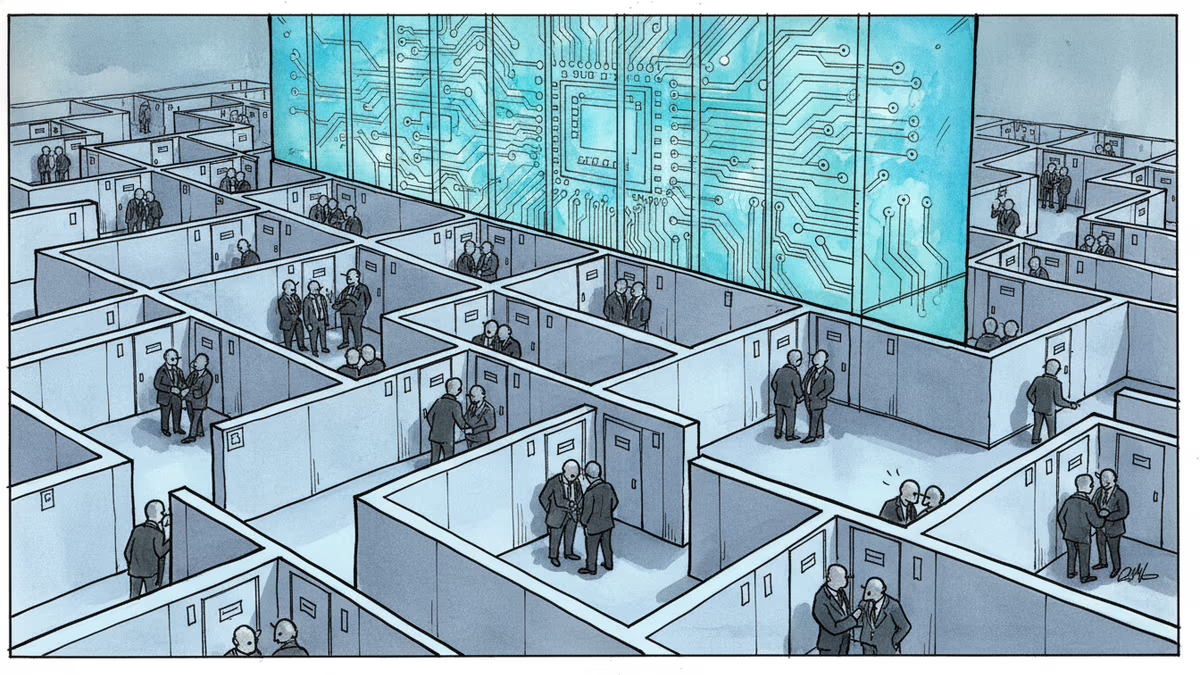
Behind every congressional hearing on Big Tech, there's a quieter room where the real rules get negotiated. As AI regulation, antitrust battles, and privacy law converge on Capitol Hill in 2026, the stakes have never been higher.
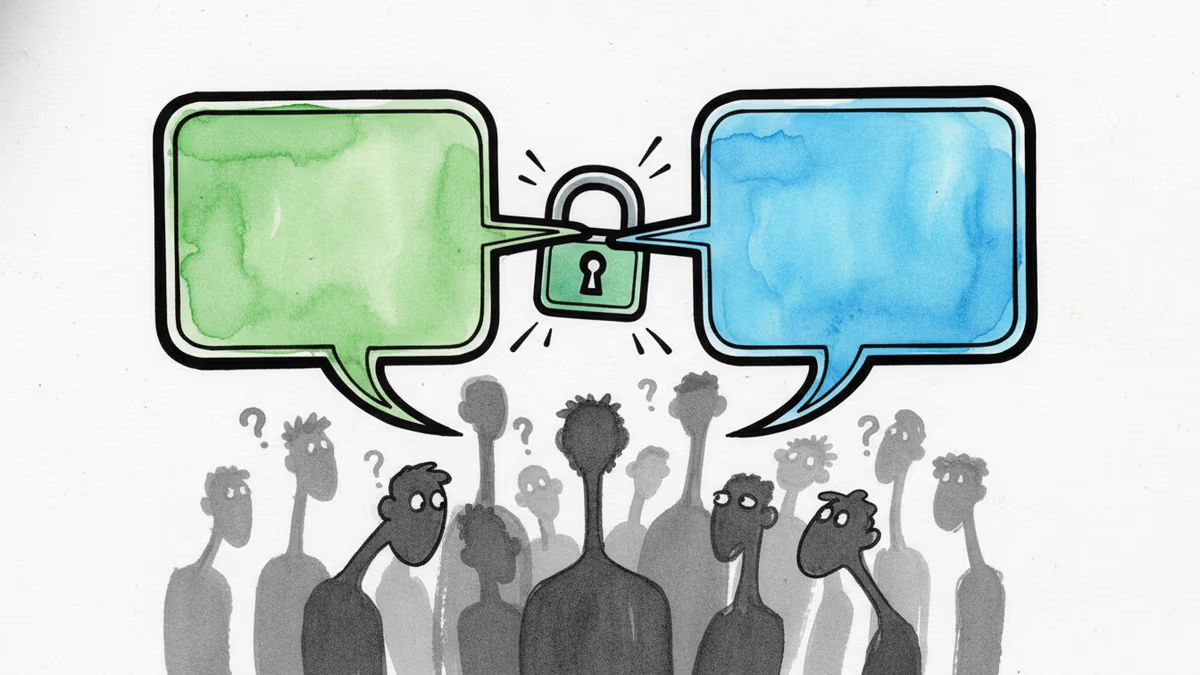
After 15 years of fragmented mobile messaging, Apple and Google are rolling out end-to-end encrypted RCS messaging between iPhones and Android devices. Here's what changed, why it took so long, and what it means for your privacy.
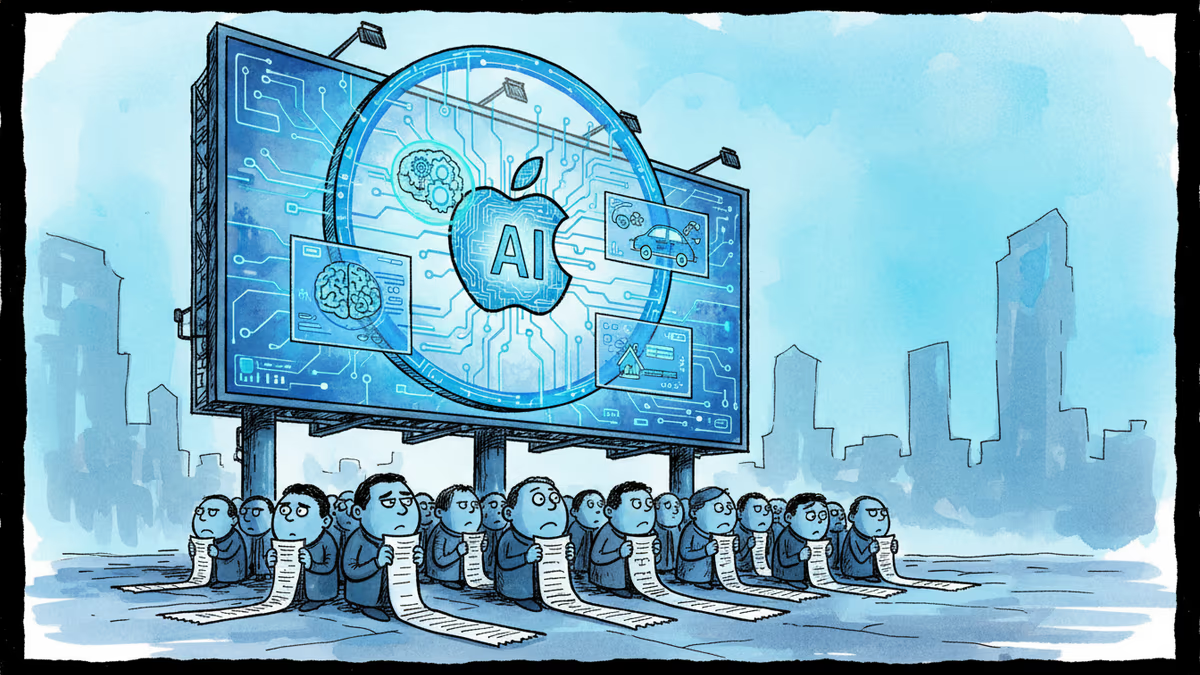
Apple agreed to pay $250 million to settle claims it misled iPhone 16 buyers about Apple Intelligence features. What this means for consumers, Big Tech marketing, and the AI industry.
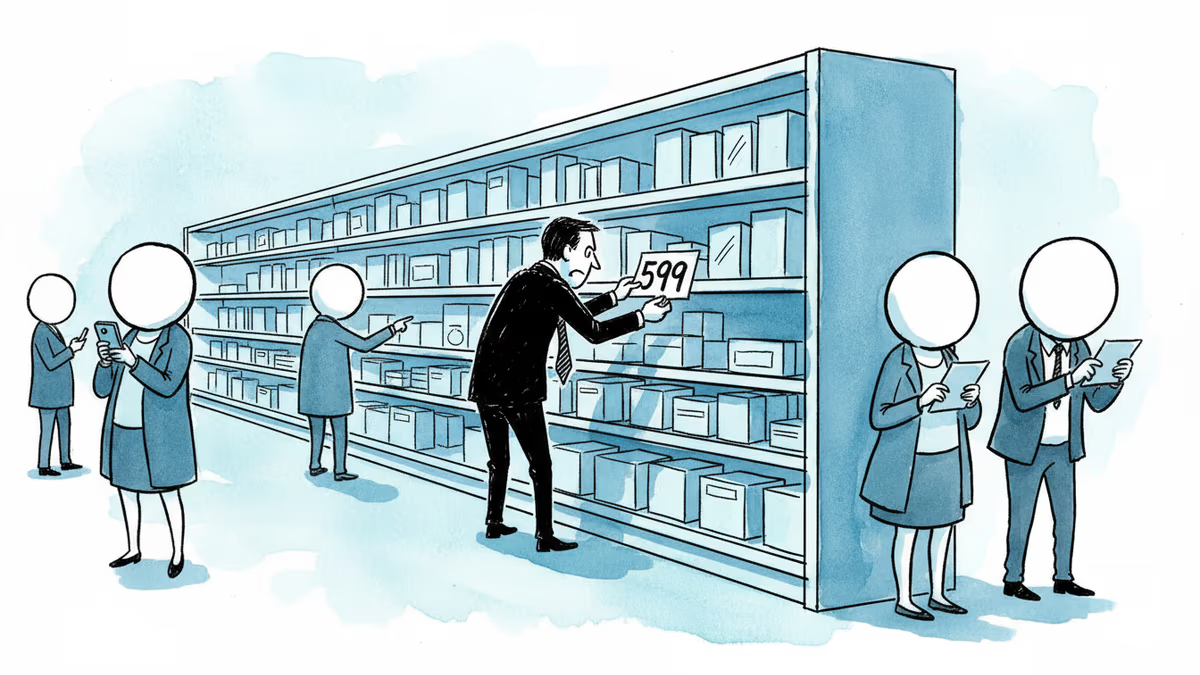
Apple quietly removed the entry-level $599 Mac Mini, raising the starting price to $799 — just one day after Tim Cook warned of chip supply constraints on the earnings call.
Behind every congressional hearing on Big Tech, there's a quieter room where the real rules get negotiated. As AI regulation, antitrust battles, and privacy law converge on Capitol Hill in 2026, the stakes have never been higher.
After 15 years of fragmented mobile messaging, Apple and Google are rolling out end-to-end encrypted RCS messaging between iPhones and Android devices. Here's what changed, why it took so long, and what it means for your privacy.
Apple agreed to pay $250 million to settle claims it misled iPhone 16 buyers about Apple Intelligence features. What this means for consumers, Big Tech marketing, and the AI industry.
Apple quietly removed the entry-level $599 Mac Mini, raising the starting price to $799 — just one day after Tim Cook warned of chip supply constraints on the earnings call.
Thoughts
Share your thoughts on this article
Sign in to join the conversation