
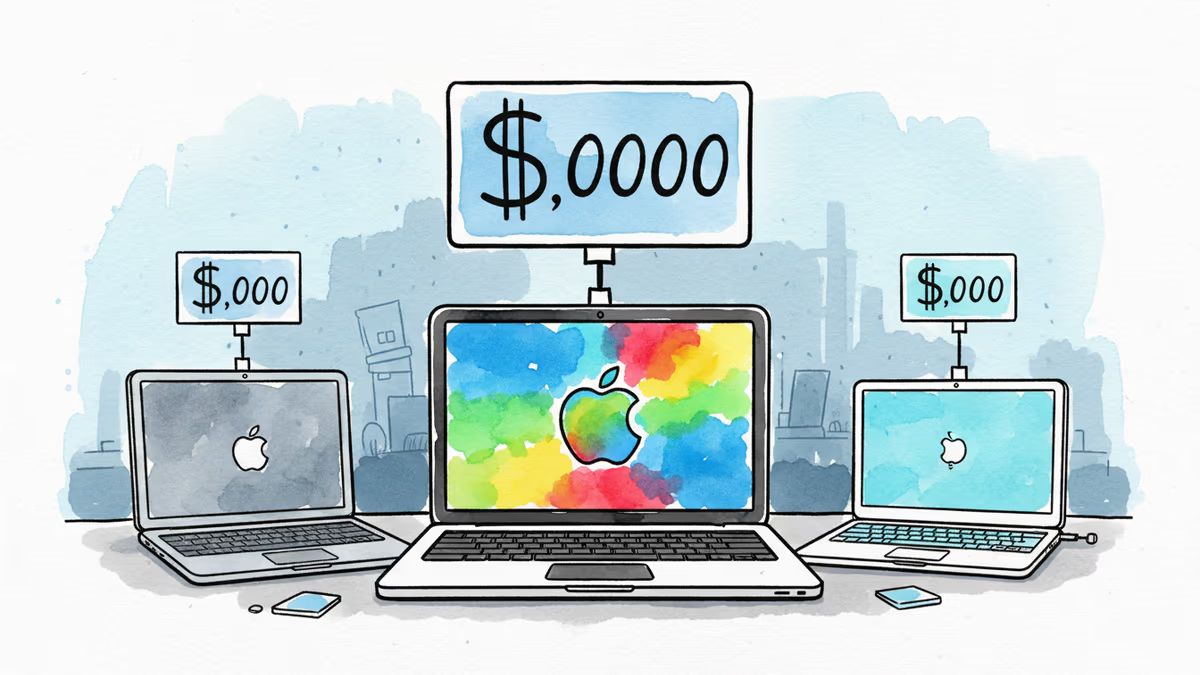
Apple's Chromebook Gambit Changes Everything
Apple's rumored MacBook Neo could launch this week as a low-cost, colorful laptop targeting Chromebook market for the first time.
What Happens When Apple Goes Cheap?
For 15 years, Apple has owned the premium laptop market. Now, according to multiple reports, the company is about to do something unprecedented: compete on price. The rumored MacBook Neo, expected to launch as early as Wednesday, could mark Apple's first real attempt at a budget laptop.
The evidence is mounting. MacRumors spotted a regulatory filing that accidentally revealed an unannounced device called the "MacBook Neo." Meanwhile, this week's Apple event logo—featuring bright green, blue, and yellow—hints at the colorful design reportedly planned for the new laptop.
iPhone Chip, MacBook Dreams
Here's where it gets interesting. Instead of Apple's powerful M-series processors, the MacBook Neo is rumored to run on an iPhone chip. That's a fascinating trade-off: sacrificing raw performance for affordability.
The Chromebook market Apple is targeting isn't small. It's worth 30 million units annually, with Google dominating 70% of the education sector. If Apple can crack this market, it's not just adding a product line—it's fundamentally shifting strategy.
The Chromebook Conundrum

But here's the challenge: Chromebooks succeed because they're simple, secure, and cheap. Apple's ecosystem is powerful but complex. Can a company that's spent decades perfecting premium experiences suddenly master the art of "good enough"?
Consider the target audience. Budget laptop buyers aren't just price-sensitive—they often prioritize different features. Battery life over performance. Durability over design. Web browsing over video editing. Apple has never optimized for these priorities.
Ripple Effects Across Silicon Valley
If Apple succeeds, the implications extend far beyond Cupertino. Google suddenly faces a credible threat to its education dominance. Microsoft might need to rethink Surface pricing. Even Samsung and other PC manufacturers could find their mid-range offerings squeezed.
The timing is crucial. With inflation still affecting consumer spending, a lower-cost Apple laptop could capture buyers who've been priced out of the ecosystem. That's potentially millions of new users who might upgrade to pricier Apple products later.
The Premium Brand Paradox
This move represents a fascinating paradox for Apple. The company's brand power comes from exclusivity—the sense that Apple products are special, premium, different. But growth requires scale, and scale often means accessibility.
Look at what happened with the iPhone SE. It brought Apple's ecosystem to price-conscious buyers without significantly damaging the premium iPhone's appeal. Could the MacBook Neo achieve the same balance?
Will other premium brands follow suit, or will Apple's experiment serve as a cautionary tale? The answer might define the next decade of consumer technology.
Authors
Related Articles
After 15 years of fragmented mobile messaging, Apple and Google are rolling out end-to-end encrypted RCS messaging between iPhones and Android devices. Here's what changed, why it took so long, and what it means for your privacy.
Apple agreed to pay $250 million to settle claims it misled iPhone 16 buyers about Apple Intelligence features. What this means for consumers, Big Tech marketing, and the AI industry.
Apple quietly removed the entry-level $599 Mac Mini, raising the starting price to $799 — just one day after Tim Cook warned of chip supply constraints on the earnings call.
Apple names John Ternus, its hardware engineering chief, as the next CEO. The shift from operator to product person signals where Apple thinks its next decade of growth will come from — and raises real questions about what comes next.
After 15 years of fragmented mobile messaging, Apple and Google are rolling out end-to-end encrypted RCS messaging between iPhones and Android devices. Here's what changed, why it took so long, and what it means for your privacy.
Apple agreed to pay $250 million to settle claims it misled iPhone 16 buyers about Apple Intelligence features. What this means for consumers, Big Tech marketing, and the AI industry.
Apple quietly removed the entry-level $599 Mac Mini, raising the starting price to $799 — just one day after Tim Cook warned of chip supply constraints on the earnings call.
Apple names John Ternus, its hardware engineering chief, as the next CEO. The shift from operator to product person signals where Apple thinks its next decade of growth will come from — and raises real questions about what comes next.
Thoughts
Share your thoughts on this article
Sign in to join the conversation