
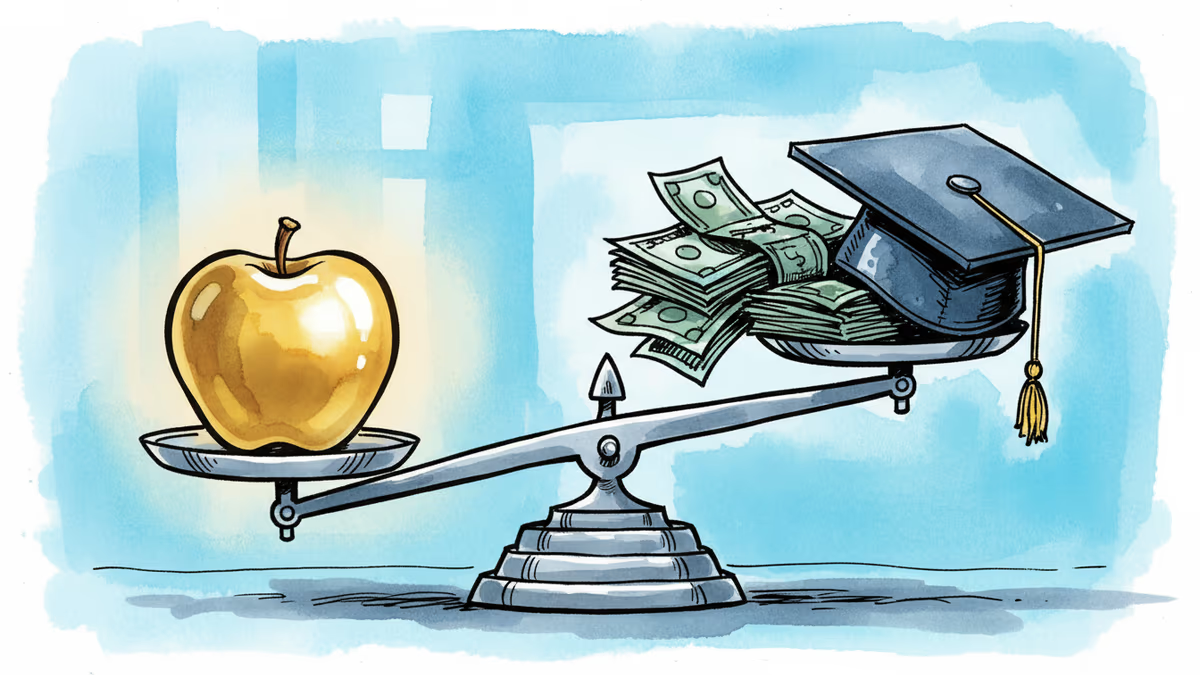
Why Apple's 'Cheap' MacBook Strategy Might Be Its Smartest Move Yet
Apple's March 4th NYC event hints at low-cost MacBook launch. Is this abandoning premium strategy or expanding market reach? Analysis of implications for consumers and competitors.
The $999 Question Apple's Been Avoiding
Apple's doing something it rarely does: breaking routine. Instead of the usual Apple Park showcase, it's hosting a "special Apple experience" in New York City on March 4th, with simultaneous events in London and Shanghai. The invitation's yellow, green, and blue Apple logo isn't subtle—these are reportedly the colors of an upcoming low-cost MacBook.
If Bloomberg's Mark Gurman is right, we're about to see A18 Pro-powered budget MacBooks and refreshed MacBook Airs. But here's what's really interesting: Apple using the word "budget" at all.
The Numbers Don't Lie
Apple's Mac revenue has declined for four consecutive quarters while the overall PC market recovered. The company's premium-only strategy worked brilliantly for years, but it's hitting a wall. In education—a market Apple once dominated—Chromebooks and budget Windows laptops have taken over.
The math is simple: a typical college student can get a capable Windows laptop for $500-700. The cheapest MacBook Air? $1,099. That $400-600 gap represents millions of potential customers who want macOS but can't justify the premium.
Tim Cook hinted at this shift during recent earnings calls, talking about "bringing Apple experiences to more users." Translation: we need volume, not just margin.
What 'Budget' Means in Apple Terms
Let's be realistic about Apple's definition of "low-cost." Remember the iPhone SE? It launched as the "affordable iPhone" but still cost $399—hardly budget by Android standards. Apple's cheap is everyone else's mid-range.

Expect the rumored budget MacBook to land around $899-999. Still expensive? Yes. But it creates psychological permission for buyers who've been eyeing MacBooks but couldn't stomach $1,300+ price tags.
The real innovation isn't in the price—it's in the positioning. Apple's betting that $900 feels "reasonable" for a MacBook, even if it's steep for a laptop.
The Ecosystem Play
This isn't really about selling more laptops. It's about expanding Apple's ecosystem reach. Internal data shows 85% of Mac users also own iPhones, but only 25% of iPhone users have Macs. The laptop becomes a gateway drug to the full Apple experience.
Once you're editing photos in Final Cut Pro or coding in Xcode, you're more likely to stick with iPhone, buy an Apple Watch, subscribe to iCloud+. The MacBook might break even, but the lifetime customer value justifies the strategy.
Competition Gets Interesting
This move puts pressure on everyone. Microsoft has been pushing premium Surface devices, but now faces Apple competing in the mid-range. Traditional PC makers like Dell and HP suddenly have to explain why their $800 laptops aren't better than Apple's $900 offering.
For consumers, this could trigger a race to the bottom—or rather, a race to better value. When Apple enters a price segment, everyone else has to step up their game.
The Risk Nobody's Talking About
Apple's biggest risk isn't cannibalization—it's brand dilution. The company spent decades training consumers that "Apple = premium." Introducing genuinely affordable products could undermine that perception.
But maybe that's exactly what Apple needs. Tesla proved you can start premium and move mainstream without losing prestige. The question is whether Apple can execute the same transition in reverse.
Authors
Related Articles
After 15 years of fragmented mobile messaging, Apple and Google are rolling out end-to-end encrypted RCS messaging between iPhones and Android devices. Here's what changed, why it took so long, and what it means for your privacy.
Apple agreed to pay $250 million to settle claims it misled iPhone 16 buyers about Apple Intelligence features. What this means for consumers, Big Tech marketing, and the AI industry.
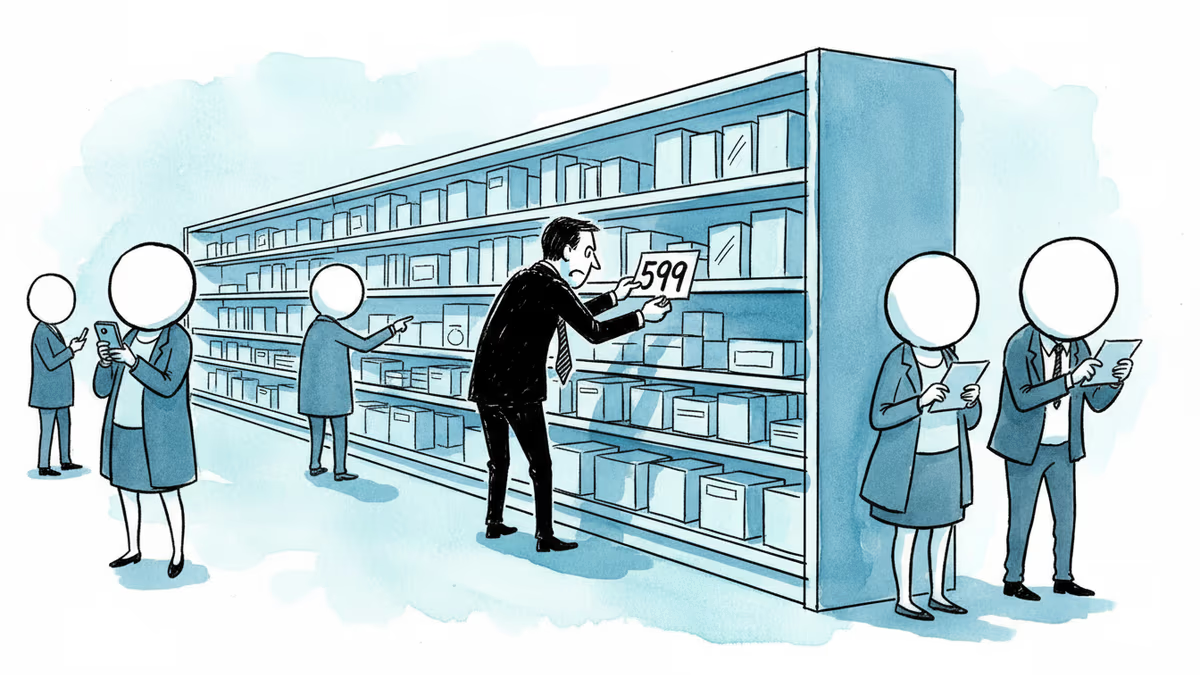
Apple quietly removed the entry-level $599 Mac Mini, raising the starting price to $799 — just one day after Tim Cook warned of chip supply constraints on the earnings call.
Apple names John Ternus, its hardware engineering chief, as the next CEO. The shift from operator to product person signals where Apple thinks its next decade of growth will come from — and raises real questions about what comes next.
After 15 years of fragmented mobile messaging, Apple and Google are rolling out end-to-end encrypted RCS messaging between iPhones and Android devices. Here's what changed, why it took so long, and what it means for your privacy.
Apple agreed to pay $250 million to settle claims it misled iPhone 16 buyers about Apple Intelligence features. What this means for consumers, Big Tech marketing, and the AI industry.
Apple quietly removed the entry-level $599 Mac Mini, raising the starting price to $799 — just one day after Tim Cook warned of chip supply constraints on the earnings call.
Apple names John Ternus, its hardware engineering chief, as the next CEO. The shift from operator to product person signals where Apple thinks its next decade of growth will come from — and raises real questions about what comes next.
Thoughts
Share your thoughts on this article
Sign in to join the conversation