
Apple's Geographic App Blocking Signals the End of a Borderless Internet
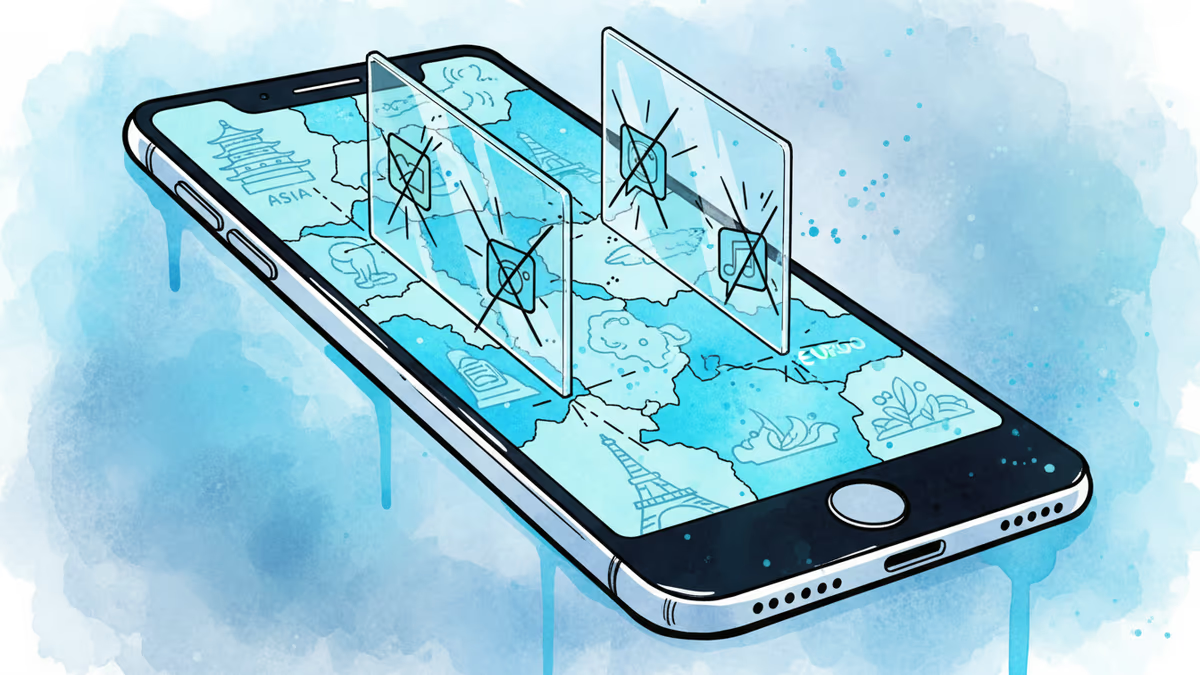
Apple deploys sophisticated location tracking to block ByteDance apps in the US, marking a shift toward geographically fragmented app ecosystems.
1 Billion Users Just Lost Access Overnight
Chinese app users living in America discovered something unsettling in late January. Their iPhones started displaying a stark message: "This app is unavailable in the country or region you're in." Even with valid Chinese App Store accounts, they couldn't download Douyin, ByteDance's AI chatbot Doubao, or dozens of other apps they'd used for years.
The timing wasn't coincidental. This happened just days after TikTok announced its divestiture deal—a transaction that saved TikTok but left its Chinese siblings in limbo.
The Law's Unintended Reach
Apple's move stems from the 2024 Protecting Americans from Foreign Adversary Controlled Applications Act, which prohibits companies from distributing apps majority-owned by ByteDance "within the land or maritime borders of the United States."
While TikTok, CapCut, and Lemon8 survived through the January divestiture deal, Chinese-market apps weren't included in the negotiations. Apps like Douyin (with over 1 billion monthly active users), the AI assistant Doubao, and fiction platform Fanqie Novel suddenly became collateral damage.
Both Apple and ByteDance declined to comment on the restrictions.
The Technology Behind Digital Borders
What's fascinating isn't just what Apple blocked, but how they did it. The company has moved beyond simple Apple ID country restrictions to sophisticated geolocation tracking.

Since 2023, Apple has deployed a system called "countryd" that combines GPS data, Wi-Fi router country codes, and SIM card information to pinpoint users' exact locations. Originally developed to comply with EU regulations requiring alternative app stores for European users, this technology now serves a different purpose: enforcing digital borders.
"If Apple gets more sophisticated about blocking access in ways that can't be circumvented with a VPN, citizens are left with much less liberty," warns Friso Bostoen, assistant professor at Tilburg University who studies EU tech regulations.
Three Stakeholder Perspectives
Users face a fragmented experience. Chinese-Americans who relied on Douyin for cultural content now find themselves cut off, while VPN workarounds become increasingly unreliable.
Developers confront a new reality where app distribution depends not just on store policies but on users' physical locations. This creates complex compliance challenges for companies serving global audiences.
Regulators have gained a powerful new tool. Governments can now enforce app restrictions with technical precision, but this capability raises questions about overreach and digital rights.
The Precedent's Global Implications
This isn't just about ByteDance. Apple's geographic blocking technology represents a fundamental shift toward nationally fragmented app ecosystems. What happens when other countries demand similar restrictions?
European regulators are already pushing for greater platform control. China maintains strict app store oversight. If geographic app blocking becomes standard practice, we could see the emergence of distinct digital territories—each with its own available apps and services.
For American users, this means potentially losing access to innovative apps from other markets. For global app developers, it means navigating an increasingly complex web of local restrictions.
Authors
Related Articles
After 15 years of fragmented mobile messaging, Apple and Google are rolling out end-to-end encrypted RCS messaging between iPhones and Android devices. Here's what changed, why it took so long, and what it means for your privacy.
Apple agreed to pay $250 million to settle claims it misled iPhone 16 buyers about Apple Intelligence features. What this means for consumers, Big Tech marketing, and the AI industry.
Apple quietly removed the entry-level $599 Mac Mini, raising the starting price to $799 — just one day after Tim Cook warned of chip supply constraints on the earnings call.

Apple names John Ternus, its hardware engineering chief, as the next CEO. The shift from operator to product person signals where Apple thinks its next decade of growth will come from — and raises real questions about what comes next.
After 15 years of fragmented mobile messaging, Apple and Google are rolling out end-to-end encrypted RCS messaging between iPhones and Android devices. Here's what changed, why it took so long, and what it means for your privacy.
Apple agreed to pay $250 million to settle claims it misled iPhone 16 buyers about Apple Intelligence features. What this means for consumers, Big Tech marketing, and the AI industry.
Apple quietly removed the entry-level $599 Mac Mini, raising the starting price to $799 — just one day after Tim Cook warned of chip supply constraints on the earnings call.
Apple names John Ternus, its hardware engineering chief, as the next CEO. The shift from operator to product person signals where Apple thinks its next decade of growth will come from — and raises real questions about what comes next.
Thoughts
Share your thoughts on this article
Sign in to join the conversation