
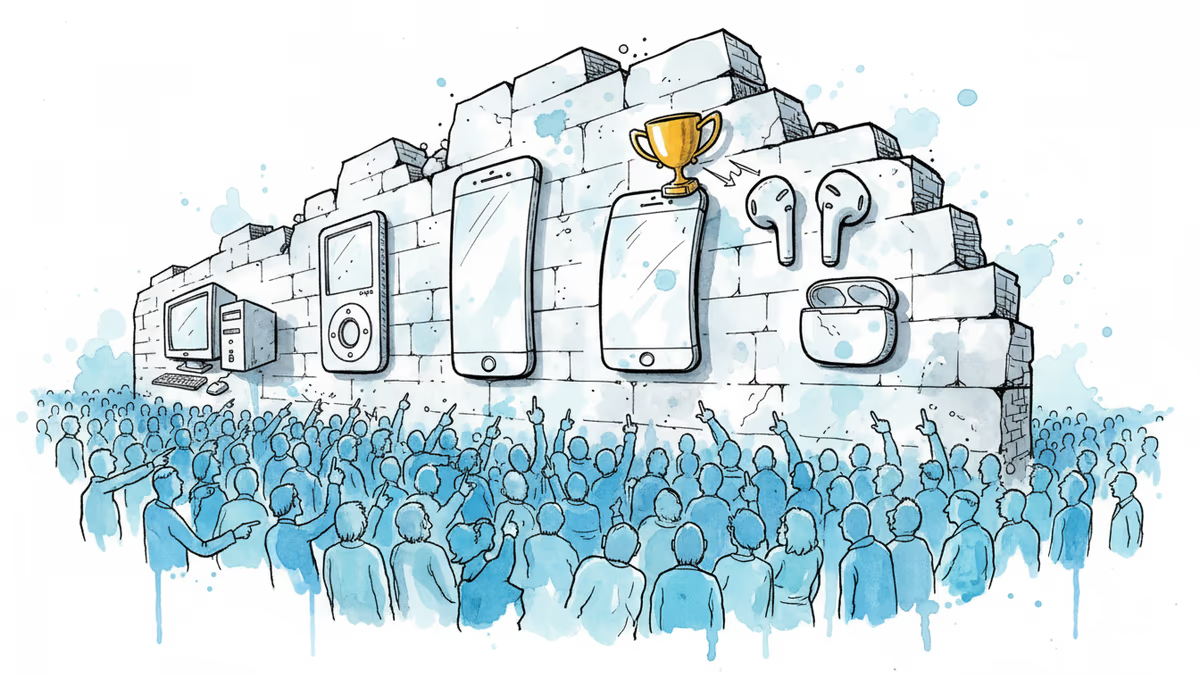
Apple Turns 50. Now You Decide What Mattered.
As Apple celebrates its 50th anniversary, The Verge has launched an interactive ranking of the 50 greatest Apple products ever made. But the real question isn't which product wins—it's what 'greatest' even means.
Fifty years ago, two guys named Steve started a company in a garage. Next week, that company will be worth more than the GDP of most nations. The question The Verge is asking to mark the occasion isn't how Apple got here—it's which of the things it built along the way actually mattered most.
The Setup: 50 Products, One Bracket
To celebrate Apple's 50th anniversary, The Verge has gone live with an interactive ranking of what its editors consider the 50 greatest things Apple has ever created. The mechanic is deliberately simple: you're shown two products head-to-head and pick the better one. Enough votes accumulate, and a live leaderboard emerges—shaped not by critics or algorithms, but by the collective judgment of readers.
The full list hasn't been laid out in advance, which is part of the point. You find out what's on it as you vote. Somewhere in that pool of 50 are products that reshaped entire industries—the Macintosh, the iPod, the iPhone—alongside quieter entries that changed daily life without anyone quite noticing: AirPods, iMessage, maybe the MacBook Air's svelte chassis that made laptops feel like they could actually be carried.
Why This Moment Feels Loaded
The anniversary arrives at an uncomfortable time for Apple. The company that once seemed to define what was next in consumer tech is now fielding pointed questions about whether it's falling behind. Apple Intelligence—its flagship AI push—has drawn underwhelming reviews. Rivals like Google, Microsoft, and Samsung are moving faster on generative AI features. The DOJ antitrust case grinds on. And iPhone market share in China has slipped for several consecutive quarters.
Against that backdrop, a week-long retrospective celebrating 50 years of Apple's greatest hits isn't just nostalgia. It's a reminder—to consumers, investors, and maybe Apple itself—of the depth of the brand's legacy. The implicit argument: a company that gave the world the iPhone and the MacBook Air has earned some patience.
The Verge, for its part, is getting something out of this too. Apple content reliably drives massive engagement. A reader-participation format turns passive readers into active contributors—and keeps them coming back to check the live results.

Three Ways to Read 'Greatest'
Here's where it gets genuinely interesting. The ranking forces a question that doesn't have a clean answer: what does 'greatest' actually mean?
If it means commercial impact, the iPhone wins before the votes are even counted. It didn't just create a product category—it restructured the global economy of attention, communication, and app development. By some estimates, the App Store ecosystem now supports over $1 trillion in developer billings annually.
If it means cultural shift, the iPod has a strong case. It didn't invent the MP3 player, but it made music personal again—and in doing so, it dismantled the album-era music business model that had stood for decades.
If it means design that changed expectations, the original Macintosh or the MacBook Air might edge ahead. The Mac made graphical interfaces feel human. The Air, when it launched in 2008, made every other laptop feel like a brick.
And if it means what actually changed your life, the answer might be something smaller—the first time FaceTime connected you to someone far away, or the moment AirPods made wires feel prehistoric.
The Skeptic's Corner
Not everyone will approach this with warmth. Critics of Apple's ecosystem have long argued that the company's greatest product isn't any single device—it's the lock-in. The seamless handoff between iPhone, Mac, Apple Watch, and AirPods is elegant precisely because leaving costs so much. From that angle, ranking Apple's 'greatest' products is a bit like ranking which link in a chain is strongest.
Privacy advocates will note the irony of celebrating Apple's product legacy while the company fights ongoing legal battles over App Store monopoly claims. And environmentalists might point out that 50 years of 'the best products ever made' has also produced an extraordinary volume of electronic waste.
Authors
Related Articles
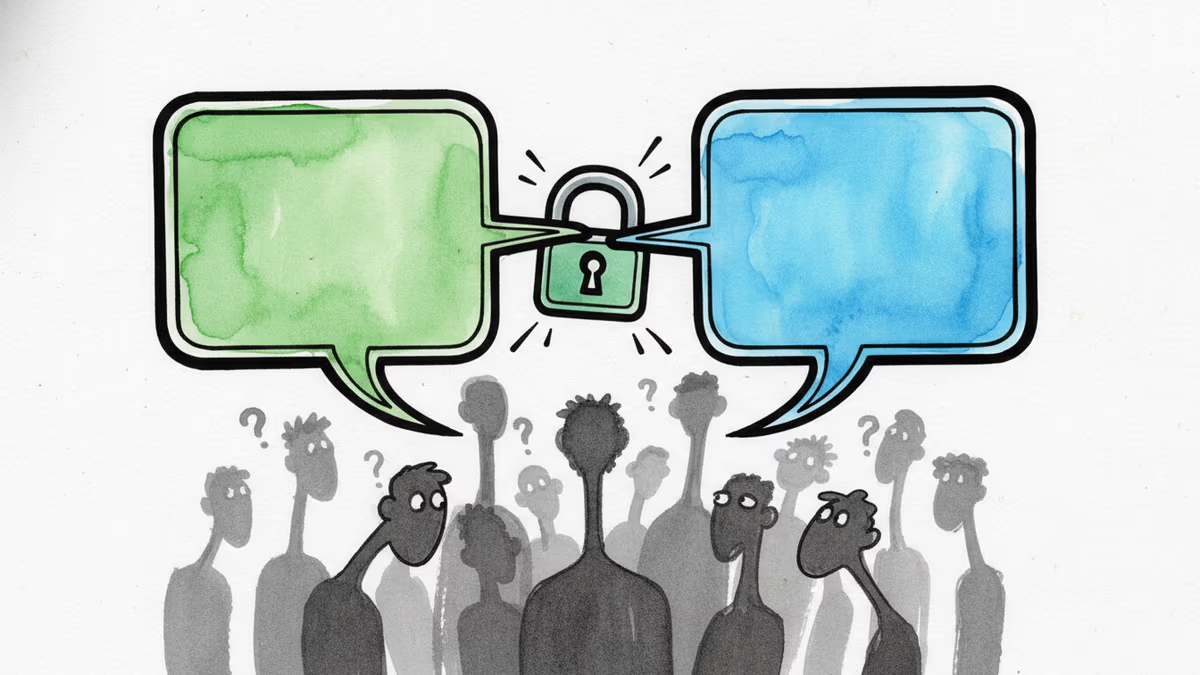
After 15 years of fragmented mobile messaging, Apple and Google are rolling out end-to-end encrypted RCS messaging between iPhones and Android devices. Here's what changed, why it took so long, and what it means for your privacy.
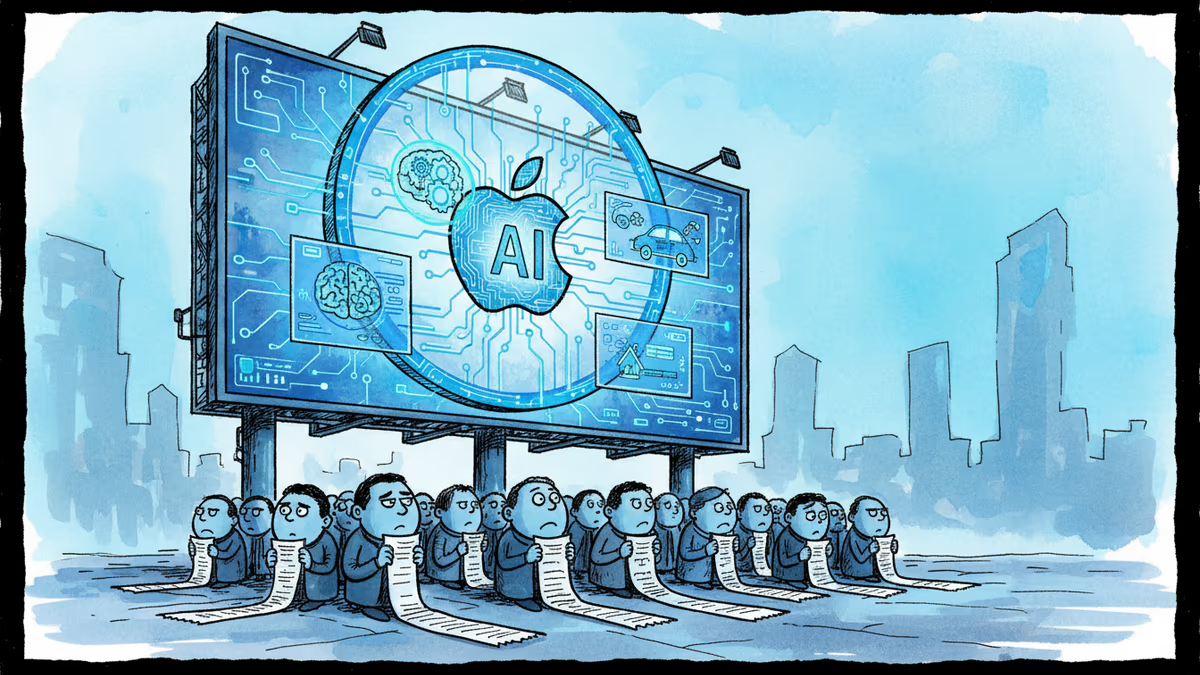
Apple agreed to pay $250 million to settle claims it misled iPhone 16 buyers about Apple Intelligence features. What this means for consumers, Big Tech marketing, and the AI industry.
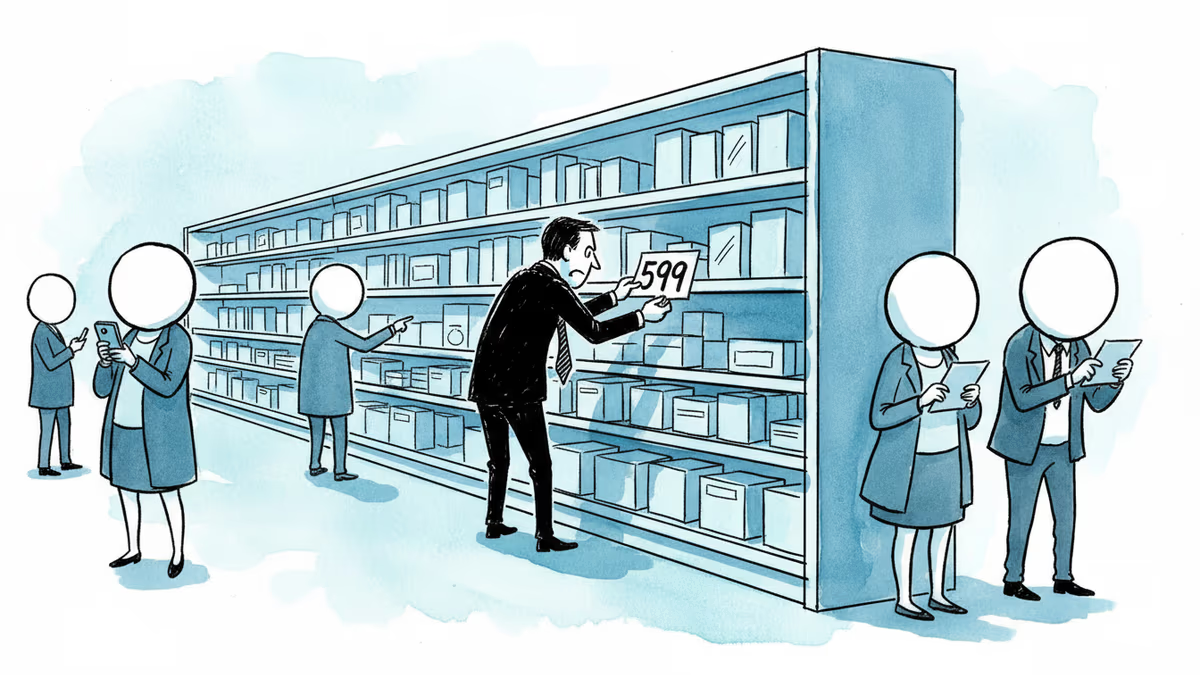
Apple quietly removed the entry-level $599 Mac Mini, raising the starting price to $799 — just one day after Tim Cook warned of chip supply constraints on the earnings call.
Apple names John Ternus, its hardware engineering chief, as the next CEO. The shift from operator to product person signals where Apple thinks its next decade of growth will come from — and raises real questions about what comes next.
After 15 years of fragmented mobile messaging, Apple and Google are rolling out end-to-end encrypted RCS messaging between iPhones and Android devices. Here's what changed, why it took so long, and what it means for your privacy.
Apple agreed to pay $250 million to settle claims it misled iPhone 16 buyers about Apple Intelligence features. What this means for consumers, Big Tech marketing, and the AI industry.
Apple quietly removed the entry-level $599 Mac Mini, raising the starting price to $799 — just one day after Tim Cook warned of chip supply constraints on the earnings call.
Apple names John Ternus, its hardware engineering chief, as the next CEO. The shift from operator to product person signals where Apple thinks its next decade of growth will come from — and raises real questions about what comes next.
Thoughts
Share your thoughts on this article
Sign in to join the conversation