
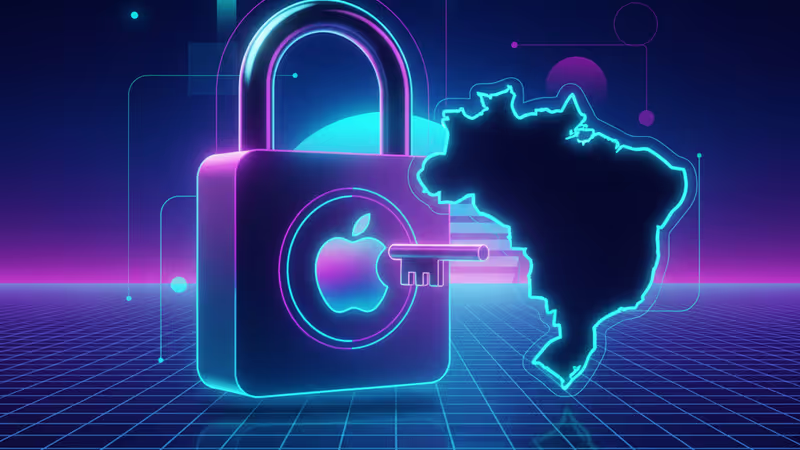
Apple to Allow Third-Party App Stores in Brazil in 2026 After Settling Antitrust Case
Apple will permit third-party iOS app stores and alternative payment systems in Brazil starting in 2026, settling a 2022 antitrust case. The move follows similar changes in the EU.
Apple is opening another gate to its walled garden, but it's keeping the tollbooth firmly in place. According to a report from 9to5Mac, Apple is set to allow third-party app stores on iOS in Brazil beginning next year, 2026, after settling a legal battle with the country's competition watchdog that dates back to 2022.
Brazil Follows the EU's Lead
Brazil's regulator, CADE, announced it has approved a settlement agreement that obligates Apple to permit not only third-party app stores but also external payment systems for developers. This move makes Brazil the second major market after the European Union to force Apple to dismantle parts of its exclusive App Store ecosystem, following the EU's Digital Markets Act (DMA).

The Fine Print: Fees Remain, Warnings Must Be Neutral
However, Apple isn't relinquishing all control. The Brazilian publication Tecnoblog reports that the company will still be able to charge fees on transactions made through external systems. A key part of the deal is that any warnings shown to users about third-party stores or payments must use 'neutral wording,' a measure that seems designed to prevent Apple from using scare tactics to dissuade users from exploring alternatives.
Authors
Related Articles
Behind every congressional hearing on Big Tech, there's a quieter room where the real rules get negotiated. As AI regulation, antitrust battles, and privacy law converge on Capitol Hill in 2026, the stakes have never been higher.
After 15 years of fragmented mobile messaging, Apple and Google are rolling out end-to-end encrypted RCS messaging between iPhones and Android devices. Here's what changed, why it took so long, and what it means for your privacy.
Apple agreed to pay $250 million to settle claims it misled iPhone 16 buyers about Apple Intelligence features. What this means for consumers, Big Tech marketing, and the AI industry.
Apple quietly removed the entry-level $599 Mac Mini, raising the starting price to $799 — just one day after Tim Cook warned of chip supply constraints on the earnings call.
Behind every congressional hearing on Big Tech, there's a quieter room where the real rules get negotiated. As AI regulation, antitrust battles, and privacy law converge on Capitol Hill in 2026, the stakes have never been higher.
After 15 years of fragmented mobile messaging, Apple and Google are rolling out end-to-end encrypted RCS messaging between iPhones and Android devices. Here's what changed, why it took so long, and what it means for your privacy.
Apple agreed to pay $250 million to settle claims it misled iPhone 16 buyers about Apple Intelligence features. What this means for consumers, Big Tech marketing, and the AI industry.
Apple quietly removed the entry-level $599 Mac Mini, raising the starting price to $799 — just one day after Tim Cook warned of chip supply constraints on the earnings call.
Thoughts
Share your thoughts on this article
Sign in to join the conversation