
Apple's Accidental 'MacBook Neo' Leak Hints at Sub-$1000 Revolution
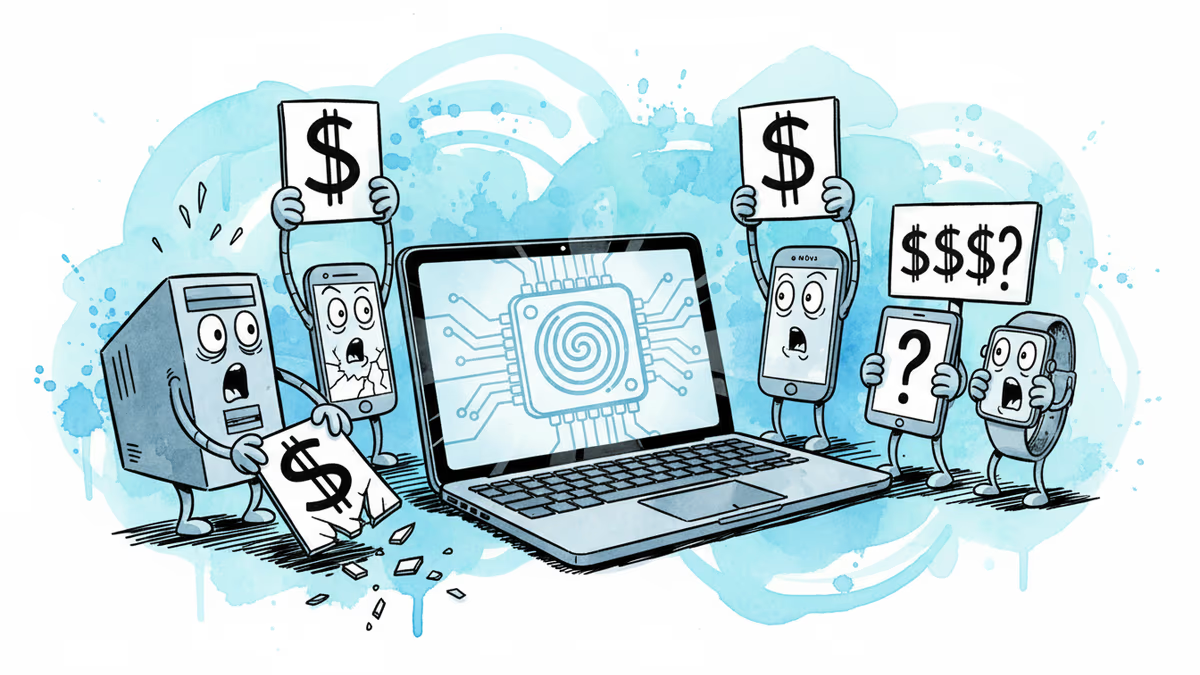
Apple accidentally revealed 'MacBook Neo' in regulatory filings. Could an iPhone-chip powered budget MacBook reshape the laptop market?
The $1000 Barrier Just Cracked
Tuesday afternoon, during Apple's weeklong product showcase, something unexpected appeared on the company's regulatory compliance page: "MacBook Neo (Model A3404)" listed among 2026 MacBooks. MacRumors caught the slip before Apple quickly scrubbed it, but the damage was done. The tech world now has its first concrete hint of Apple's rumored budget MacBook.
The timing isn't coincidental. Apple has reportedly been developing a sub-$1000 MacBook, which would mark the cheapest laptop in the company's history. Current MacBook Air models start at $1099, making this a significant departure from Apple's premium-only strategy.
iPhone Power, MacBook Form
Here's where it gets interesting: this budget MacBook is expected to run on an iPhone chip rather than Apple's M-series processors. While that might sound like a downgrade, consider this—today's iPhone chips already outperform most tasks the average user throws at a laptop.
The implications extend beyond cost savings. An iPhone-powered MacBook could seamlessly run iOS apps, creating a bridge between Apple's mobile and desktop ecosystems that doesn't currently exist. Imagine running your favorite iPhone apps in a laptop form factor, with full keyboard and trackpad support.
The Chromebook Killer?

Apple's move puts direct pressure on Google's Chromebook dominance in education and budget markets. Chromebooks captured schools and price-conscious consumers precisely because they offered "good enough" computing at low prices. A $999 MacBook with iPhone-level performance could flip that equation entirely.
Microsoft faces a different challenge. Windows laptops in the sub-$1000 range often compromise on build quality, performance, or both. Apple's reputation for hardware excellence, even in budget products (see: iPhone SE), could redefine expectations in this price segment.
The Ecosystem Play
This isn't just about selling cheaper laptops—it's about expanding Apple's ecosystem reach. Every MacBook Neo buyer becomes a potential customer for AirPods, Apple Watch, iCloud subscriptions, and eventually, premium MacBooks when they're ready to upgrade.
The strategy mirrors what Apple did with the iPhone SE: offer a lower-cost entry point without cannibalizing high-end sales. The question is whether laptop buyers will embrace this approach as readily as smartphone users did.
Market Disruption Ahead
If Apple successfully launches a sub-$1000 MacBook, it could trigger a broader industry reset. Traditional PC manufacturers have long competed primarily on price and specs. Apple's entry forces them to compete on experience, ecosystem integration, and long-term value—areas where many struggle.
For consumers, this represents a fundamental shift. The choice between a $500 Windows laptop and a $1000 MacBook is very different from choosing between a $500 Windows laptop and a $999 MacBook Neo.
Authors
Related Articles
After 15 years of fragmented mobile messaging, Apple and Google are rolling out end-to-end encrypted RCS messaging between iPhones and Android devices. Here's what changed, why it took so long, and what it means for your privacy.
Apple agreed to pay $250 million to settle claims it misled iPhone 16 buyers about Apple Intelligence features. What this means for consumers, Big Tech marketing, and the AI industry.
Apple quietly removed the entry-level $599 Mac Mini, raising the starting price to $799 — just one day after Tim Cook warned of chip supply constraints on the earnings call.
Apple names John Ternus, its hardware engineering chief, as the next CEO. The shift from operator to product person signals where Apple thinks its next decade of growth will come from — and raises real questions about what comes next.
After 15 years of fragmented mobile messaging, Apple and Google are rolling out end-to-end encrypted RCS messaging between iPhones and Android devices. Here's what changed, why it took so long, and what it means for your privacy.
Apple agreed to pay $250 million to settle claims it misled iPhone 16 buyers about Apple Intelligence features. What this means for consumers, Big Tech marketing, and the AI industry.
Apple quietly removed the entry-level $599 Mac Mini, raising the starting price to $799 — just one day after Tim Cook warned of chip supply constraints on the earnings call.
Apple names John Ternus, its hardware engineering chief, as the next CEO. The shift from operator to product person signals where Apple thinks its next decade of growth will come from — and raises real questions about what comes next.
Thoughts
Share your thoughts on this article
Sign in to join the conversation