
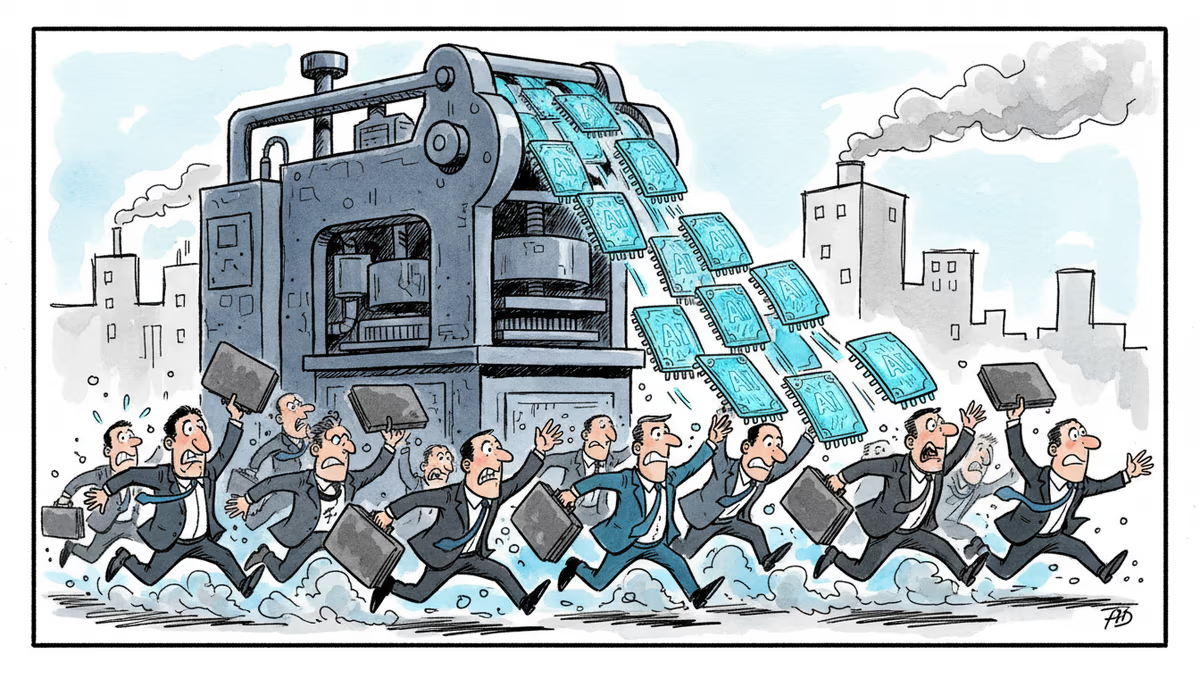
Anthropic Doubles Down with $20B Raise at $350B Valuation
Anthropic raises twice its planned funding as AI arms race intensifies. What this capital surge means for the future of AI development.
When Investors Throw Money Twice as Fast
Anthropic just closed a $20 billion funding round at a $350 billion valuation—double what the company initially planned to raise. The demand was so intense that investors pushed the AI startup to take more money than it wanted.
This comes just five months after Anthropic's $13 billion equity round. The rapid-fire fundraising isn't just about opportunity—it's about survival in an industry where compute costs are skyrocketing and the window for competitive advantage is shrinking fast.
The round includes familiar names like Sequoia Capital, Lightspeed, and Menlo Ventures, but the heavy lifting comes from strategic partners Nvidia and Microsoft. Meanwhile, rival OpenAI is reportedly assembling its own $100 billion war chest.
The Coding Agent Breakthrough
Anthropic's timing isn't accidental. The company's recent coding agents have software engineers buzzing about genuine productivity gains—not just hype. Last week, their legal and business research models sent shockwaves through data company stocks as investors realized AI might actually disrupt these industries.

The shift is subtle but significant. We're moving from "AI can do cool demos" to "AI can replace expensive human tasks." Law firms are quietly testing these tools for document review. Consulting firms are exploring automated research capabilities.
But the real test isn't technical—it's economic. Can these AI tools generate enough value to justify the astronomical development costs?
The Capital Arms Race Problem
Here's the uncomfortable truth: AI innovation is becoming a function of capital access. Training frontier models now requires hundreds of millions in compute costs, and the cycle is accelerating. Six months between major releases used to be fast. Now it's becoming standard.
This creates a winner-take-most dynamic. Companies with deeper pockets can afford more compute, better talent, and faster iteration cycles. Smaller players get squeezed out—not because their ideas are worse, but because they can't afford the entry fee.
The IPO preparations by both Anthropic and OpenAI suggest another shift: from private funding to public markets. That could democratize AI investment, but it also means quarterly pressure on companies building technology with uncertain timelines.
Authors
Related Articles
Anthropic shipped Claude Sonnet 5, its mid-tier agent model, on June 30. Behind the 'Opus-class power, budget price' headline sits a tokenizer catch and a three-horse race that's only half real. Here's what developers should actually run the numbers on.
Samsung and SK unveiled a chip and AI investment package worth thousands of trillions of won on June 29. The headline number swings wildly by outlet, but the real contest isn't capital — it's water and power.

A small but growing group of developers has gone all-in on AI coding agents like Claude Code and OpenClaw. History suggests the rest of us won't be far behind.

Viral videos show 2026 graduates jeering executives who praise AI at commencement ceremonies. It's not just rudeness — it's a signal about who pays for technological optimism.
Anthropic shipped Claude Sonnet 5, its mid-tier agent model, on June 30. Behind the 'Opus-class power, budget price' headline sits a tokenizer catch and a three-horse race that's only half real. Here's what developers should actually run the numbers on.
Samsung and SK unveiled a chip and AI investment package worth thousands of trillions of won on June 29. The headline number swings wildly by outlet, but the real contest isn't capital — it's water and power.
A small but growing group of developers has gone all-in on AI coding agents like Claude Code and OpenClaw. History suggests the rest of us won't be far behind.
Viral videos show 2026 graduates jeering executives who praise AI at commencement ceremonies. It's not just rudeness — it's a signal about who pays for technological optimism.
Thoughts
Share your thoughts on this article
Sign in to join the conversation