

Bezos Unveils TeraWave: A 6Tbps Blue Origin Satellite Constellation
Jeff Bezos' Blue Origin announces TeraWave, a megaconstellation of 5,408 satellites designed to deliver data speeds of up to 6Tbps anywhere on Earth.
6Tbps speeds from the heavens are no longer a fantasy. Blue Origin, the space venture founded by Jeff Bezos, announced a massive new megaconstellation on Wednesday that aims to deliver unprecedented data rates to any corner of the globe.
The Architecture of Blue Origin TeraWave Satellite Constellation
The project, named TeraWave, will consist of 5,408 optically interconnected satellites. According to the company, the fleet will be split between low-Earth orbit (LEO) and medium-Earth orbit (MEO), creating a multi-layered mesh network that blankets the planet.

Optical Links vs. Radio Spectrum
The LEO component of the constellation will utilize radio spectrum to provide up to 144Gbps. However, the real power lies in the MEO satellites, which use optical interconnects to facilitate high-speed data transfers. This hybrid approach allows for both wide-area coverage and high-density data pipelines.
Authors
Related Articles
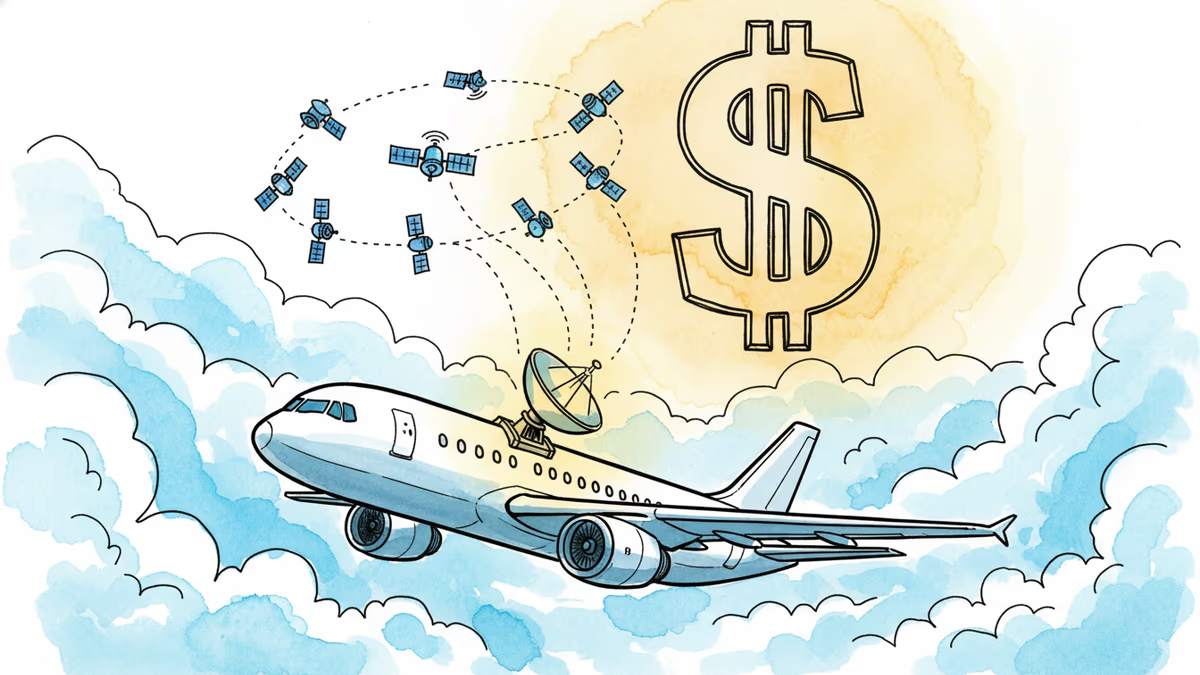
American Airlines just signed Starlink for 500+ aircraft. It's not just about faster inflight internet — it's a calculated move in the run-up to what could be the largest IPO in history.

NASA's Artemis III has been redesigned as an Earth-orbit mission. SpaceX and Blue Origin say their landers won't be ready until late 2027. What does this mean for the future of lunar exploration?
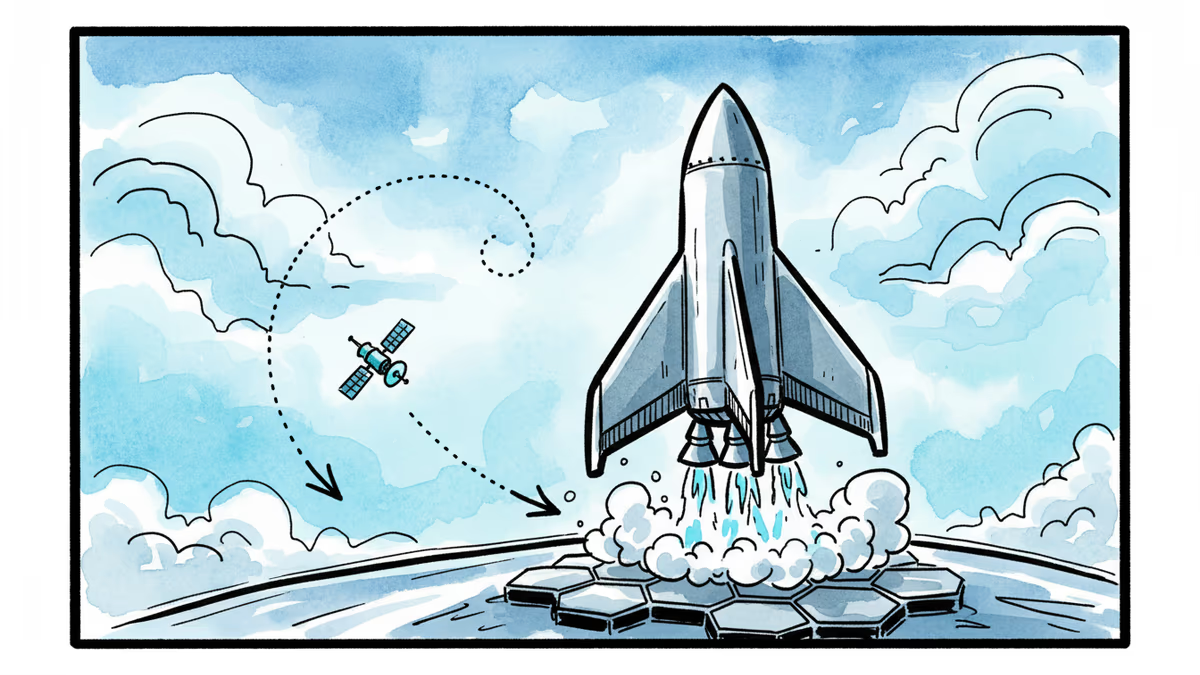
Blue Origin's New Glenn nailed its second booster landing, but AST SpaceMobile's BlueBird 7 satellite ended up in the wrong orbit—effectively useless. What this split outcome reveals about the space race.
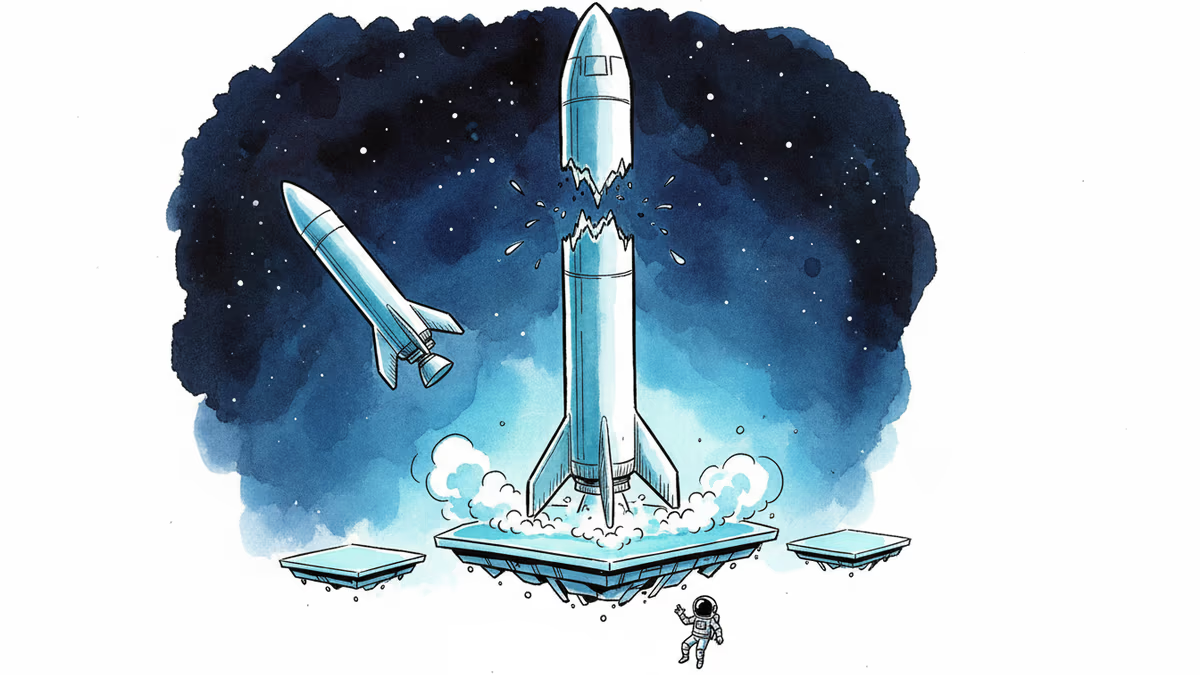
Blue Origin successfully reflew an orbital-class booster for the first time, but New Glenn's upper stage failed on its third mission — raising questions about NASA's Artemis timeline.
American Airlines just signed Starlink for 500+ aircraft. It's not just about faster inflight internet — it's a calculated move in the run-up to what could be the largest IPO in history.
NASA's Artemis III has been redesigned as an Earth-orbit mission. SpaceX and Blue Origin say their landers won't be ready until late 2027. What does this mean for the future of lunar exploration?
Blue Origin's New Glenn nailed its second booster landing, but AST SpaceMobile's BlueBird 7 satellite ended up in the wrong orbit—effectively useless. What this split outcome reveals about the space race.
Blue Origin successfully reflew an orbital-class booster for the first time, but New Glenn's upper stage failed on its third mission — raising questions about NASA's Artemis timeline.
Thoughts
Share your thoughts on this article
Sign in to join the conversation