
Your Lost Luggage Just Got a Digital Detective
Google's new Android feature lets travelers share luggage locations directly with airlines. Ten carriers are already on board, but this shift in power dynamics between passengers and airlines runs deeper.
2.7 million bags go missing every year
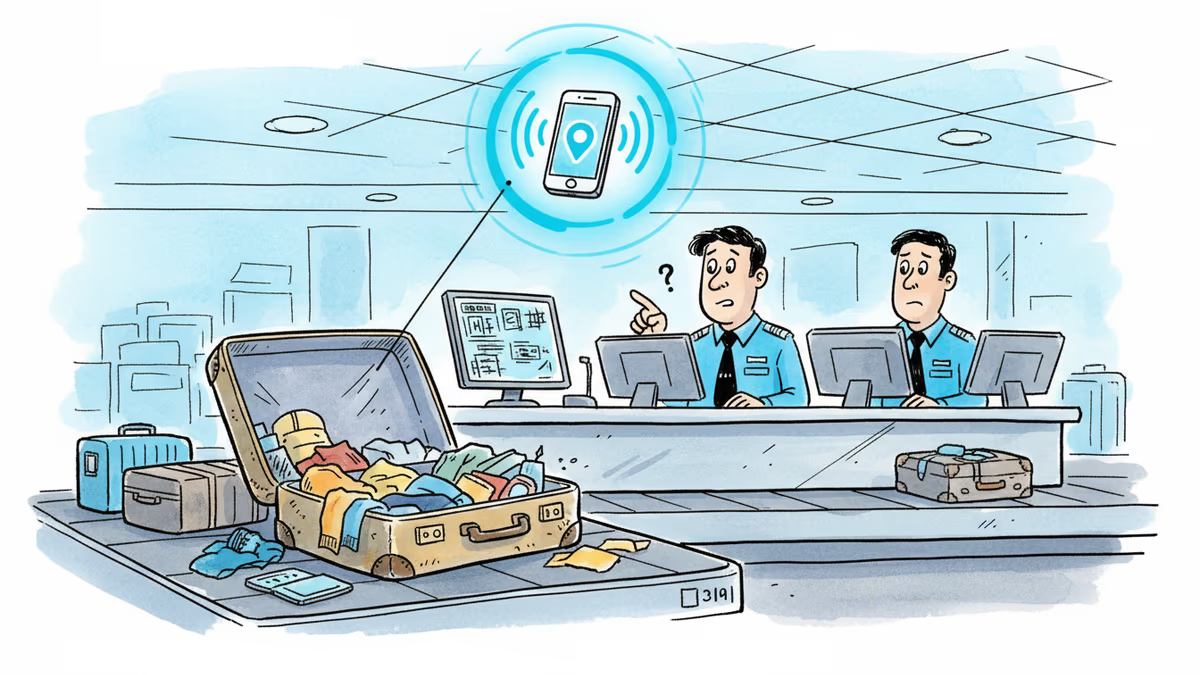
That sinking feeling when your suitcase doesn't appear on the carousel? Google wants to make it history. The tech giant announced Tuesday that Android users can now share their lost luggage location directly with airlines—turning passengers from helpless waiters into active participants in bag recovery.
Here's how it works: If you've attached a Find Hub-compatible tracker to your luggage, you can generate a secure, unique URL through the Find Hub app and paste it directly into your airline's mobile app or website. The link expires after seven days and automatically disables once your phone detects your bag is back with you.
More than 10 global airlines—including Air India, Lufthansa Group, Turkish Airlines, and Scandinavian Airlines—have already integrated this system into their baggage recovery process.
The Quiet Revolution in Air Travel
This isn't just about convenience. It's about shifting the power dynamic between passengers and airlines. For decades, lost luggage meant surrendering control entirely to airline systems. You filed a report and waited. Now, passengers become co-investigators in their own cases.

The airline industry processes 4.5 billion bags annually, with a mishandling rate of about 0.6%. That might sound small, but it translates to millions of frustrated travelers and billions in compensation costs. By letting passengers provide real-time location data, airlines can potentially slash recovery times and costs.
But there's a catch: this only works if you've already invested in a tracking device. Apple AirTags, Samsung Galaxy SmartTags, and similar devices typically cost $25-30 each. The question becomes: should basic luggage tracking be a premium service, or should airlines provide it by default?
Beyond Baggage: Google's Ecosystem Play
The luggage feature is part of a broader Android update that includes real-time location sharing in Google Messages, app preview videos in Google Play, and personalized "Calling Cards" for incoming calls—think iPhone's Contact Posters, but for Android.
The Circle to Search enhancement is particularly clever. The "Find the Look" tool can identify individual clothing pieces from any image, while "Try It On" lets you see how outfits from videos or social content might look on you. Shopping is becoming increasingly frictionless—and that has implications beyond convenience.
Pixel Watch users get gesture controls for answering calls or taking photos with a double pinch or wrist turn. The watch can also alert you when you've left your phone behind and automatically lock it when out of range.
Authors
Related Articles
In a post-Google I/O interview, Sundar Pichai acknowledged flawed search results, real AI anxiety, and an AGI timeline that makes the label irrelevant. Here's what he said — and what it means.
Google is building AI agents that search the web proactively, without user prompting. That's not just a product update — it's a fundamental shift in who controls the information you receive.
Google unveiled the 'Googlebook' platform to replace Chromebook and ChromeOS—but revealed zero hardware specs. What's the strategy, and what does it mean for users, manufacturers, and the education market?
After 15 years of fragmented mobile messaging, Apple and Google are rolling out end-to-end encrypted RCS messaging between iPhones and Android devices. Here's what changed, why it took so long, and what it means for your privacy.
In a post-Google I/O interview, Sundar Pichai acknowledged flawed search results, real AI anxiety, and an AGI timeline that makes the label irrelevant. Here's what he said — and what it means.
Google is building AI agents that search the web proactively, without user prompting. That's not just a product update — it's a fundamental shift in who controls the information you receive.
Google unveiled the 'Googlebook' platform to replace Chromebook and ChromeOS—but revealed zero hardware specs. What's the strategy, and what does it mean for users, manufacturers, and the education market?
After 15 years of fragmented mobile messaging, Apple and Google are rolling out end-to-end encrypted RCS messaging between iPhones and Android devices. Here's what changed, why it took so long, and what it means for your privacy.
Thoughts
Share your thoughts on this article
Sign in to join the conversation