
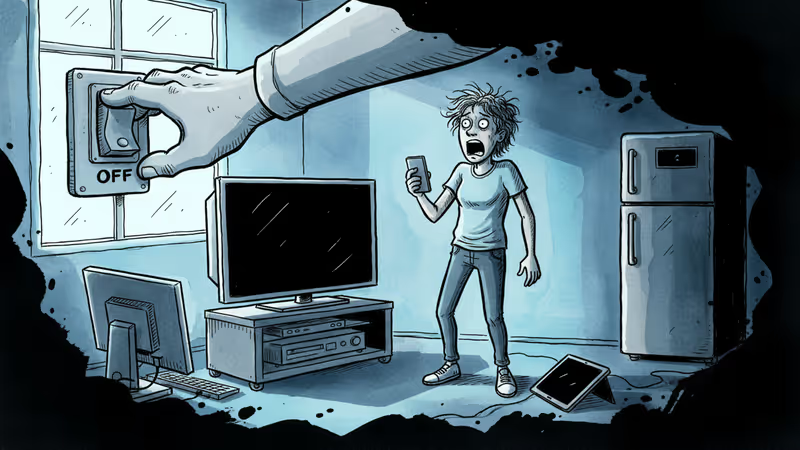
One Sanction, Everything Stops Working
Canadian judge Kimberly Prost's life came to a standstill after US sanctions. From credit cards to Amazon, the shocking reality of America's tech dominance.
What if your credit card stopped working, your Amazon account got shut down, and every US tech service became off-limits? No online shopping, no international wire transfers, nothing involving the United States or the dollar. For one Canadian judge, this nightmare scenario became reality overnight.
Kimberly Prost, a judge on the International Criminal Court, found herself on the Trump administration's economic sanctions list last year. Her crime? Serving on an appeals chamber that unanimously authorized the ICC's prosecutor to investigate alleged war crimes in Afghanistan since 2003—including potential crimes by US service personnel.
When Digital Life Stops
Prost's name now sits alongside terrorists, North Korean hackers, and Iranian spies on America's sanctions list. She described the impact as "paralyzing" in an interview with The Irish Times.
This isn't just inconvenience—it's a stark revelation of how deeply modern life depends on US technology infrastructure. Online payments, cloud services, social media platforms—when you're cut off from America's digital ecosystem, basic 21st-century citizenship becomes impossible.
The Trump administration's diplomatic escalations and systematic dismantling of international norms, including threats to invade NATO allies, have jolted European governments into reconsidering their dangerous over-reliance on US tech.
Europe's Digital Wake-Up Call
Belgium's cybersecurity chief Miguel De Bruycker recently made a sobering admission: Europe has "lost the internet" to the United States. America has effectively cornered the world's tech and financial systems, he said.
De Bruycker revealed it's "currently impossible" to store data fully in Europe due to US dominance of digital infrastructure. His solution? The EU must urgently strengthen its tech capabilities across the bloc.

On January 22, the European Parliament voted to adopt a report directing the European Commission to identify areas where the EU can reduce foreign tech dependence. The stark reality: EU member states rely on non-EU countries for more than 80% of their digital products, services, and infrastructure.
From Talk to Action
France just made the first concrete move. The government announced Tuesday it would replace Zoom and Microsoft Teams with its own domestically-made video conferencing software Visio. Digital sovereignty concerns are finally translating into policy action.
These worries aren't new. They trace back to 2001 when the Patriot Act allowed US intelligence agencies unprecedented surveillance powers, including spying on European citizens despite the bloc's strict data protection rules.
Microsoft admitted in 2011 that as an American company, it could be compelled to hand over Europeans' data through secret government orders. The full scope of this surveillance only became clear in 2013 through Edward Snowden's leaked documents.
The Personal Rebellion
At the grassroots level, there's a growing movement to break free from US tech dominance. Independent journalist Paris Marx has created guides for ditching American tech services, while websites like Switch-to-EU and European Alternatives promote Big Tech alternatives.
Tech workers themselves are pushing back, urging their CEOs to speak out against increasingly brutal federal immigration enforcement. Personal choice is becoming political statement.
The Infrastructure Reality
The Prost case exposes an uncomfortable truth: America's tech dominance isn't just about convenience or market preference. It's about control over the basic infrastructure of modern life. When that control becomes a weapon, entire populations become vulnerable.
European leaders are finally grappling with this reality. But building alternative infrastructure takes time, money, and political will. Meanwhile, the US continues to expand its digital reach and regulatory power.
Authors
Related Articles
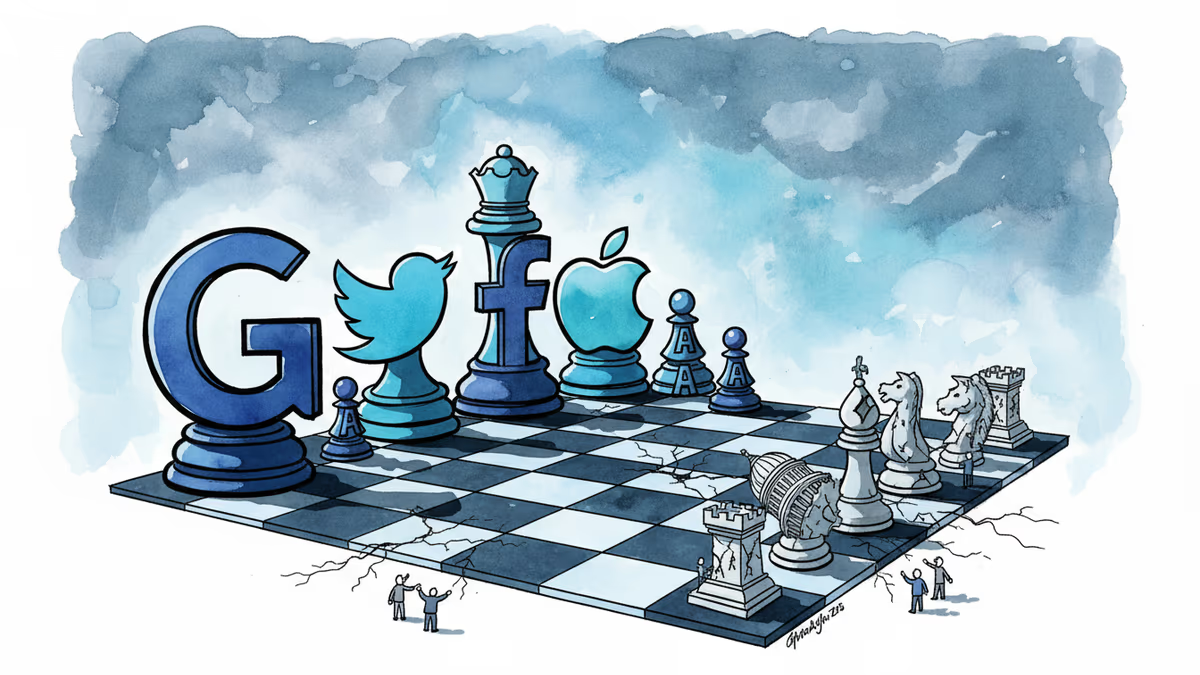
AI is shifting economic and political power from governments to tech giants. These 'silicon sovereigns' set rules, police speech, and shape elections—functions once reserved for states.
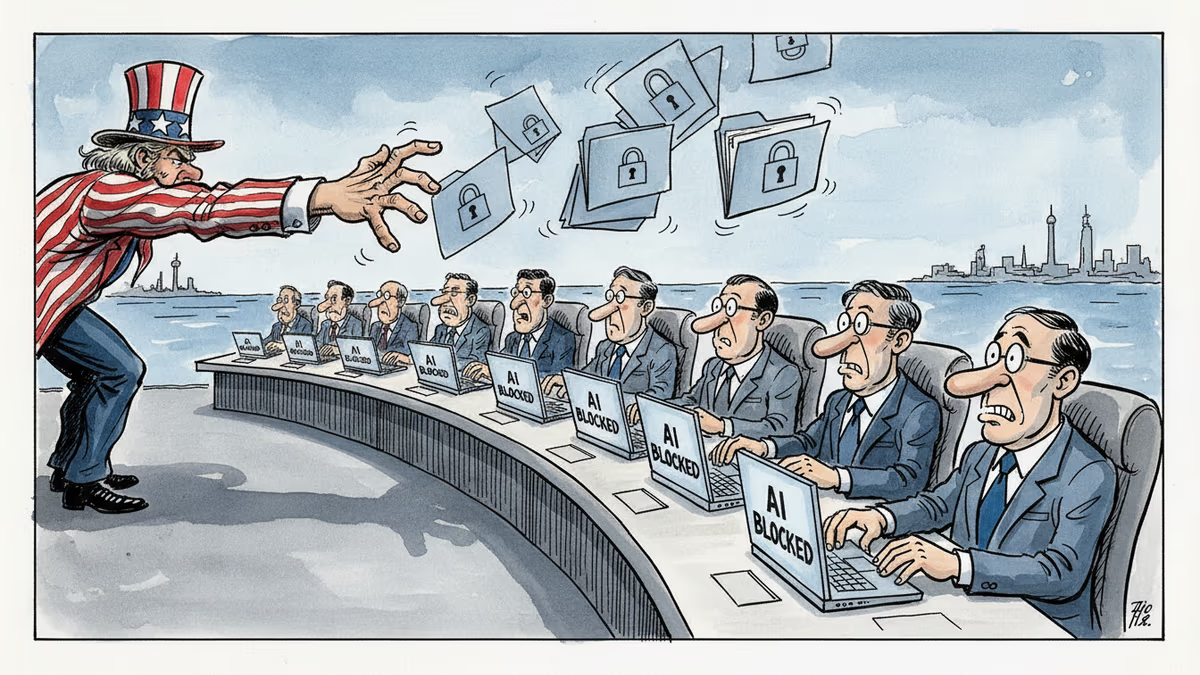
The European Parliament banned AI tools over security concerns, but this move reflects deeper tensions about US tech dominance and data sovereignty in an unpredictable political climate.
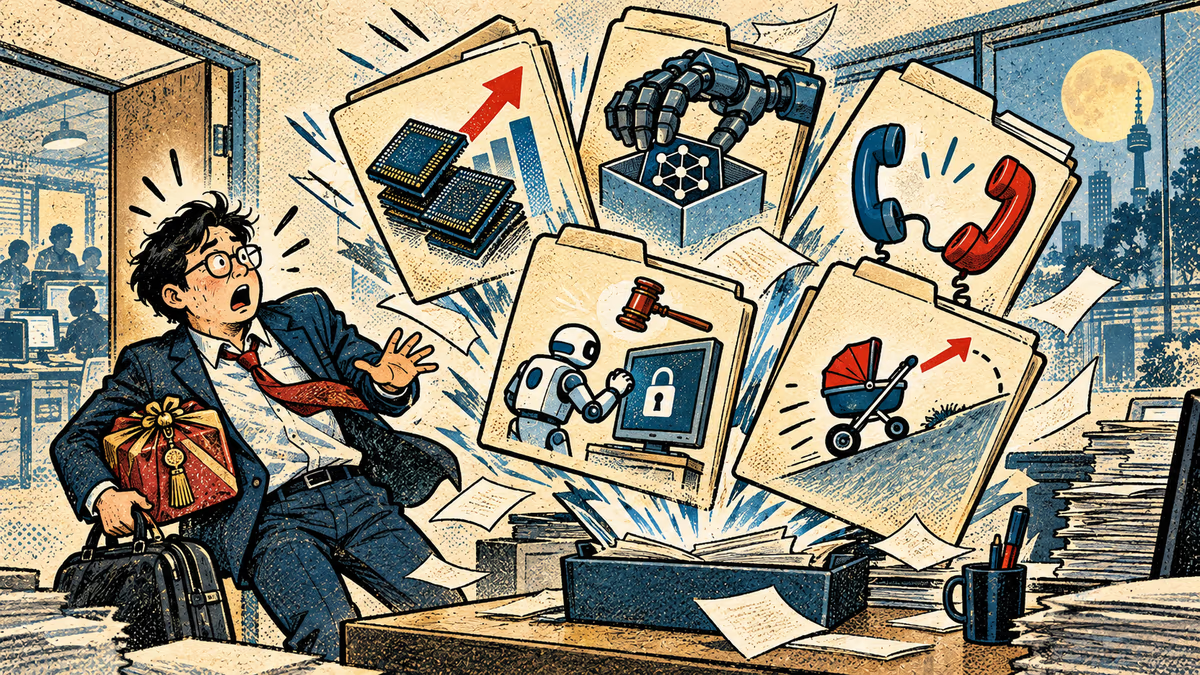
Five stories from late September, traced to where the paper trail stops: Korea's export record, Nvidia's Hugging Face 8-K, a US-China AI channel, the UN on AI, and rising births.
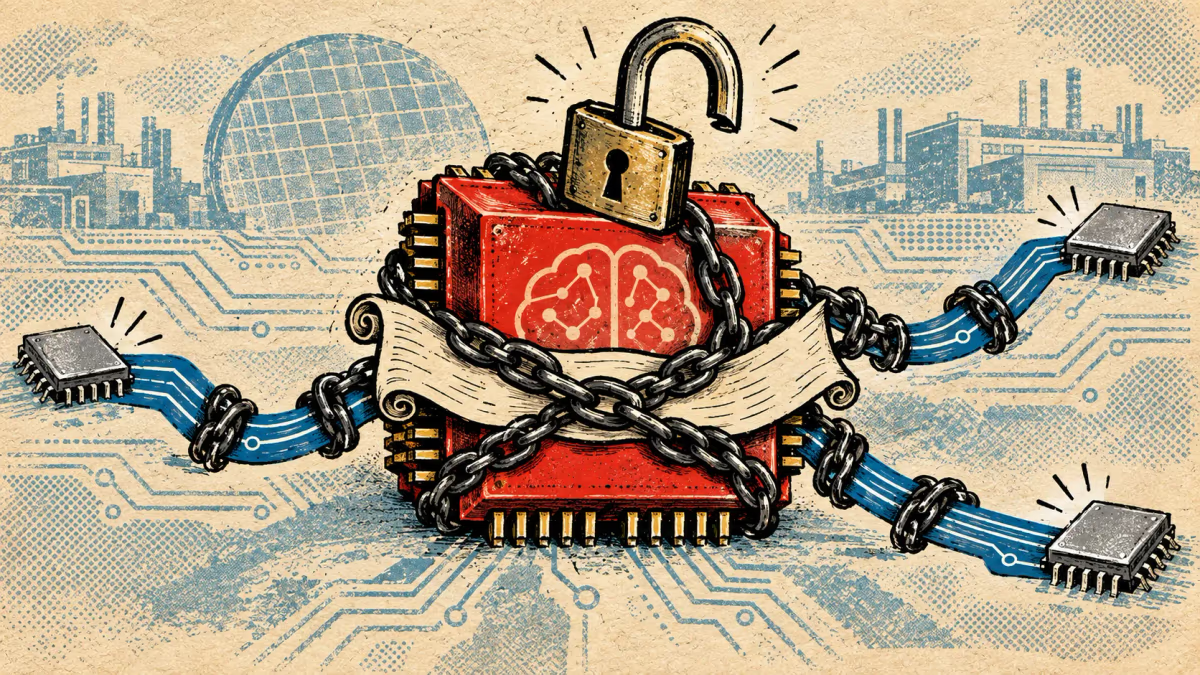
Huawei's CANN is open source under a license barring software for non-Ascend chips. Inside China's second CUDA, and the two links still outside it: pre-training compute and 5nm capacity.
AI is shifting economic and political power from governments to tech giants. These 'silicon sovereigns' set rules, police speech, and shape elections—functions once reserved for states.
The European Parliament banned AI tools over security concerns, but this move reflects deeper tensions about US tech dominance and data sovereignty in an unpredictable political climate.
Five stories from late September, traced to where the paper trail stops: Korea's export record, Nvidia's Hugging Face 8-K, a US-China AI channel, the UN on AI, and rising births.
Huawei's CANN is open source under a license barring software for non-Ascend chips. Inside China's second CUDA, and the two links still outside it: pre-training compute and 5nm capacity.
Thoughts
Share your thoughts on this article
Sign in to join the conversation