
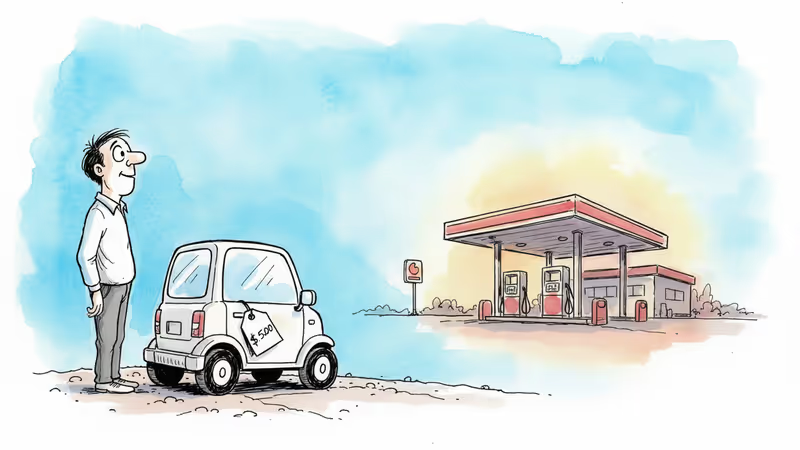
The $5,000 Electric Car Is Here (Sort Of)
Used EVs are hitting rock-bottom prices, with some models available for under $5,000. But there's a catch—range anxiety becomes range reality at this price point.
$5,000 for an electric vehicle. Five years ago, that would have been the down payment on a decent EV. Today, it's the total price for some models in the used car market.
The rapid depreciation of electric vehicles is creating an unexpected opportunity for budget-conscious buyers. While EV depreciation might sting first owners, it's opening doors for the 75% of American car buyers who shop used. The question isn't whether you can find a cheap EV anymore—it's whether you can live with what $5,000 gets you.
Why EVs Depreciate Like Smartphones
Electric vehicles face a perfect storm of depreciation factors. Technology advances at breakneck speed, making last year's 200-mile range feel antiquated when this year's models offer 300+ miles. It's the smartphone effect applied to cars—nobody wants yesterday's tech when tomorrow's is so much better.
Then there's the incentive factor. Federal tax credits, state rebates, and manufacturer incentives that made that $60,000 EV affordable for the first buyer get baked into resale calculations. The second owner effectively pays for those benefits without receiving them.
Battery anxiety amplifies the depreciation. Despite evidence that EV batteries last longer than expected, buyers still worry about eventual $15,000-20,000 replacement costs. It's often unfounded fear, but fear drives prices nonetheless.
What $5,000 Actually Buys

At the bottom of the EV market, you'll find early adopters like the Nissan Leaf, BMW i3, and Ford Focus Electric. These 2015-2018 models represent the industry's awkward teenage years—functional but limited.
The reality check comes with range. We're talking 80-120 miles of real-world driving, not the optimistic EPA estimates. Factor in cold weather, highway speeds, or air conditioning, and that shrinks further. Road trips? Forget about it.
But here's the thing: most Americans drive less than 40 miles daily. For urban commuters, grocery runs, and short errands, these budget EVs could work perfectly. They excel in stop-and-go traffic where gas engines waste fuel idling.
The Economics Make Sense (Sometimes)
Operating costs favor even cheap EVs. Electricity typically costs the equivalent of $1-2 per gallon, depending on local rates. Maintenance is minimal—no oil changes, fewer moving parts, regenerative braking that extends brake life.
A $5,000 EV that saves $1,500 annually on fuel and maintenance pays for itself quickly. For families needing a second car for local driving, the math works.
The Infrastructure Reality
Here's where cheap EVs hit their biggest obstacle. Public charging networks have improved dramatically, but they're still concentrated in urban areas and major highways. If you live in rural Montana or need to drive across states regularly, a short-range EV becomes impractical.
Home charging is almost essential. Without a garage or dedicated parking spot with electrical access, even the cheapest EV becomes a hassle.
Authors
Related Articles
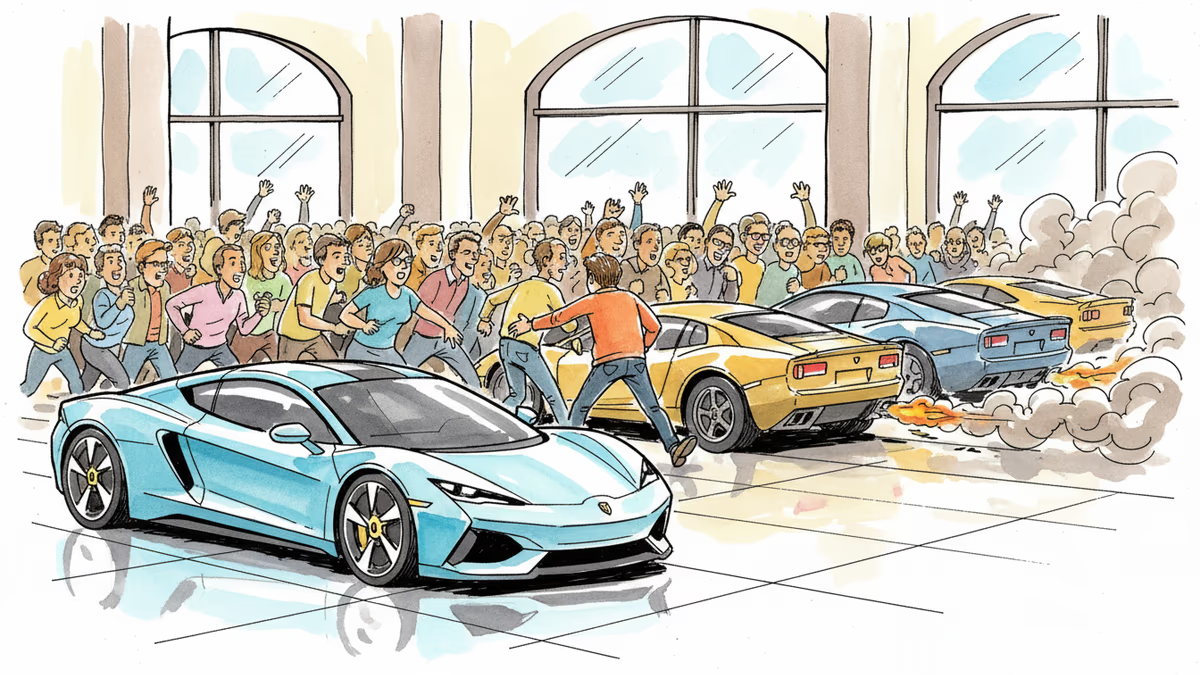
Despite EV success, electric sports cars struggle with consumer rejection, technical hurdles, and emotional disconnect from traditional performance enthusiasts
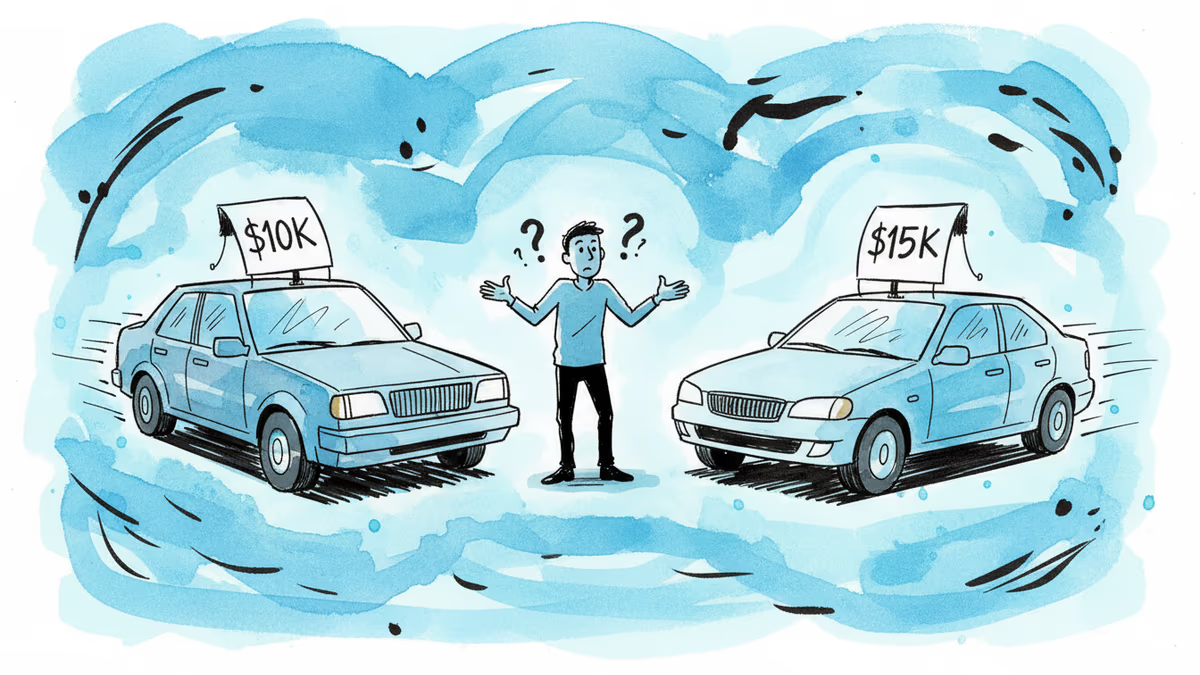
Exploring the used EV market at $15,000 budget point. BMW i3 and Chevrolet Bolt options compared with lower mileage, newer features, and better value propositions.
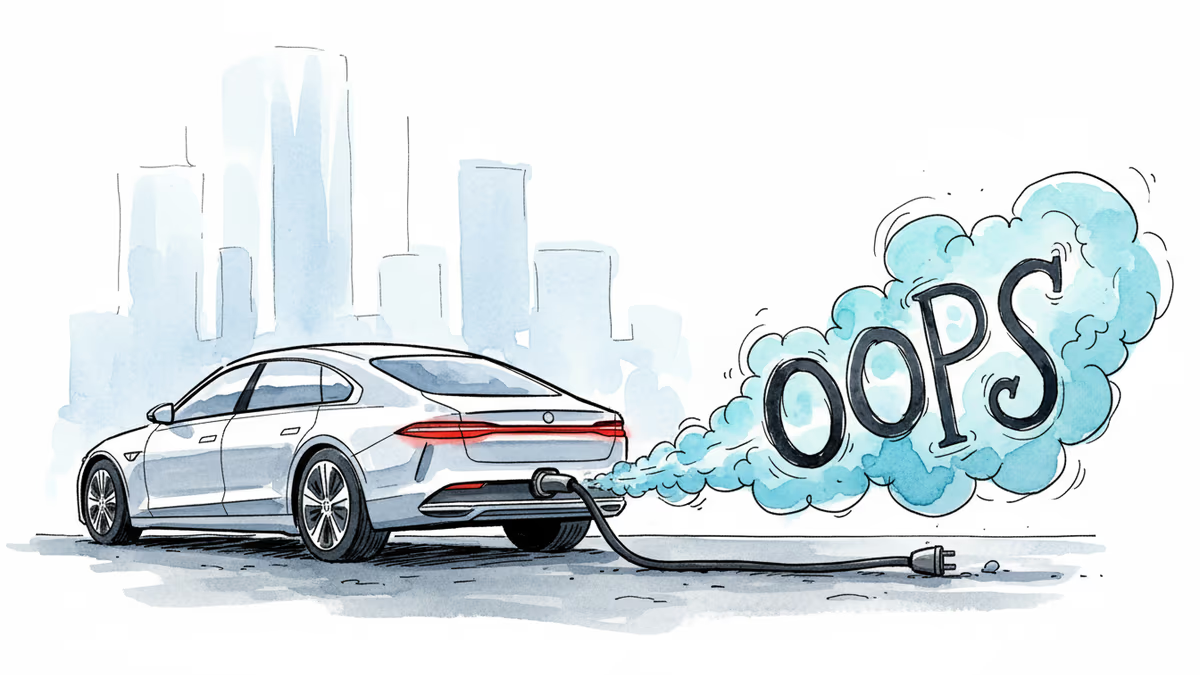
German study reveals shocking truth about plug-in hybrids - most owners rarely charge them. Porsche drivers averaged just 0.8% electric usage over two years.
Used EV market explodes with sub-$10k options as battery degradation fears prove overblown. Mass adoption accelerates with improved reliability data
Despite EV success, electric sports cars struggle with consumer rejection, technical hurdles, and emotional disconnect from traditional performance enthusiasts
Exploring the used EV market at $15,000 budget point. BMW i3 and Chevrolet Bolt options compared with lower mileage, newer features, and better value propositions.
German study reveals shocking truth about plug-in hybrids - most owners rarely charge them. Porsche drivers averaged just 0.8% electric usage over two years.
Used EV market explodes with sub-$10k options as battery degradation fears prove overblown. Mass adoption accelerates with improved reliability data
Thoughts
Share your thoughts on this article
Sign in to join the conversation