
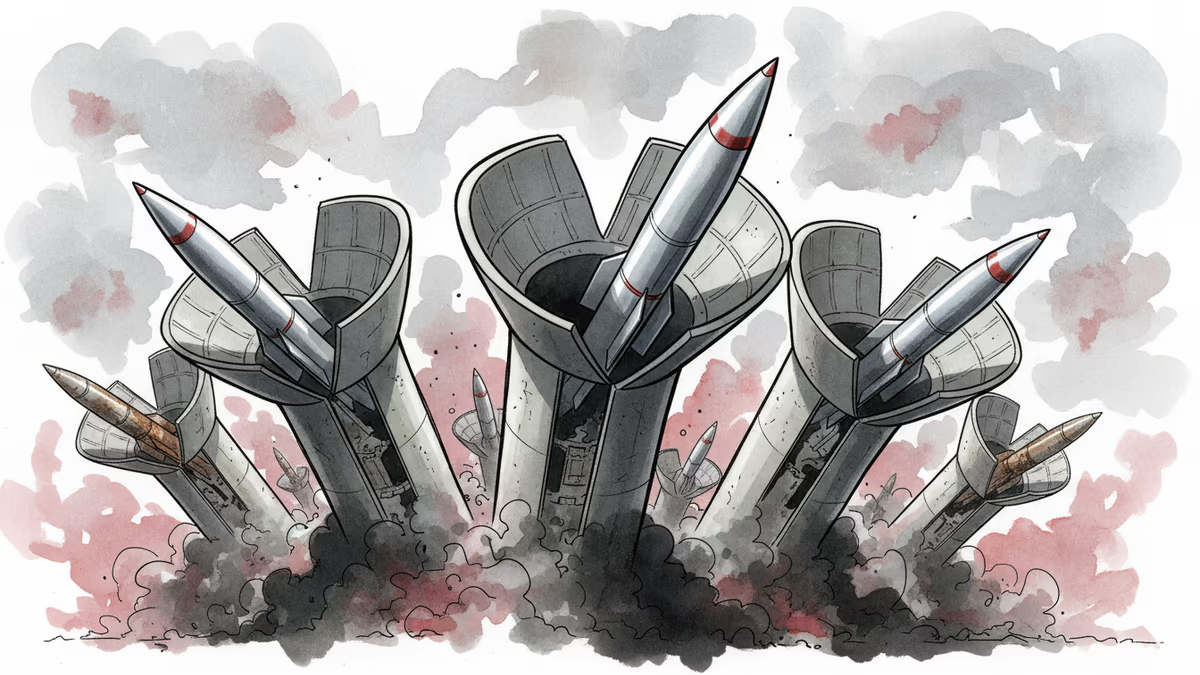
America's Nuclear Upgrade: What 54-Year-Old Missiles Tell Us About Tomorrow's Wars
The US Air Force prepares to replace Minuteman III ICBMs with Sentinel missiles after 54 years of service. What this $100 billion modernization reveals about shifting global power dynamics and nuclear strategy.
The $100 Billion Question: Why America Is Rebuilding Its Nuclear Arsenal
After 54 years of faithful service, America's Minuteman III intercontinental ballistic missiles are getting ready for retirement. The Air Force confirmed last week that the new Sentinel ICBM will conduct its first test flight next year, with 450 missiles and hardened silos scheduled for deployment in the early 2030s.
This isn't just a routine weapons upgrade. It's America's answer to a rapidly changing nuclear landscape where China has tripled its warhead count in five years and Russia deploys hypersonic weapons that can outmaneuver traditional defenses.
The Minuteman's Long Farewell
Designed during the Nixon administration, the Minuteman III has outlived its intended lifespan by two decades. Maintenance costs have skyrocketed as engineers struggle to find replacement parts for systems built with 1970s technology. Some components are so old that the original manufacturers no longer exist.
The Sentinel promises more than just reliability. It offers enhanced accuracy, longer range, and the ability to carry multiple warheads. More importantly, it's designed to operate until 2075, giving the US military a half-century of nuclear deterrence without major overhauls.
Northrop Grumman, the prime contractor, faces the challenge of building a weapon system that must work flawlessly while hopefully never being used. The project involves not just new missiles but completely rebuilding 450 underground silos scattered across Montana, North Dakota, and Wyoming.

Reading the Nuclear Tea Leaves
The timing reveals everything. China's nuclear arsenal is projected to reach 1,000 warheads by 2030, up from roughly 300 today. Russia continues deploying its Sarmat "Satan II" missiles, each capable of carrying 15 warheads. Meanwhile, North Korea's ICBM program advances with each test.
For defense contractors, the Sentinel program represents a generational opportunity. Beyond Northrop Grumman, hundreds of suppliers will contribute everything from guidance systems to blast-resistant electronics. The ripple effects will sustain entire industrial communities for decades.
Yet critics question whether ICBMs remain relevant in an age of cyber warfare and space-based weapons. Some argue the $100 billion could be better spent on missile defense or conventional forces. Others worry that nuclear modernization could trigger an arms race reminiscent of the Cold War.
The Allies' Dilemma
America's nuclear umbrella protects 30 countries worldwide. For allies like South Korea and Japan, facing increasingly sophisticated threats from North Korea and China, the Sentinel represents renewed commitment to extended deterrence. But it also raises uncomfortable questions about dependency and self-reliance.
European allies, already increasing defense spending due to the Ukraine war, must consider how America's nuclear modernization affects their own security calculations. Will enhanced US capabilities reduce pressure for independent deterrents, or will great power competition eventually force difficult choices?
Authors
Related Articles
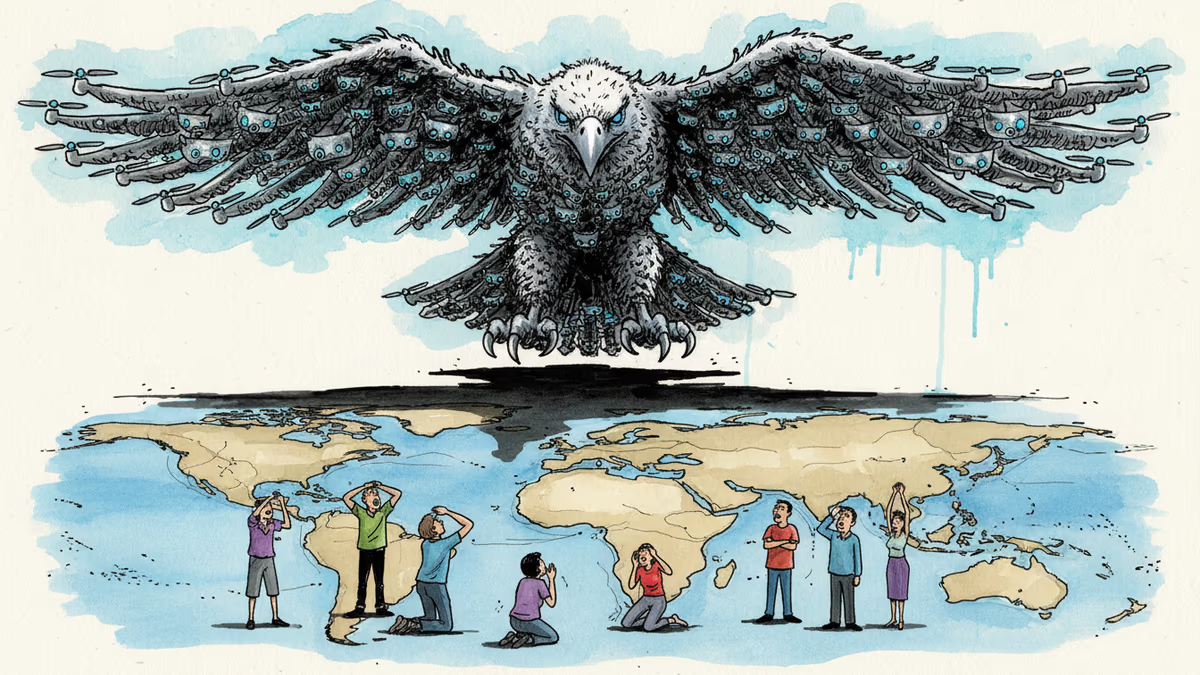
The US defense budget request for FY2027 includes $53.6 billion for drone and autonomous warfare—more than most nations spend on their entire military. What does this mean for global security and the future of war?

AI's power hunger is forcing a reckoning. Natural gas, SMRs, fusion, and batteries are all racing to power the grid — but only one can win on cost. Here's where the race stands.
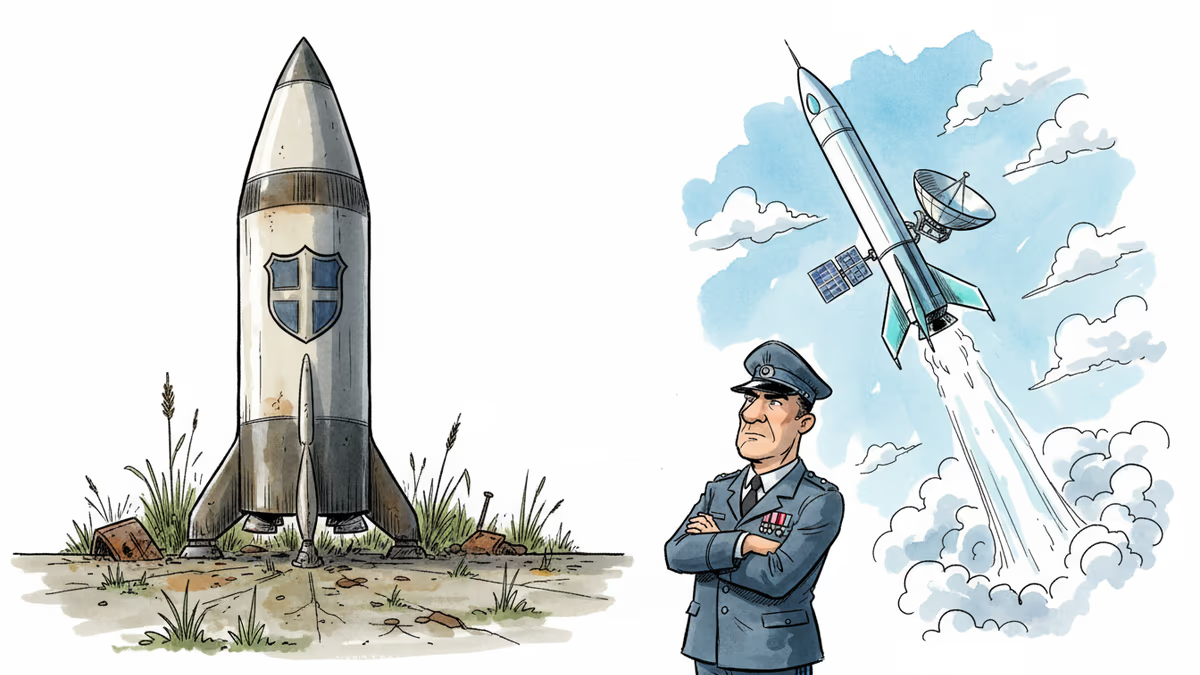
The US Space Force has transferred yet another GPS satellite launch from ULA to SpaceX — the fourth such move in just over a year. What this pattern reveals about the future of military space launches.
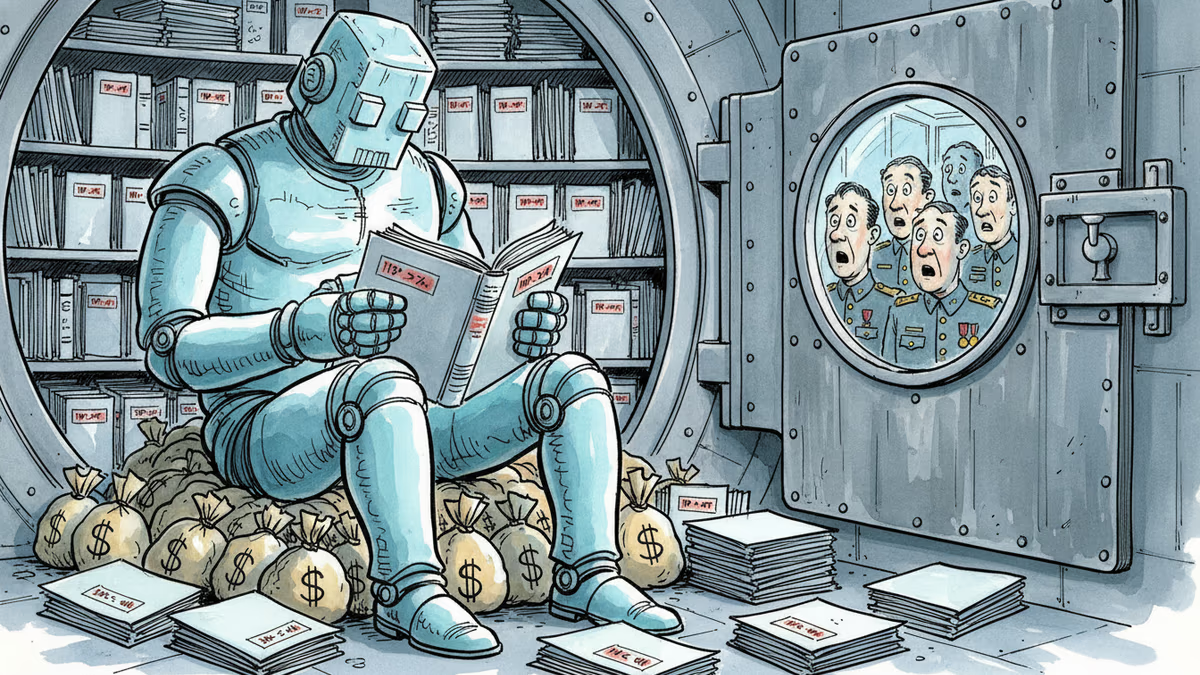
The Pentagon is exploring training AI models like OpenAI and xAI on classified military data. As tensions with Iran escalate, the plan raises urgent questions about security, accountability, and the future of AI in warfare.
The US defense budget request for FY2027 includes $53.6 billion for drone and autonomous warfare—more than most nations spend on their entire military. What does this mean for global security and the future of war?
AI's power hunger is forcing a reckoning. Natural gas, SMRs, fusion, and batteries are all racing to power the grid — but only one can win on cost. Here's where the race stands.
The US Space Force has transferred yet another GPS satellite launch from ULA to SpaceX — the fourth such move in just over a year. What this pattern reveals about the future of military space launches.
The Pentagon is exploring training AI models like OpenAI and xAI on classified military data. As tensions with Iran escalate, the plan raises urgent questions about security, accountability, and the future of AI in warfare.
Thoughts
Share your thoughts on this article
Sign in to join the conversation