
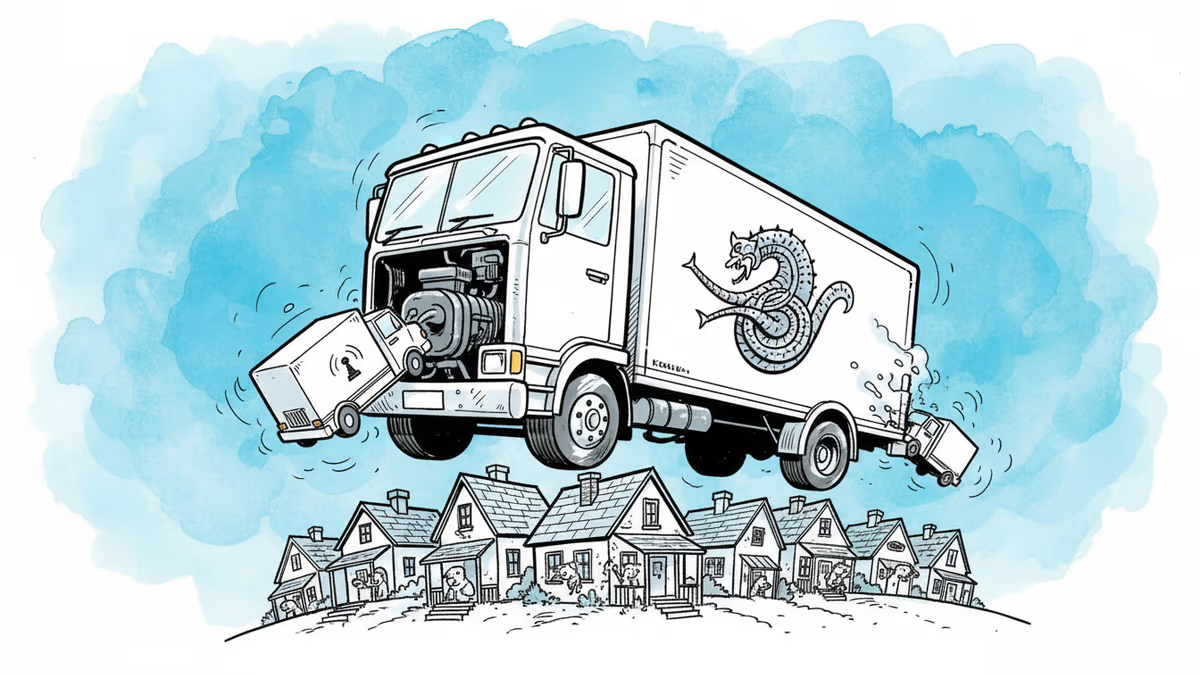
America's Internet Giant Just Got Bigger
Charter's $34.5B Cox acquisition creates largest US ISP with 35.6M customers, surpassing Comcast. FCC approves despite monopoly concerns over pricing power
The $34.5 Billion Reshuffling of American Internet
For three decades, Comcast sat atop America's internet hierarchy. Not anymore. Charter Communications just secured Federal Communications Commission approval to acquire Cox Communications, a deal that will crown Charter as the nation's largest home internet provider with 35.6 million customers.
The math is stark: Charter currently serves 29.7 million internet customers, while Comcast has 31.26 million. Add Cox's 5.9 million subscribers, and Charter leapfrogs into first place by a margin of over 4 million customers. It's the biggest shake-up in the cable internet landscape since the industry's consolidation began in the 1990s.
The Monopoly Paradox
Critics painted a dystopian picture: eliminate Cox as an independent player, and Charter plus Comcast could coordinate price hikes across America's living rooms. Their concern isn't theoretical—cable internet prices have climbed an average of 5% annually over the past decade, far outpacing inflation.
But the FCC dismissed these fears with a geographic argument that reveals the peculiar nature of America's internet market. Charter and Cox don't compete head-to-head in most territories, the commission noted. They operate like feudal lords of the digital age—each controlling their own fiefdoms with minimal overlap.
This "geographic monopoly" defense highlights a uncomfortable truth: most Americans already lack meaningful choice in high-speed internet providers. Whether it's Charter or Cox controlling your neighborhood, you're typically stuck with one option anyway.

The Approval Gauntlet Ahead
FCC approval is just the opening act. Charter still faces the Justice Department's antitrust review and sign-offs from key states including California and New York—markets where Cox serves 1.8 million and 1.2 million customers respectively.
The timing is tricky. The Biden administration has taken an aggressive stance on tech consolidation, blocking deals from Nvidia's ARM acquisition to Microsoft's Activision purchase (though the latter eventually went through). Charter's deal enters this heightened scrutiny environment.
Industry insiders expect the approval process to drag on for 6 to 12 months, giving competitors time to strategize and consumer advocates time to mobilize opposition.
The Streaming Era's Irony
Here's the paradox: as Americans "cut the cord" from traditional cable TV, they're becoming more dependent on cable companies for internet access. Every Netflix binge, every Zoom call, every TikTok scroll flows through infrastructure controlled by companies like Charter.
Verizon's 5G home internet and SpaceX's Starlink represent potential alternatives, but they're still nascent. Fiber providers like Google Fiber remain geographically limited. For most Americans, the cable company remains the only game in town for high-speed internet.
Authors
Related Articles

Deutsche Telekom partners with ElevenLabs to launch app-free AI translation during phone calls. But the convenience comes with privacy trade-offs that could reshape how we communicate.
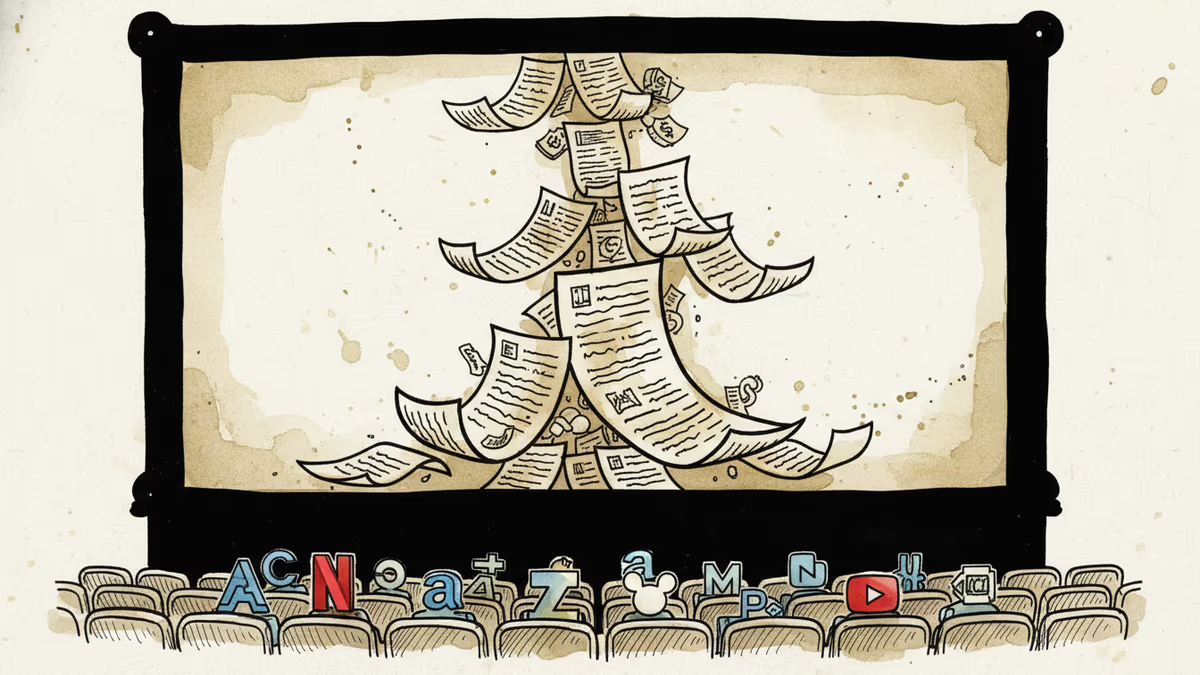
Paramount-Warner merger creates streaming giant with 200M+ subscribers after Netflix abandoned WBD deal. What this mega-consolidation means for content and competition.
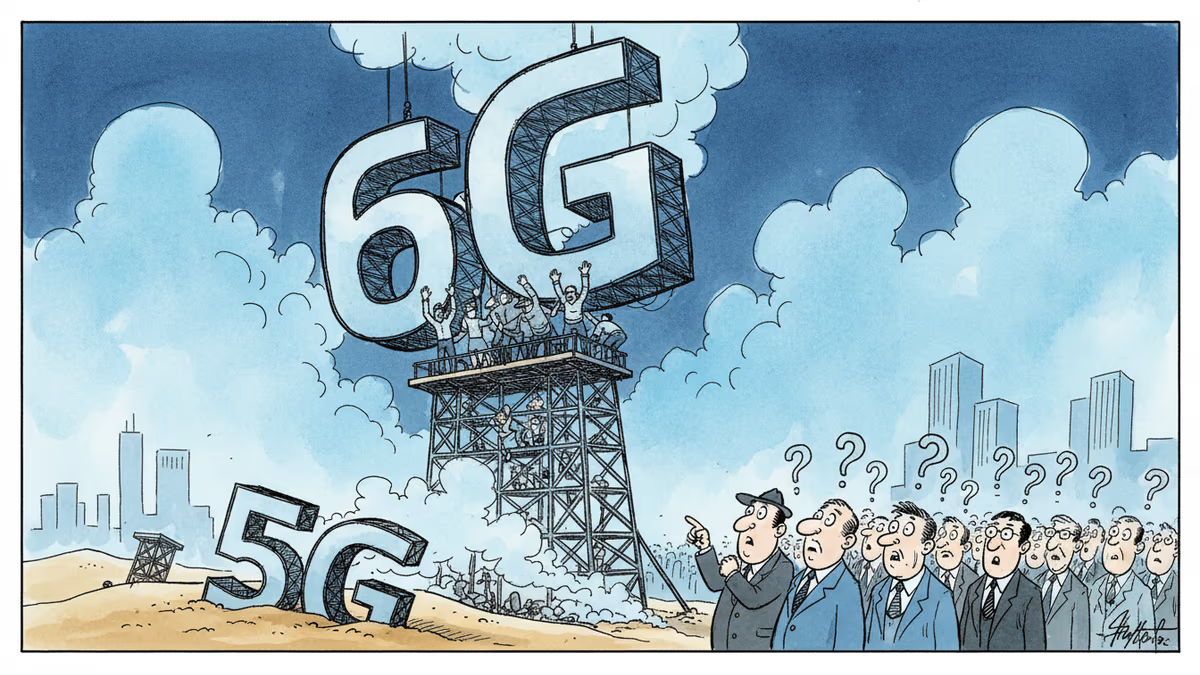
Mobile World Congress 2026 kicks off with 6G discussions, but 5G's promised revolution remains largely unfulfilled. What does the next generation really mean?
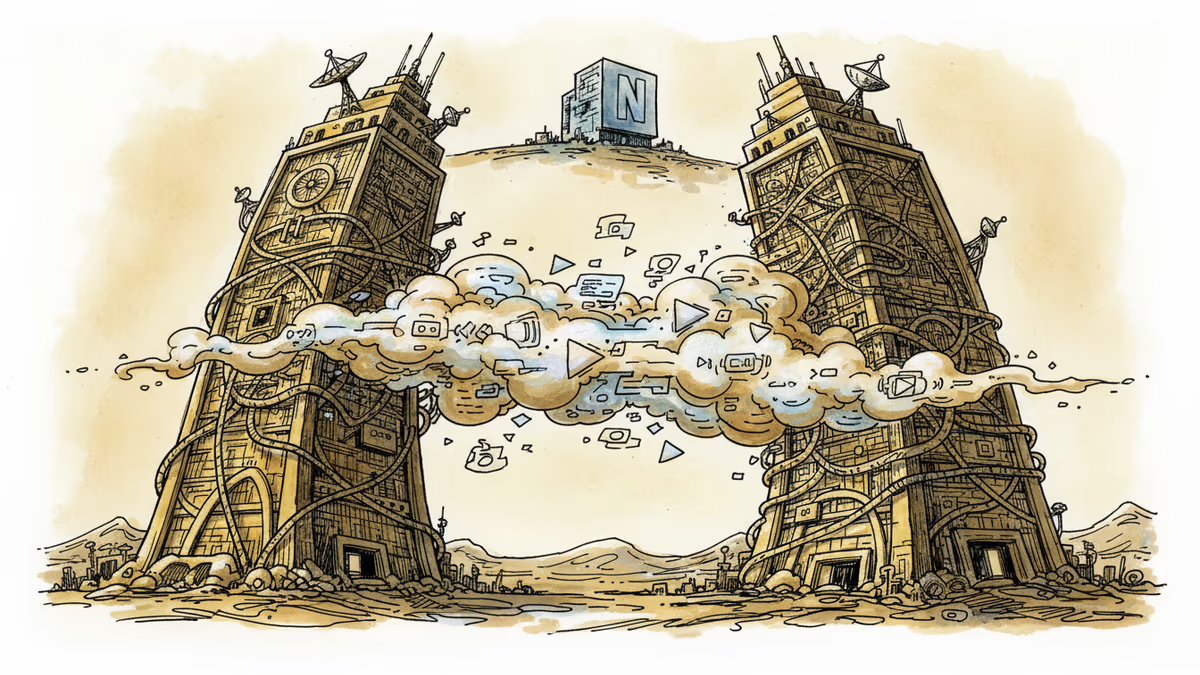
Warner Bros. Discovery and Paramount announce $83B merger after Netflix withdraws from bidding war. Analysis of streaming consolidation and industry implications.
Deutsche Telekom partners with ElevenLabs to launch app-free AI translation during phone calls. But the convenience comes with privacy trade-offs that could reshape how we communicate.
Paramount-Warner merger creates streaming giant with 200M+ subscribers after Netflix abandoned WBD deal. What this mega-consolidation means for content and competition.
Mobile World Congress 2026 kicks off with 6G discussions, but 5G's promised revolution remains largely unfulfilled. What does the next generation really mean?
Warner Bros. Discovery and Paramount announce $83B merger after Netflix withdraws from bidding war. Analysis of streaming consolidation and industry implications.
Thoughts
Share your thoughts on this article
Sign in to join the conversation