
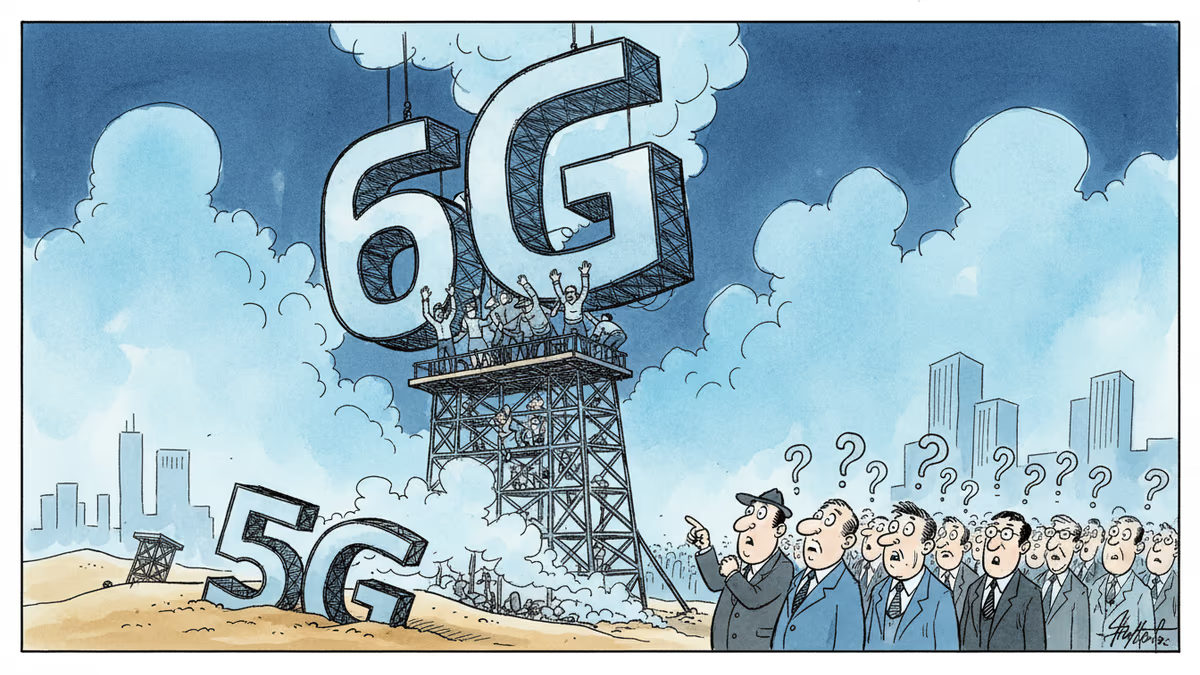
6G is Coming, But Did 5G Ever Really Arrive?
Mobile World Congress 2026 kicks off with 6G discussions, but 5G's promised revolution remains largely unfulfilled. What does the next generation really mean?
The Robot Surgeons Never Showed Up
Mobile World Congress 2026 opened in Barcelona today with 6G taking center stage. But here's an uncomfortable question: Where are the robot surgeons and autonomous vehicle fleets that 5G promised seven years ago?
Walk down any street in 2026, and you'll still see humans behind steering wheels. Check your local hospital, and surgeons are still using their own hands. The revolutionary 5G applications that were supposed to transform our daily lives remain largely in demonstration videos and pilot programs.
Yet here we are, already talking about the next G.
The Eternal Upgrade Cycle
5G has evolved through multiple "releases" since its 2019 debut, each bringing incremental improvements. It's a familiar pattern that every G generation has followed – promise transformation, deliver iteration.
Ericsson, Nokia, and other telecom giants are already pouring billions into 6G research, targeting 2030 for commercial deployment. The race for standard-setting dominance has begun, with companies positioning themselves as the architects of our connected future.

Industry vs. Reality Gap
The disconnect isn't just about unfulfilled promises. Consumer behavior tells a different story. Most people use 5G primarily for faster Netflix streaming and quicker Instagram uploads – hardly the industrial revolution that was advertised.
Meanwhile, the applications that were supposed to justify 5G's existence – Internet of Things at scale, edge computing, augmented reality – are still emerging. The infrastructure is there, but the ecosystem isn't quite ready.
What 6G Actually Promises
This time, industry leaders claim it's different. 6G isn't just about speed – it's about holographic communication, brain-computer interfaces, and digital twins of entire cities. The vision is compelling: truly immersive virtual experiences, instantaneous global collaboration, and AI-powered everything.
But skeptics remember similar promises from the 5G era. The technology might be feasible, but will it translate into meaningful change for ordinary users?
The Standards War Begins
Behind the technical discussions at MWC lies a geopolitical reality. The country or companies that shape 6G standards will have significant influence over the next decade of global communications infrastructure.
China dominated 5G deployment, while the US focused on security concerns. For 6G, the competition is starting earlier, with more players and higher stakes.
Authors
Related Articles

Deutsche Telekom partners with ElevenLabs to launch app-free AI translation during phone calls. But the convenience comes with privacy trade-offs that could reshape how we communicate.

Charter's $34.5B Cox acquisition creates largest US ISP with 35.6M customers, surpassing Comcast. FCC approves despite monopoly concerns over pricing power

MWC 2026 showcases Honor's Robot Phone and other shape-shifting devices that challenge everything we know about mobile design. Are we ready for phones that transform themselves?

Lenovo's MWC 2026 concepts include a laptop with a detachable second screen, a folding gaming handheld, and a 3D workstation with magnetic tools. Are these the computers we actually want?
Deutsche Telekom partners with ElevenLabs to launch app-free AI translation during phone calls. But the convenience comes with privacy trade-offs that could reshape how we communicate.
Charter's $34.5B Cox acquisition creates largest US ISP with 35.6M customers, surpassing Comcast. FCC approves despite monopoly concerns over pricing power
MWC 2026 showcases Honor's Robot Phone and other shape-shifting devices that challenge everything we know about mobile design. Are we ready for phones that transform themselves?
Lenovo's MWC 2026 concepts include a laptop with a detachable second screen, a folding gaming handheld, and a 3D workstation with magnetic tools. Are these the computers we actually want?
Thoughts
Share your thoughts on this article
Sign in to join the conversation