
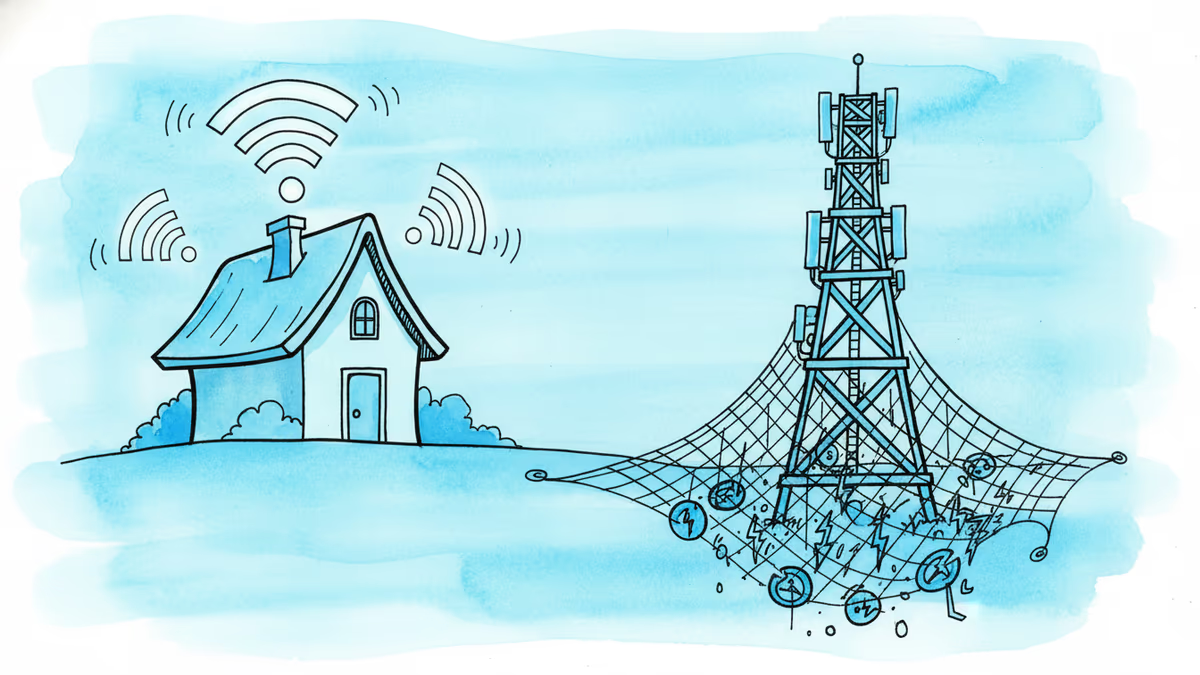
Amazon's $99 Internet Insurance: Genius or Overkill?
Amazon's eero Signal offers backup internet for $99. As connectivity becomes critical infrastructure, are we ready to pay for 'internet insurance'?
When Your Internet Dies, Your Life Stops
Last Tuesday at 2:47 PM, Sarah Chen's Zoom presentation froze mid-sentence. Her home internet had crashed during the most important client pitch of her quarter. By the time she'd hotspotted through her phone, the moment—and potentially the deal—was lost.
This scenario plays out thousands of times daily across America. Amazon thinks it has the solution: a $99.99 device called eero Signal 4G LTE that automatically switches to cellular when your home internet fails.
Subscription Model Meets Connectivity Anxiety
The eero Signal plugs into any compatible eero router via USB-C. When your broadband goes down, it seamlessly switches to 4G LTE, then returns to standby when service resumes. Simple concept, but the pricing model reveals Amazon's bigger play.
Two subscription tiers: $99.99 annually for 10GB of backup data, or $199.99 for 100GB. Amazon claims this costs less than comparable 4G plans, though that's debatable when you factor in the device cost. A $199.99 5G version launches later this year.
The real story? Amazon is turning connectivity into insurance. Pay annually, stay connected always.
The Remote Work Reality Check

For remote workers, internet outages aren't inconveniences—they're career threats. A Upwork study found 73% of remote workers have missed important meetings due to connectivity issues. Home security systems, smart doorbells, and medical monitoring devices all depend on constant connection.
But here's the tension: most US households experience internet outages less than 4 hours annually, according to FCC data. Are we solving a real problem or feeding connectivity paranoia?
The target market seems clear: work-from-home professionals, small businesses, and anyone in areas prone to outages. Rural users especially, where broadband reliability remains spotty.
The Bigger Infrastructure Question
Amazon's move signals something larger. As everything becomes connected—from refrigerators to medical devices—internet access approaches utility status. Yet unlike water or electricity, we don't typically pay for backup internet.
Comcast, Verizon, and other ISPs already offer business continuity solutions, but they're expensive and complex. Amazon's betting on simplicity: plug in, pay annually, forget about it.
The competitive response will be telling. Will other router manufacturers follow? Will ISPs bundle backup connectivity into standard plans? The market's about to find out if consumers value "internet insurance."
The Privacy Trade-Off Nobody's Discussing
Here's what Amazon isn't emphasizing: eero Signal gives the company another data stream about your connectivity patterns. When your internet fails, how you use backup data, which devices get priority—all valuable behavioral insights.
For a company already knowing what you buy (Amazon), what you watch (Prime Video), and what you ask (Alexa), connectivity data completes another piece of the puzzle.
Authors
Related Articles
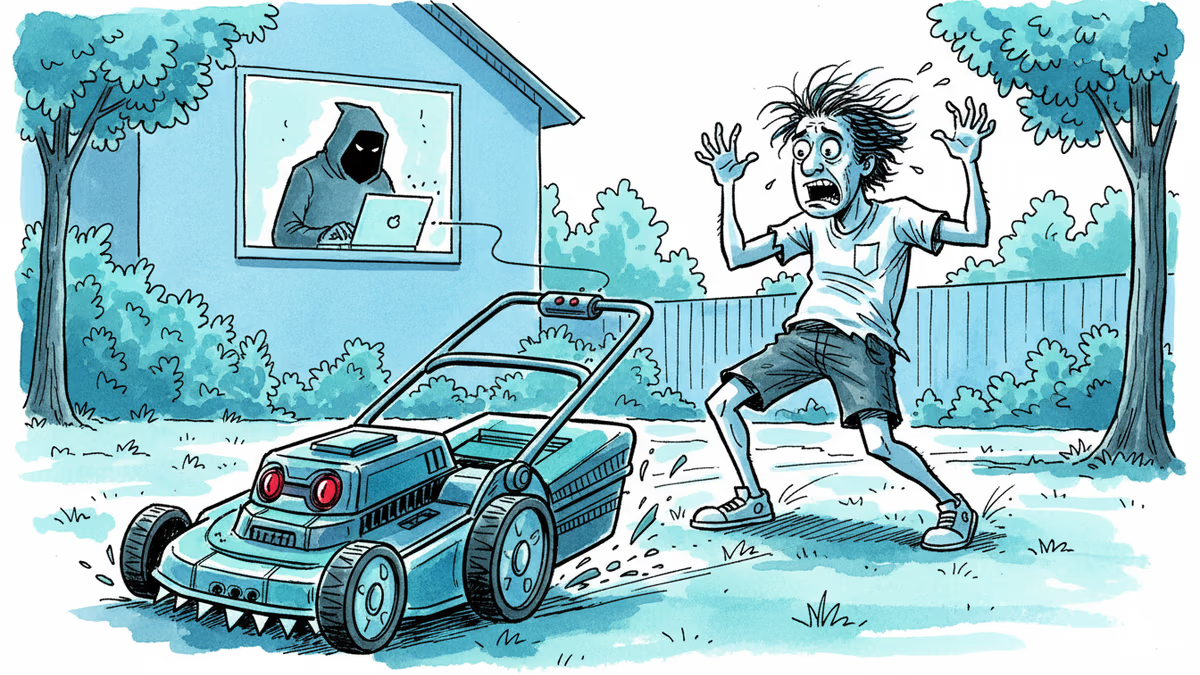
Yarbo's robot lawn mowers had critical security flaws exposing GPS, Wi-Fi passwords, and emails. The company confirmed the findings and cut remote access. But the real issue runs deeper than one brand.
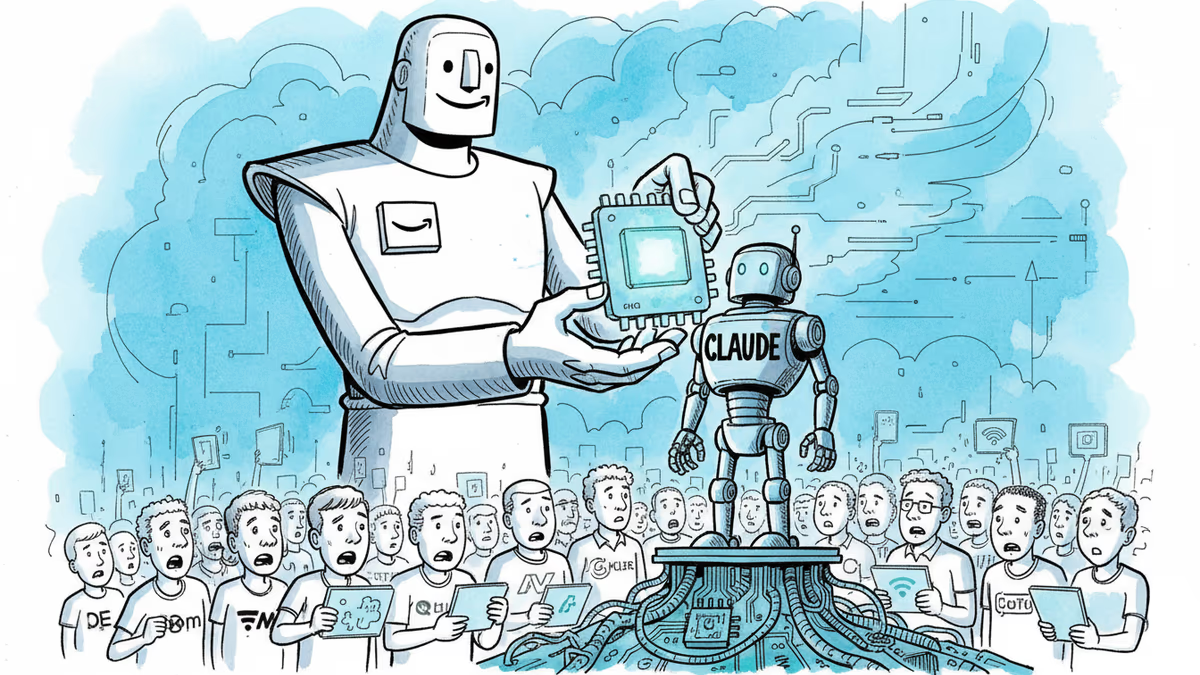
Amazon has poured an additional $5 billion into Anthropic, bringing its total stake to $13 billion—with up to $20 billion more on the table. Here's what the deal really signals about the AI infrastructure race.
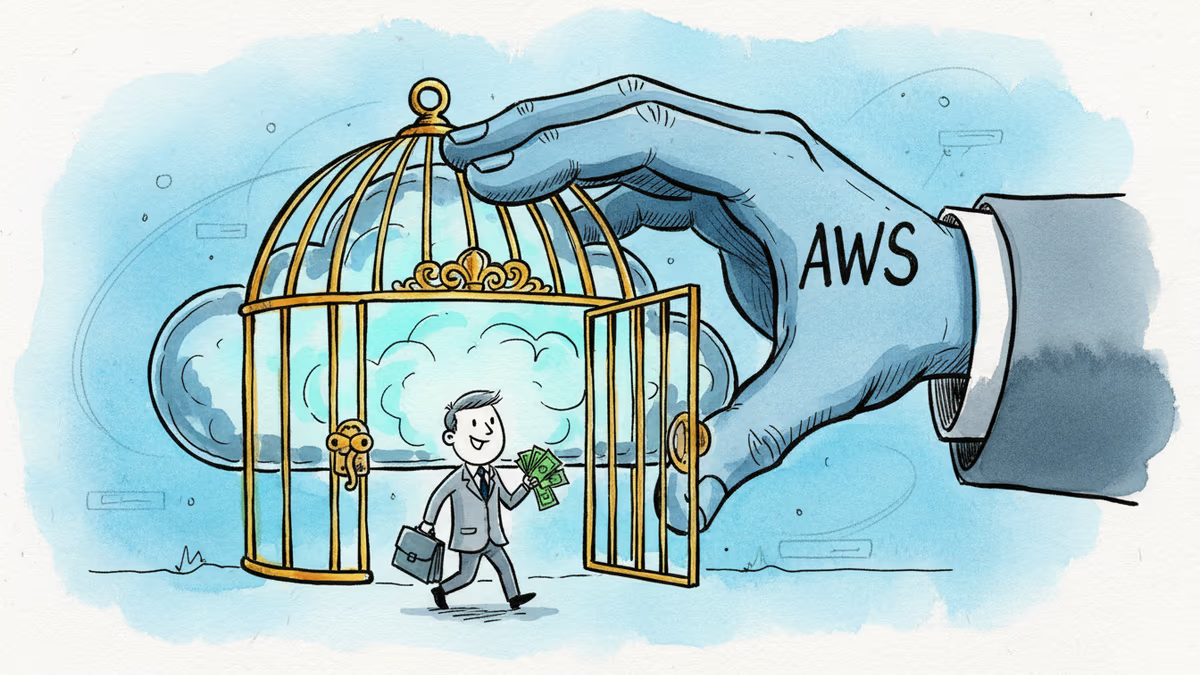
Amazon's fresh $5B investment in Anthropic brings its total to $13B. But the real story is a $100B AWS spending pledge and a bet on Amazon's own AI chips over Nvidia.
Amazon is in talks to acquire Globalstar, the satellite telecom firm that powers Apple's emergency SOS feature. A 20% Apple stake is complicating everything — and the stakes go beyond one deal.
Yarbo's robot lawn mowers had critical security flaws exposing GPS, Wi-Fi passwords, and emails. The company confirmed the findings and cut remote access. But the real issue runs deeper than one brand.
Amazon has poured an additional $5 billion into Anthropic, bringing its total stake to $13 billion—with up to $20 billion more on the table. Here's what the deal really signals about the AI infrastructure race.
Amazon's fresh $5B investment in Anthropic brings its total to $13B. But the real story is a $100B AWS spending pledge and a bet on Amazon's own AI chips over Nvidia.
Amazon is in talks to acquire Globalstar, the satellite telecom firm that powers Apple's emergency SOS feature. A 20% Apple stake is complicating everything — and the stakes go beyond one deal.
Thoughts
Share your thoughts on this article
Sign in to join the conversation