
Amazon Fire TV OS Redesign: A Fresh Look Inspired by Google TV
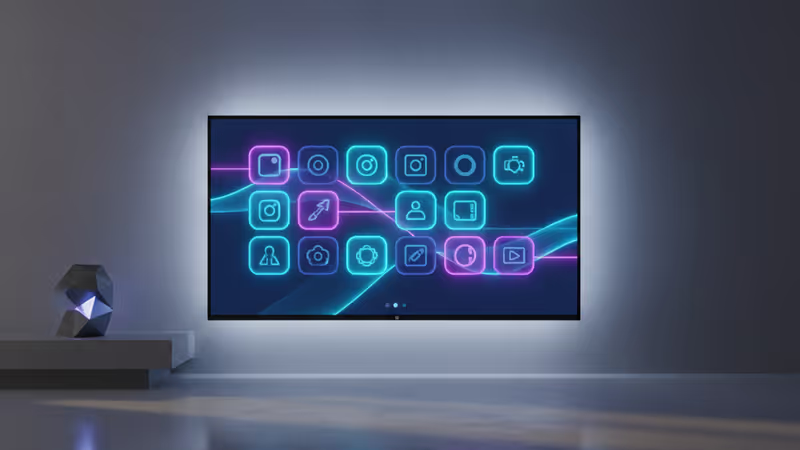
Amazon is rolling out a major Amazon Fire TV OS redesign inspired by Google TV, featuring a cleaner UI and improved responsiveness for a smoother experience.
Amazon's weakest link is finally getting a much-needed facelift. For years, the Amazon Fire TV OS has felt cluttered and unresponsive, often detracting from high-end hardware like the Panasonic Z95B. However, according to The Verge, a recent demo of the new interface suggests that Amazon is ready to catch up with its more polished rivals.
The 2026 Amazon Fire TV OS Redesign Strategy
The new layout is noticeably better organized and draws heavy inspiration from Google TV. It's visually pleasing, featuring rounded-corner tiles instead of the harsh rectangular shapes of previous iterations. This shift signifies a move toward a more modern design language that prioritizes ease of use over dense information delivery.

Fixing the Performance Gap
Performance has been the primary pain point for Fire TV users. The new OS redesign reportedly addresses this with improved responsiveness that makes navigating through apps and settings feel lightning-fast. By aligning its UI with industry standards, Amazon aims to ensure that its hardware ecosystem remains a top choice for home entertainment.
Authors
Related Articles
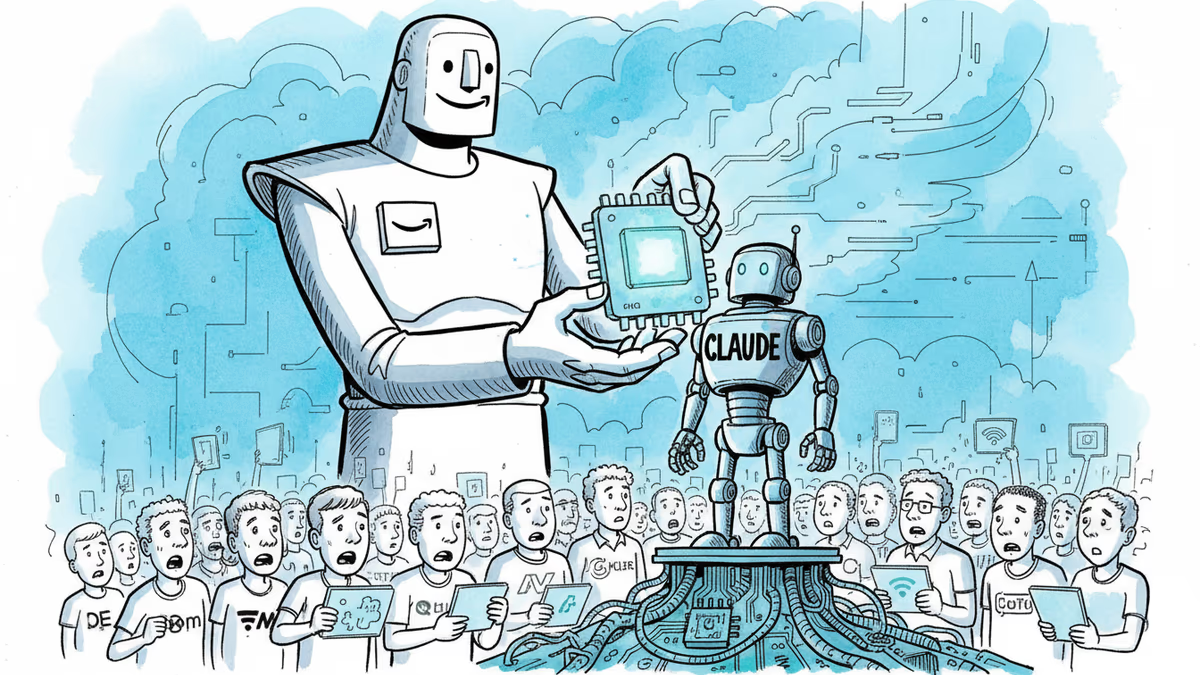
Amazon has poured an additional $5 billion into Anthropic, bringing its total stake to $13 billion—with up to $20 billion more on the table. Here's what the deal really signals about the AI infrastructure race.
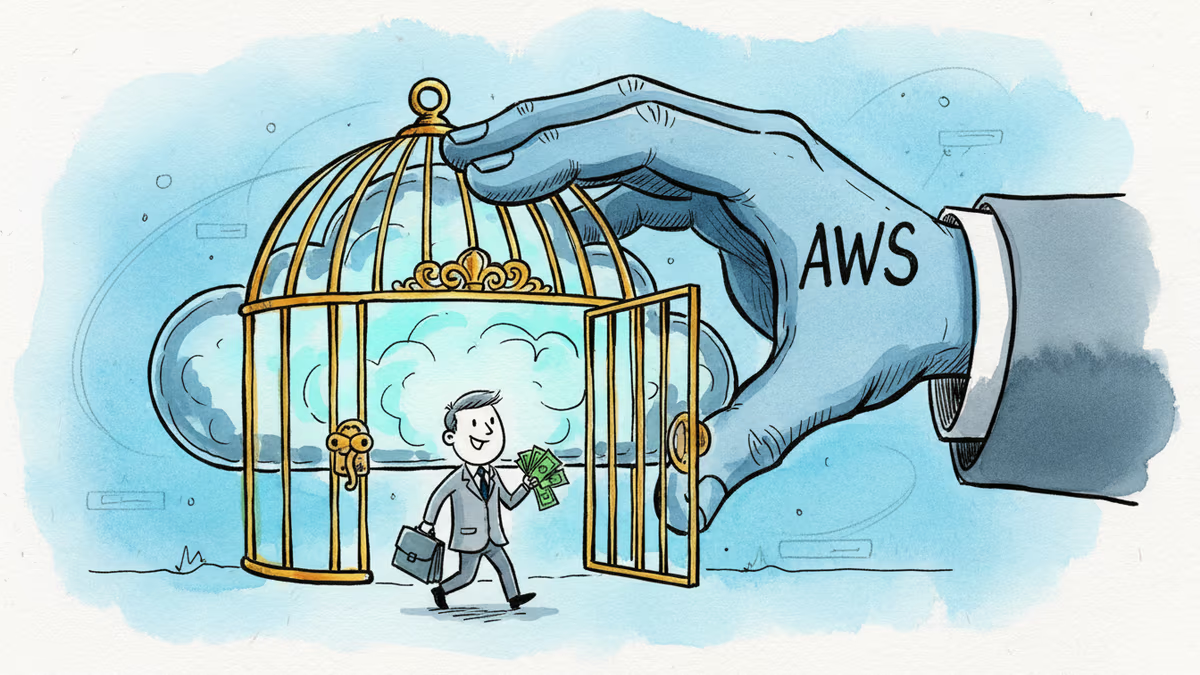
Amazon's fresh $5B investment in Anthropic brings its total to $13B. But the real story is a $100B AWS spending pledge and a bet on Amazon's own AI chips over Nvidia.
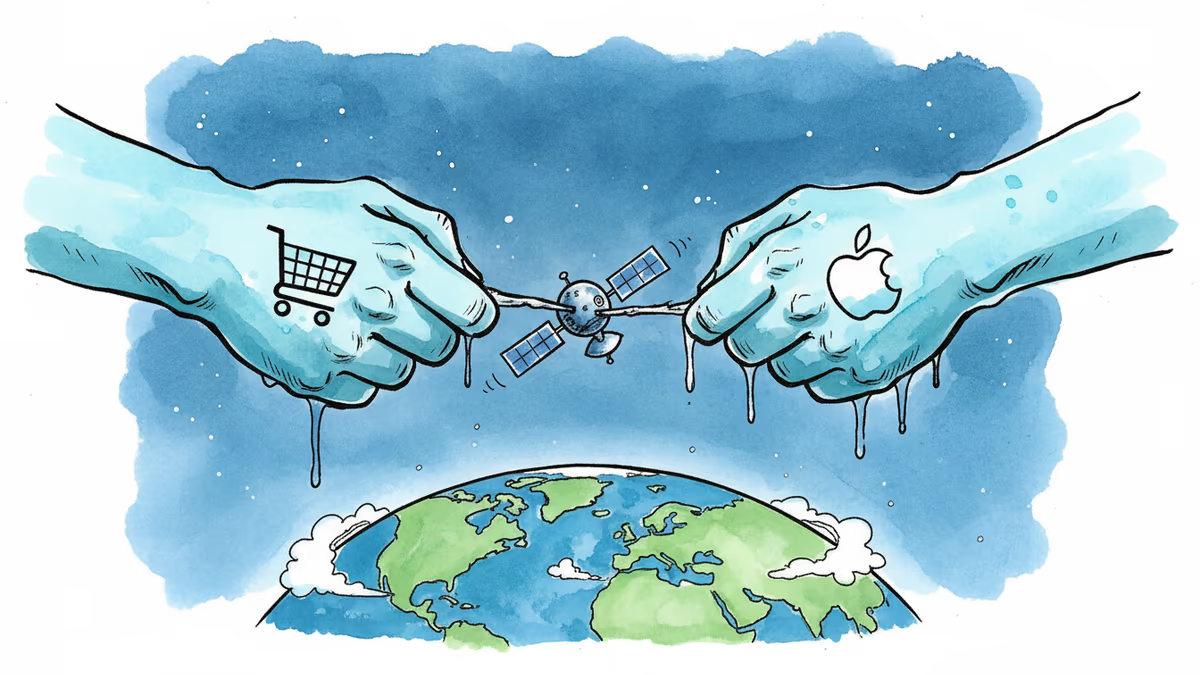
Amazon is in talks to acquire Globalstar, the satellite telecom firm that powers Apple's emergency SOS feature. A 20% Apple stake is complicating everything — and the stakes go beyond one deal.
Amazon's Big Spring Sale runs through March 31st with record-low prices on robot vacuums, headphones, and smart home gear — but the real story is why it's happening now.
Amazon has poured an additional $5 billion into Anthropic, bringing its total stake to $13 billion—with up to $20 billion more on the table. Here's what the deal really signals about the AI infrastructure race.
Amazon's fresh $5B investment in Anthropic brings its total to $13B. But the real story is a $100B AWS spending pledge and a bet on Amazon's own AI chips over Nvidia.
Amazon is in talks to acquire Globalstar, the satellite telecom firm that powers Apple's emergency SOS feature. A 20% Apple stake is complicating everything — and the stakes go beyond one deal.
Amazon's Big Spring Sale runs through March 31st with record-low prices on robot vacuums, headphones, and smart home gear — but the real story is why it's happening now.
Thoughts
Share your thoughts on this article
Sign in to join the conversation