

AI's Shadow Cost: How the Data Center Boom is Cannibalizing America's Infrastructure
The AI data center boom is creating a resource war against public infrastructure. Discover the hidden economic costs and strategic risks.
The Great Resource War of the 21st Century
The race for AI supremacy isn't just being fought with silicon chips and algorithms. It's being fought with concrete, steel, and a finite pool of skilled labor. A new analysis reveals a startling economic collision: the insatiable demand for AI data centers is now directly competing with, and potentially crippling, America's long-overdue infrastructure overhaul. For investors and policymakers, this isn't just a construction trend; it's a flashing red light on the dashboard of the national economy.
Why It Matters: The Physical Bottleneck of a Digital Revolution
Most reporting focuses on the digital side of AI—the processing power, the energy consumption. The real story, however, is the physical world constraint. The second-order effects are what a savvy leader needs to watch:
- Inflationary Pressure: When two massive sectors—private tech and public works—compete for the same welders, electricians, and project managers, wages and material costs skyrocket. This will inflate the cost of everything from building a new factory to repairing a local bridge.
- Project Gridlock: As Autodesk's CEO Andrew Anagnost stated, infrastructure projects "are not going to move as fast as people want." This means delayed improvements to ports, roads, and grids, creating logistical bottlenecks that impact the entire supply chain, including the very tech companies driving the data center boom.
- A Question of National Priority: This conflict forces a fundamental, yet unspoken, national debate. What is more critical in the near term: the digital backbone for tomorrow's AI or the physical backbone that supports today's entire economy?

The Analysis: A Tale of Two Booms
The $41 Billion Collision Course
The numbers paint a stark picture. Private spending on data center construction is roaring along at an annualized rate of over $41 billion. According to Census Bureau data, this is nearly equivalent to the entire spend by state and local governments on transportation projects. These are not two parallel tracks; they are two freight trains on a single track, headed for a collision. This competition is amplified by a structural labor shortage, exacerbated by high retirement rates in the trades and restrictive immigration policies, creating a perfect storm for project delays and cost overruns across the board.
Digital Ambition Meets Physical Reality
Historically, national-level projects like the interstate highway system or wartime production were able to command the nation's resources due to federal prioritization. Today, we have a different dynamic: a federally-encouraged infrastructure renewal (via legislation like the Bipartisan Infrastructure Law) is being outpaced and outbid by a privately funded, hyper-growth tech boom. Unlike past infrastructure pushes, the government is now a direct competitor for resources against some of the most well-capitalized companies in history. This creates a market imbalance that public-sector bidding processes are ill-equipped to handle.
PRISM's Take
The current trajectory is unsustainable. We are prioritizing the construction of AI's virtual worlds over the maintenance of our physical one, without acknowledging the profound trade-offs. This isn't just bad policy; it's a systemic risk. The very power grids, water systems, and transportation networks that these massive data centers depend on are the same projects being starved of resources. The AI revolution cannot happen in a vacuum. Unless enterprise leaders and government officials address this physical resource crisis head-on, the AI boom could ironically be throttled by the crumbling infrastructure it's helping to neglect.
Authors
Related Articles
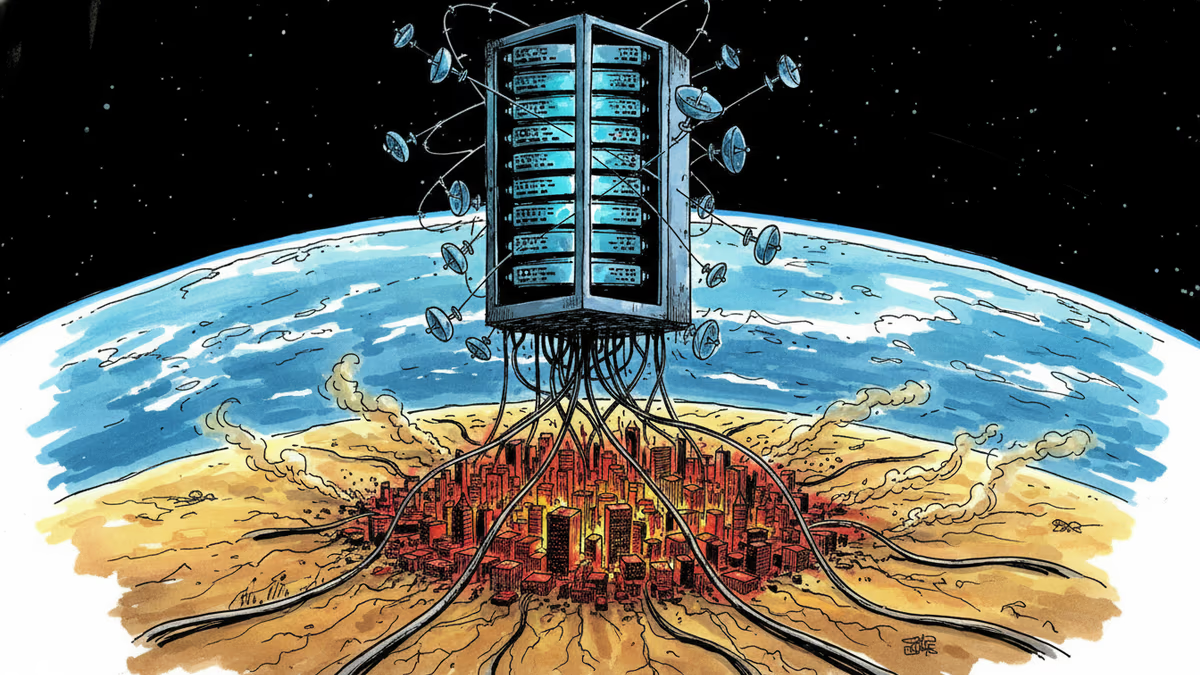
SpaceX wants to launch a million orbital data centers to power AI without draining Earth. The vision is compelling. The physics, economics, and debris math are not.
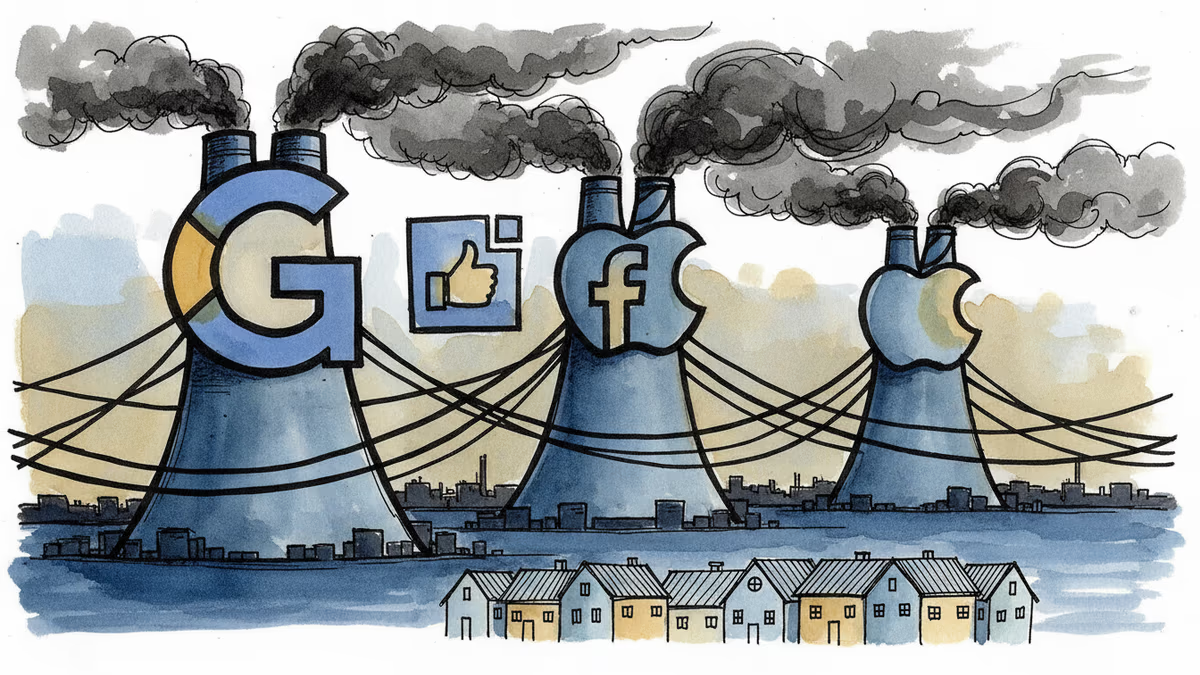
Amazon, Google, Meta and others pledge to pay for their data centers' power infrastructure, but the agreement lacks enforcement and ignores basic economics
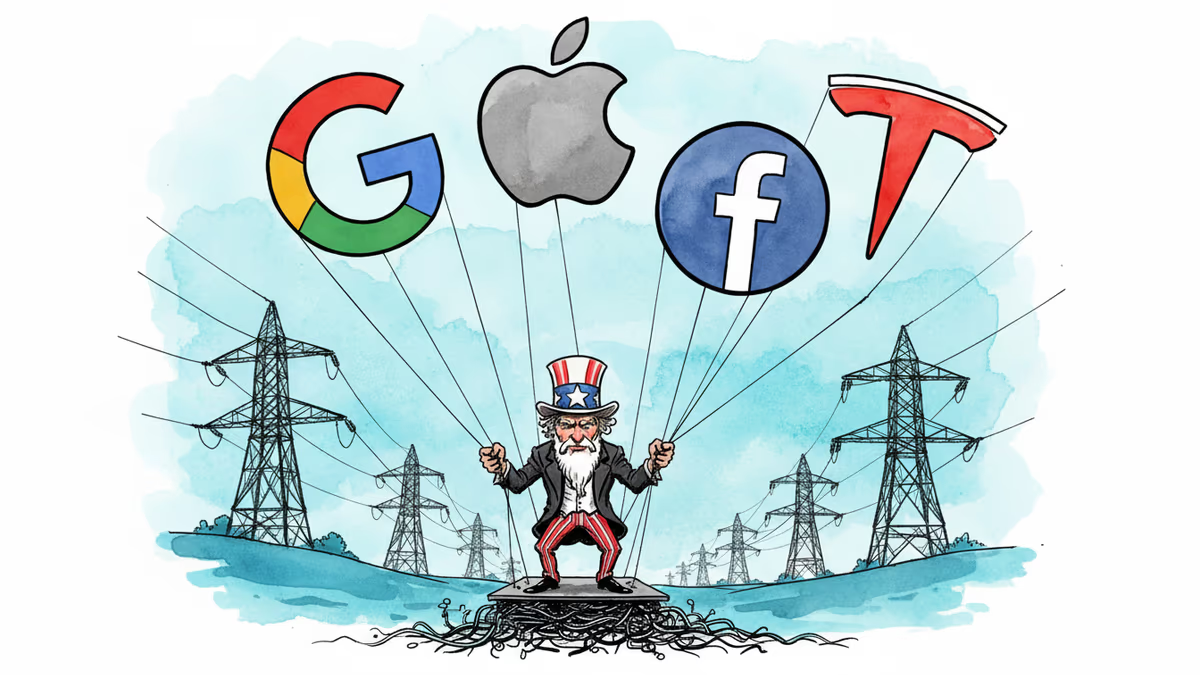
Trump administration secures nonbinding pledge from tech giants to protect consumers from data center electricity costs, but experts doubt meaningful impact
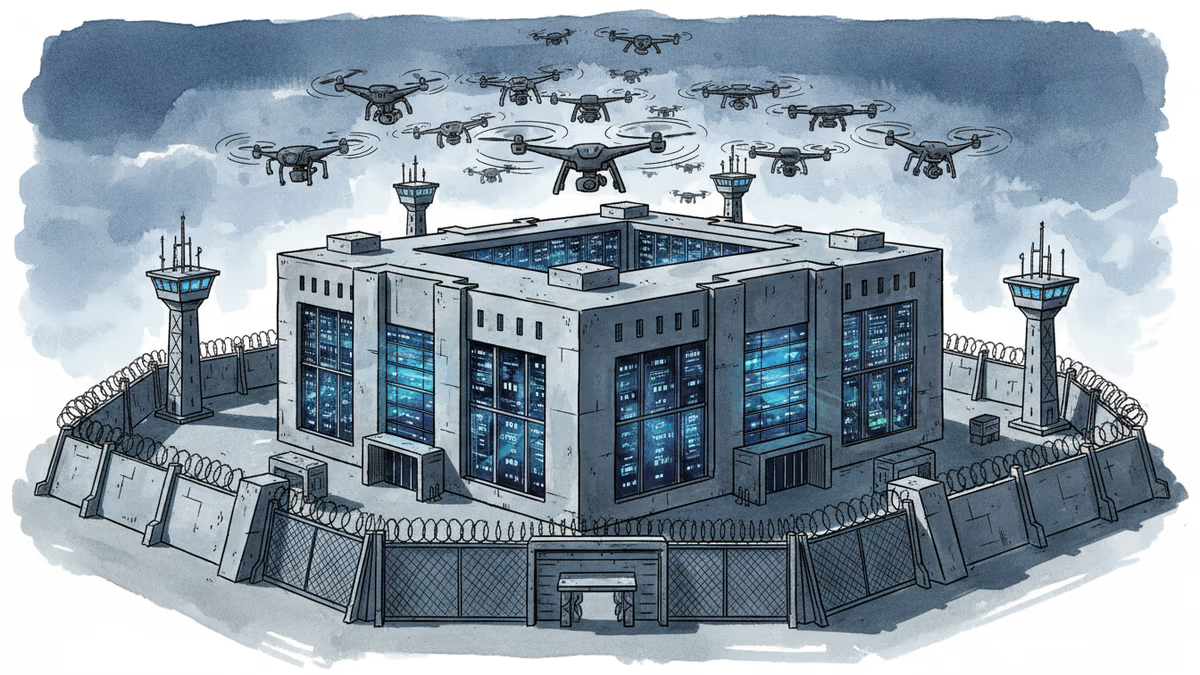
Iranian strikes on AWS facilities mark a new era where cloud infrastructure faces physical warfare. How should companies and governments adapt to this reality?
SpaceX wants to launch a million orbital data centers to power AI without draining Earth. The vision is compelling. The physics, economics, and debris math are not.
Amazon, Google, Meta and others pledge to pay for their data centers' power infrastructure, but the agreement lacks enforcement and ignores basic economics
Trump administration secures nonbinding pledge from tech giants to protect consumers from data center electricity costs, but experts doubt meaningful impact
Iranian strikes on AWS facilities mark a new era where cloud infrastructure faces physical warfare. How should companies and governments adapt to this reality?
Thoughts
Share your thoughts on this article
Sign in to join the conversation