
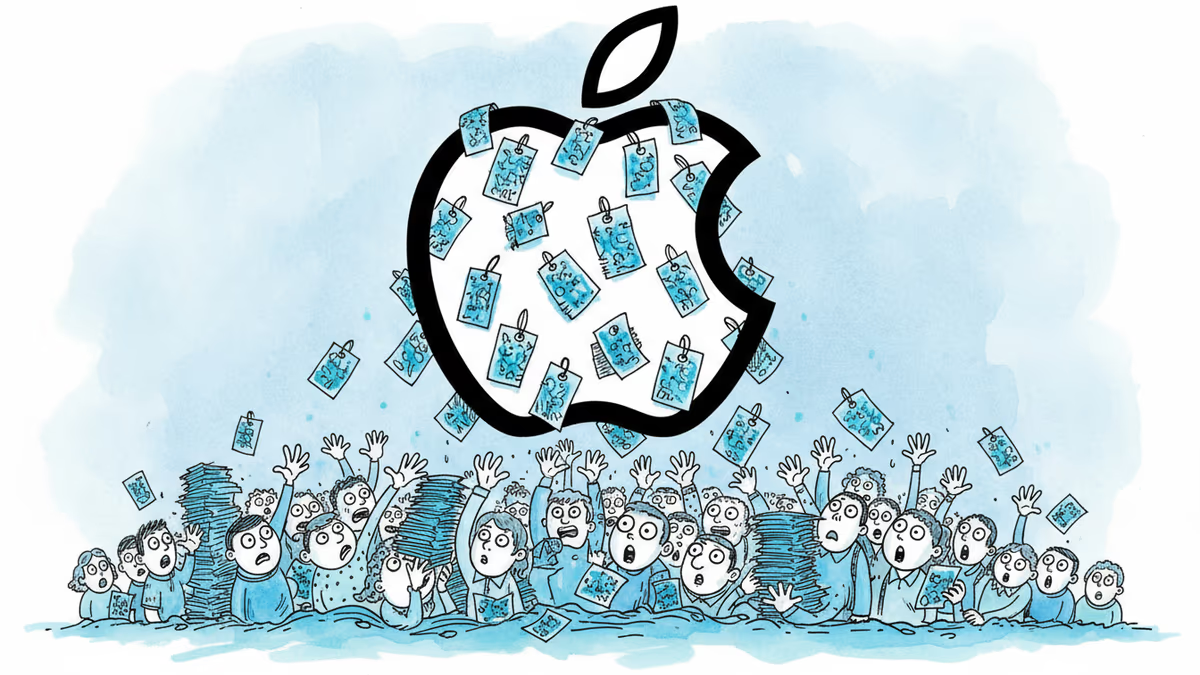
The AirPods Discount Paradox: Why Apple Is Breaking Its Own Rules
Apple's entire AirPods lineup is now regularly discounted. We analyze what this pricing shift reveals about the wireless earbuds market and Apple's evolving strategy.
$60 Off Has Become the New Normal
Something's changed at Apple. The company that famously never discounts is now cutting prices across its entire AirPods lineup. The AirPods 4 dropped $40 within four months of launch. The AirPods Pro 3 are $30 off just six months after debut. Even the premium AirPods Max regularly shed $100.
This isn't seasonal clearing. It's a fundamental shift in how Apple thinks about pricing—and what that means for the wireless earbuds market.
The Market Made Apple Blink
Competition forced Apple's hand. Sony, Bose, and Sennheiser brought decades of audio expertise to wireless earbuds. Chinese brands like Anker and 1MORE deliver 80% of the performance at 50% of the price. Meanwhile, Samsung's Galaxy Buds and Google's Pixel Buds offer tight ecosystem integration for Android users.
Apple's response is strategic: maintain premium positioning while lowering entry barriers. Getting the base AirPods 4 down to $89 targets the sub-$100 market where buying decisions happen faster. Once customers enter the ecosystem through affordable earbuds, they're more likely to buy iPhones, Apple Watches, and services.

The Real Competition Isn't Audio—It's Ecosystem Lock-In
The wireless earbuds war isn't really about sound quality anymore. It's about which tech giant can capture users first. Apple knows that someone who buys discounted AirPods today becomes a candidate for Apple Music, iCloud, and eventually an iPhone upgrade.
Samsung and Google are playing the same game. Galaxy Buds integrate seamlessly with Samsung phones. Pixel Buds offer real-time translation and Google Assistant. The earbuds are just the entry point—the real value is in the services that follow.
Health Features Signal Apple's Next Move
The AirPods Pro 3's heart rate sensor reveals Apple's broader ambition. While competitors focus on audio quality and noise cancellation, Apple is positioning earbuds as health devices. Heart rate monitoring, hearing protection, and live translation transform earbuds from entertainment accessories into daily health companions.
This creates a different value proposition entirely. You're not just buying earbuds—you're buying a health monitor that happens to play music.
The question isn't whether you should buy discounted AirPods—it's whether you're prepared for the ecosystem commitment that comes with them.
Authors
Related Articles
After 15 years of fragmented mobile messaging, Apple and Google are rolling out end-to-end encrypted RCS messaging between iPhones and Android devices. Here's what changed, why it took so long, and what it means for your privacy.
Apple agreed to pay $250 million to settle claims it misled iPhone 16 buyers about Apple Intelligence features. What this means for consumers, Big Tech marketing, and the AI industry.
Apple quietly removed the entry-level $599 Mac Mini, raising the starting price to $799 — just one day after Tim Cook warned of chip supply constraints on the earnings call.
Apple names John Ternus, its hardware engineering chief, as the next CEO. The shift from operator to product person signals where Apple thinks its next decade of growth will come from — and raises real questions about what comes next.
After 15 years of fragmented mobile messaging, Apple and Google are rolling out end-to-end encrypted RCS messaging between iPhones and Android devices. Here's what changed, why it took so long, and what it means for your privacy.
Apple agreed to pay $250 million to settle claims it misled iPhone 16 buyers about Apple Intelligence features. What this means for consumers, Big Tech marketing, and the AI industry.
Apple quietly removed the entry-level $599 Mac Mini, raising the starting price to $799 — just one day after Tim Cook warned of chip supply constraints on the earnings call.
Apple names John Ternus, its hardware engineering chief, as the next CEO. The shift from operator to product person signals where Apple thinks its next decade of growth will come from — and raises real questions about what comes next.
Thoughts
Share your thoughts on this article
Sign in to join the conversation