
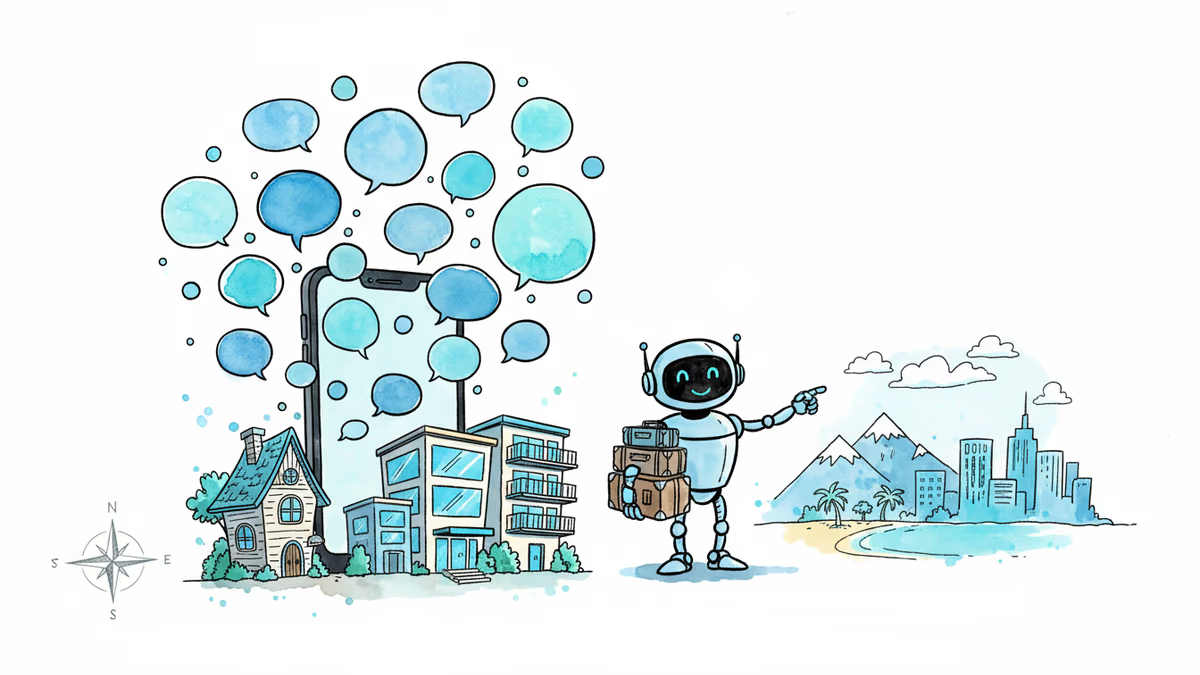
Airbnb's AI Gambit: From Search to Personal Travel Assistant
Airbnb unveils comprehensive AI strategy including natural language search, trip planning, and host support tools. CEO Brian Chesky promises an 'AI-native experience' that knows users.
When 30% of Customer Problems Disappear Overnight
Brian Chesky dropped a bombshell during Airbnb's Q4 earnings call Friday. The company that built its empire on peer-to-peer rentals is now betting big on AI to transform how we search, book, and experience travel. But here's the kicker: their AI customer support bot, launched just last year in North America, already handles one-third of customer issues without human intervention.
That's not just a efficiency win—it's a preview of Airbnb's broader AI vision.
Beyond "Find Me a Place" to "Plan My Life"
The company is testing natural language search that lets users ask questions like "quiet beachfront spot for families" or "best neighborhood in Tokyo for first-time visitors." But Chesky's ambitions stretch far beyond smarter search.
"We are building an AI-native experience where the app does not just search for you. It knows you," Chesky explained. The vision: AI that helps guests plan entire trips, assists hosts in running their businesses, and streamlines company operations.
To power this transformation, Airbnb recently hired Ahmad Al-Dahle as CTO—the former Meta engineer who worked on Llama models. His mission: leverage Airbnb's treasure trove of user identity and review data to make the platform genuinely intelligent.

The Voice Revolution Comes Next
By next year, Chesky predicts "significantly more than 30% of tickets will be handled by AI customer service agents, in many more languages." But here's the twist: it won't just be chat. "AI customer service will not only be chat, it will be voice," he said.
Imagine calling Airbnb and having a natural conversation with an AI that knows your travel history, preferences, and can instantly access property details. The implications for customer experience—and human jobs—are staggering.
The Advertising Elephant in the Room
When analysts pressed about sponsored listings in AI search results, Chesky played it cautious. "We want to get the design and user experience right first," he said. Currently, AI search reaches only "a very small percentage of traffic."
But he hinted at the future: "Eventually, we will be looking at sponsor listings as a result of that." The company plans to design ad units that fit naturally into conversational search flows—a potentially massive revenue opportunity.
Internal AI Adoption Tells the Real Story
Perhaps most telling: 80% of Airbnb's engineers already use AI tools, with a goal of reaching 100%. When a tech company's own workforce embraces AI this thoroughly, it signals genuine transformation, not just marketing hype.
The financial backdrop supports this AI push: Airbnb reported $2.78 billion in Q4 revenue, beating expectations with 12% year-over-year growth.
Authors
Related Articles

Samsung and SK unveiled a chip and AI investment package worth thousands of trillions of won on June 29. The headline number swings wildly by outlet, but the real contest isn't capital — it's water and power.
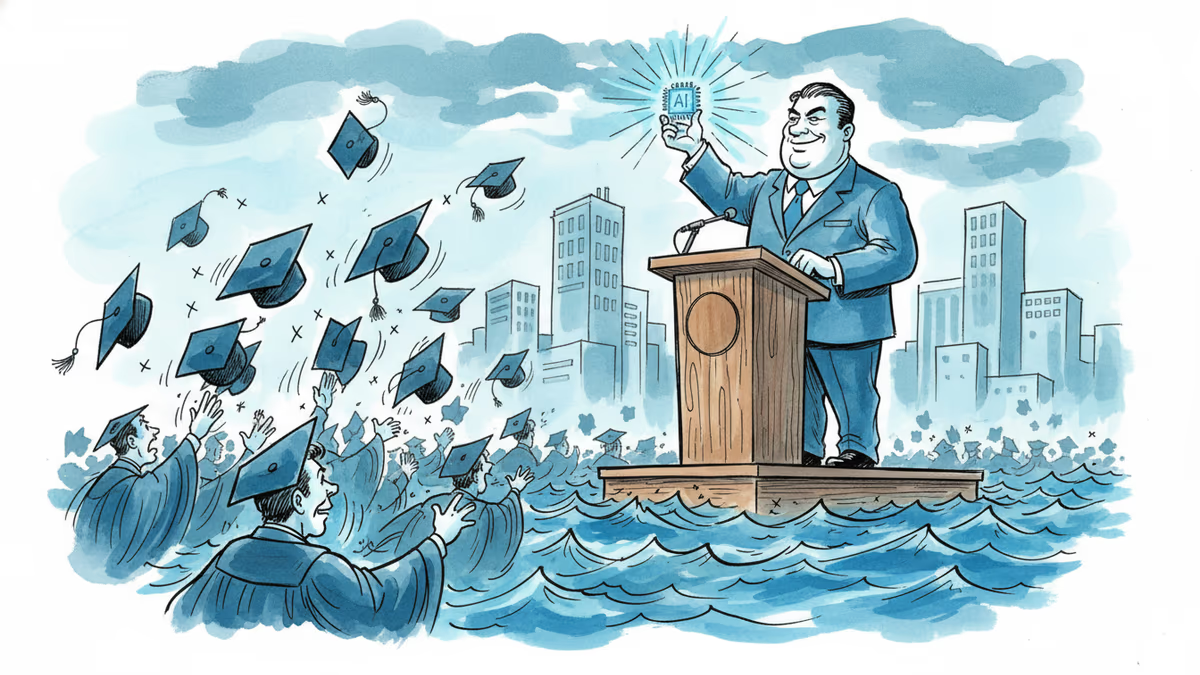
Viral videos show 2026 graduates jeering executives who praise AI at commencement ceremonies. It's not just rudeness — it's a signal about who pays for technological optimism.

Filipino virtual assistants using AI to ghost-manage LinkedIn profiles for executives is now a structured industry. 30 comments a day, fake engagement rings, and a platform struggling to tell real from fabricated.
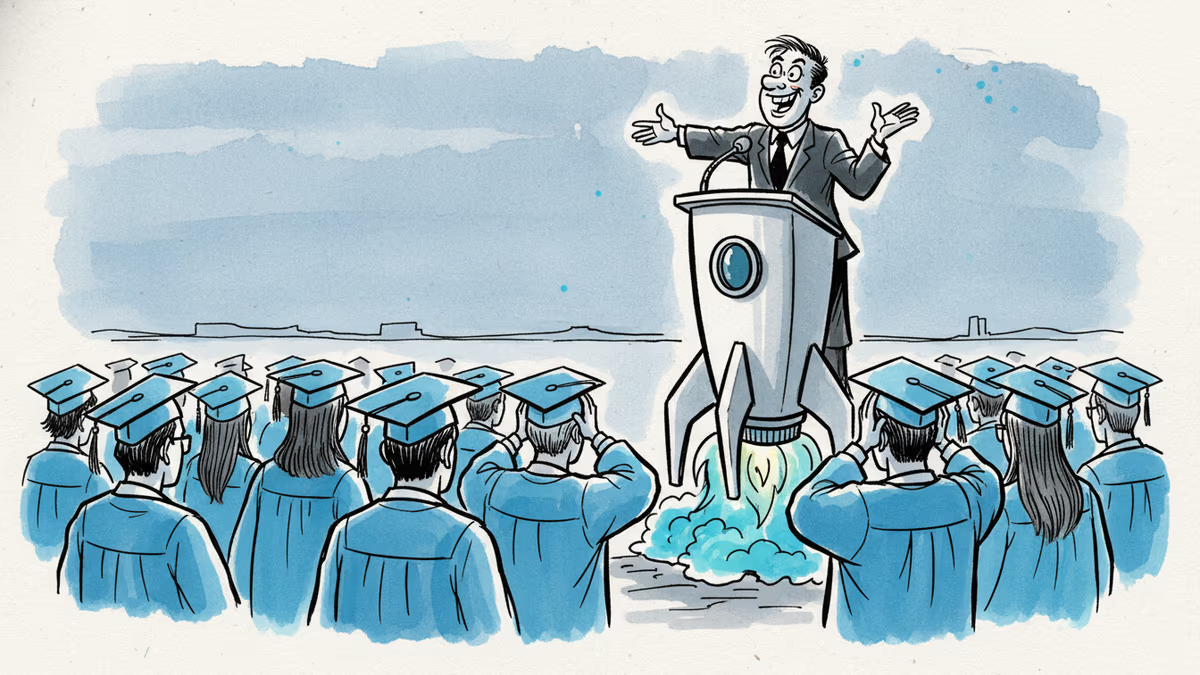
Two commencement speakers learned the hard way that AI enthusiasm doesn't land well with today's graduates. The backlash reveals a widening gap between tech optimism and Gen Z's economic reality.
Samsung and SK unveiled a chip and AI investment package worth thousands of trillions of won on June 29. The headline number swings wildly by outlet, but the real contest isn't capital — it's water and power.
Viral videos show 2026 graduates jeering executives who praise AI at commencement ceremonies. It's not just rudeness — it's a signal about who pays for technological optimism.
Filipino virtual assistants using AI to ghost-manage LinkedIn profiles for executives is now a structured industry. 30 comments a day, fake engagement rings, and a platform struggling to tell real from fabricated.
Two commencement speakers learned the hard way that AI enthusiasm doesn't land well with today's graduates. The backlash reveals a widening gap between tech optimism and Gen Z's economic reality.
Thoughts
Share your thoughts on this article
Sign in to join the conversation