

Japan Deploys AI 'B Alert' System to Predict and Prevent Bear Attacks
Japan is deploying 'B Alert,' an AI-powered surveillance system that detects bears near residential areas and cuts down public warning times by over 30 minutes, amid rising attacks.
As bear sightings and attacks continue to rise across Japan, a new AI-powered surveillance system is being rolled out to prevent dangerous encounters before they happen. The system, called 'B Alert,' automatically detects bears near populated areas and notifies authorities in real time, reshaping how local governments manage wildlife threats.
By automating the detection and alert process, the technology is cutting down the time it takes to issue public warnings by more than 30 minutes. According to Kyodo, it’s already being adopted by prefectures like Gunma, Toyama, and Ishikawa, offering a high-tech layer of defense for unsettled communities.
How AI Becomes a Digital Watchtower
Developed jointly by Hokuriku Electric Power Co. and communications firm Hokutsu Co., B Alert relies on a network of cameras equipped with communication functions. These are strategically placed on trees in mountainous regions and along riverbanks bordering residential zones.
The cameras trigger automatically when they sense body heat, capturing images of any passing animal. These images are then transmitted to a cloud-based AI. The AI, trained on a dataset of approximately 60,000 photographs of bears and other wildlife, filters the data to identify bears with a reported accuracy of 99.9%. A key strength, a company representative noted, is its ability to spot animals in dimly lit areas where the human eye would struggle.

Once a bear is confirmed, the system automatically emails the images to local government officials. This eliminates the need for staff to physically verify the sighting, allowing for a much faster public response. Municipalities like Toyama, Fukui, and Kobe have already adopted the system.
Born from a Close Encounter
The impetus for B Alert was a frightening incident in 2019. A Hokuriku Electric Power maintenance worker was attacked and sustained minor injuries from a bear while working on a transmission tower in Toyama Prefecture. This prompted the utility company to explore countermeasures.
At the same time, Toyama Prefecture was dealing with its own surge in bear-related incidents. Hokuriku Electric shared its concerns with the prefectural government, which then allocated funding for a proof-of-concept experiment, kickstarting the system's development.
The system has been met with praise from local officials. "(B Alert) contributes to efficiency and labor savings at a time when staff shortages are an ongoing challenge," said Hirokazu Sugibayashi, deputy chief of Toyama's forest policy division. A neighborhood association chairman, Terumasa Yokogoshi, added that it provides "welcome reassurance and peace of mind for residents."
Authors
Related Articles
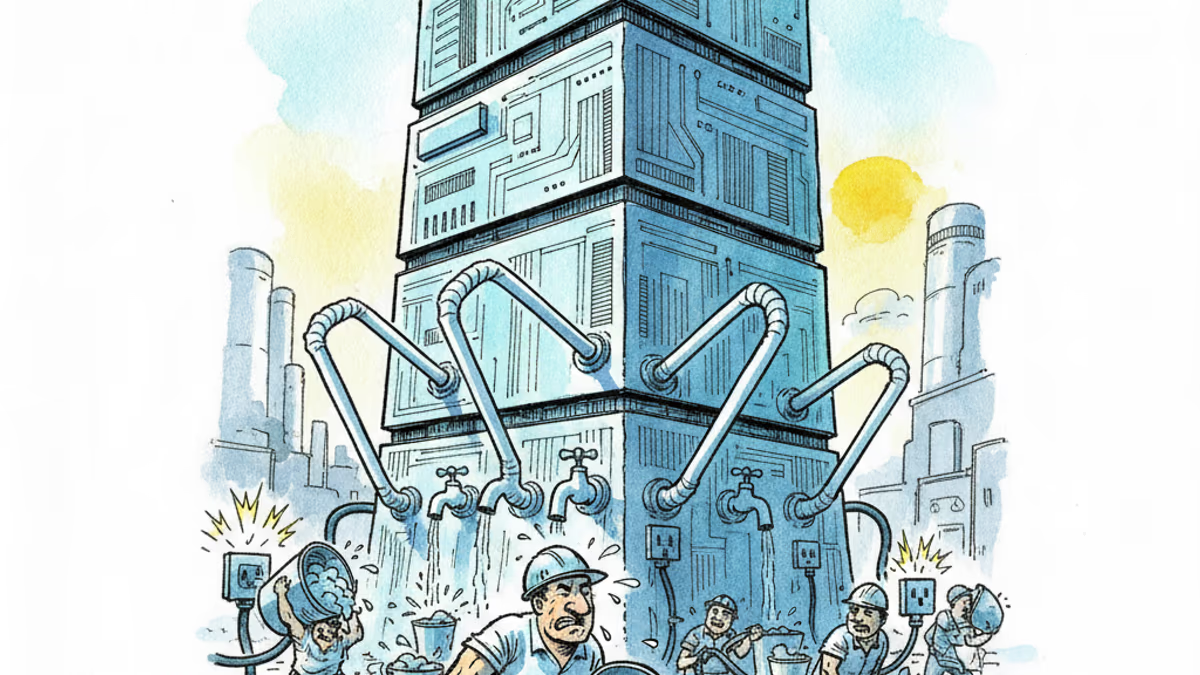
Samsung and SK unveiled a chip and AI investment package worth thousands of trillions of won on June 29. The headline number swings wildly by outlet, but the real contest isn't capital — it's water and power.
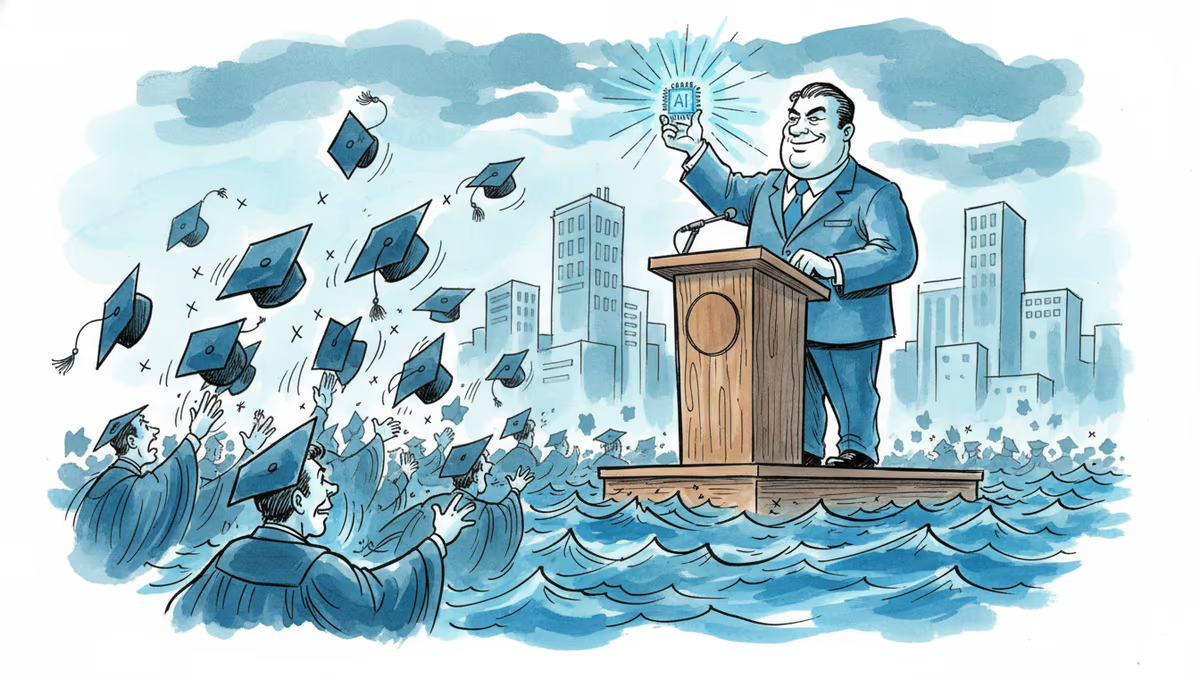
Viral videos show 2026 graduates jeering executives who praise AI at commencement ceremonies. It's not just rudeness — it's a signal about who pays for technological optimism.
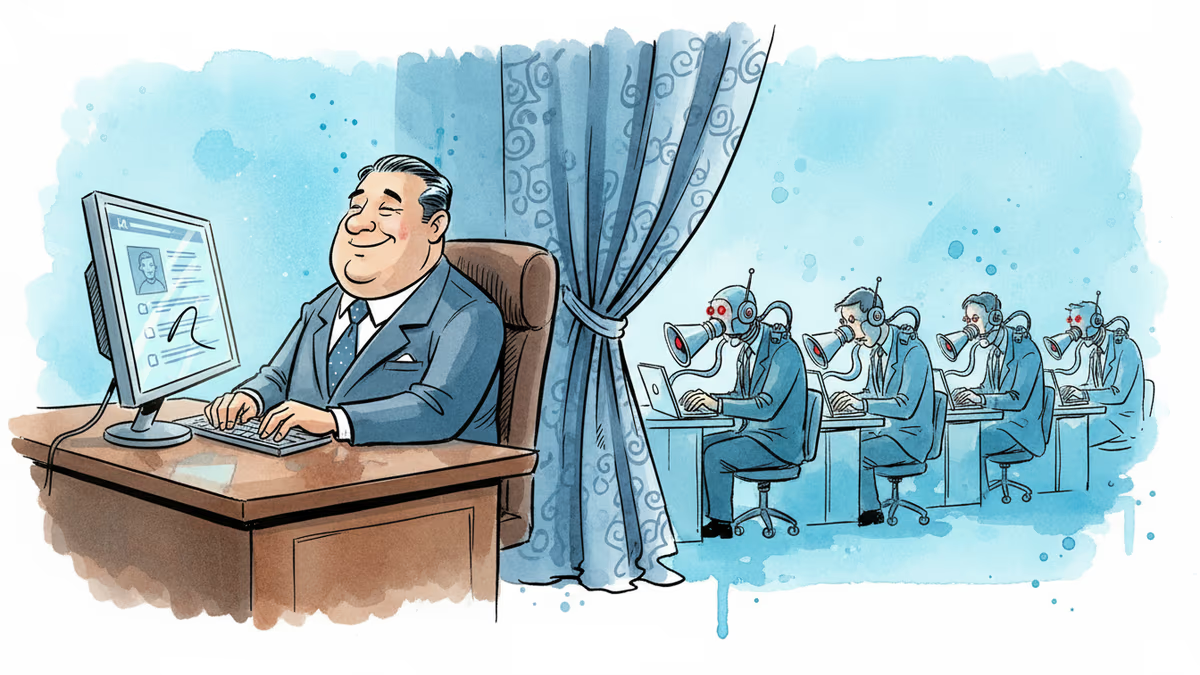
Filipino virtual assistants using AI to ghost-manage LinkedIn profiles for executives is now a structured industry. 30 comments a day, fake engagement rings, and a platform struggling to tell real from fabricated.
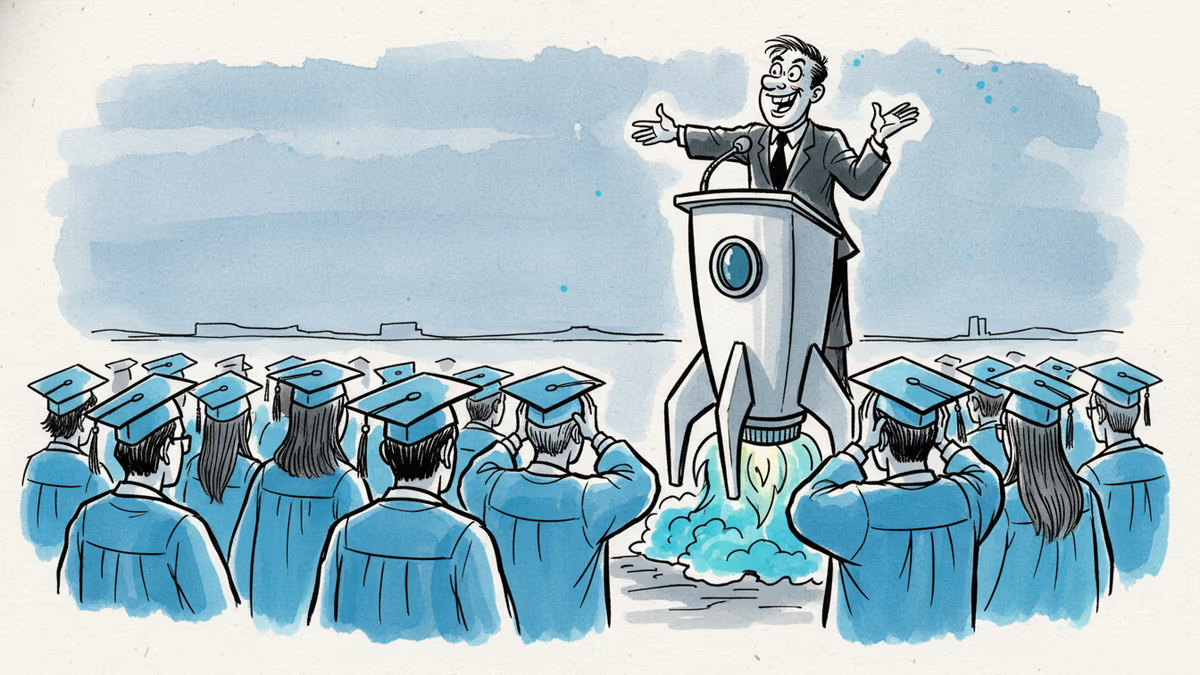
Two commencement speakers learned the hard way that AI enthusiasm doesn't land well with today's graduates. The backlash reveals a widening gap between tech optimism and Gen Z's economic reality.
Samsung and SK unveiled a chip and AI investment package worth thousands of trillions of won on June 29. The headline number swings wildly by outlet, but the real contest isn't capital — it's water and power.
Viral videos show 2026 graduates jeering executives who praise AI at commencement ceremonies. It's not just rudeness — it's a signal about who pays for technological optimism.
Filipino virtual assistants using AI to ghost-manage LinkedIn profiles for executives is now a structured industry. 30 comments a day, fake engagement rings, and a platform struggling to tell real from fabricated.
Two commencement speakers learned the hard way that AI enthusiasm doesn't land well with today's graduates. The backlash reveals a widening gap between tech optimism and Gen Z's economic reality.
Thoughts
Share your thoughts on this article
Sign in to join the conversation