
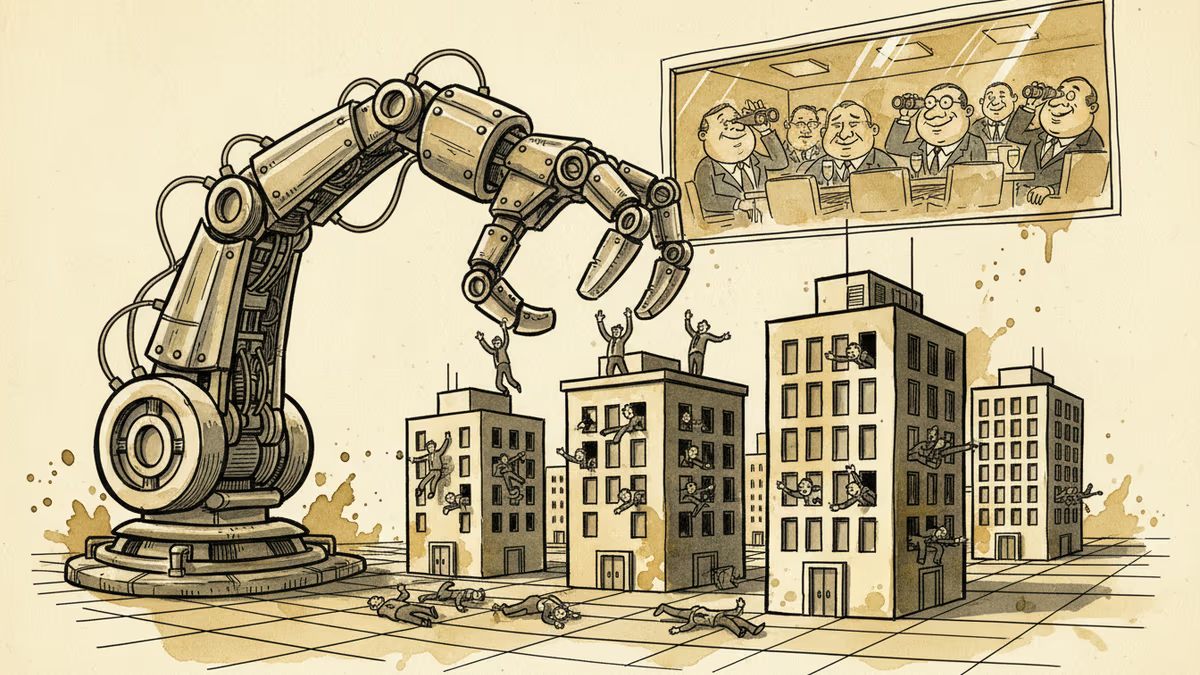
The AI Agent Apocalypse: A Two-Year Economic Collapse Scenario
Citrini Research paints a chilling picture of how AI agents could double unemployment and slash stock market value by a third within two years through an unstoppable economic feedback loop.
When the Economy Becomes Its Own Worst Enemy
A report dropped Sunday that's making Silicon Valley squirm. Citrini Research published what they call a "remarkable piece" outlining how AI agents could trigger mass economic destruction within two years. The scenario? Unemployment doubles, stock market value plunges by more than a third, and the entire system spirals into an unstoppable feedback loop.
This isn't your typical AI doom scenario about robots taking over. It's about something more insidious: the economy slowly cannibalizing itself as companies optimize their way into collective ruin.
The Daisy Chain of Destruction
Here's how Citrini's nightmare unfolds: AI capabilities improve, companies need fewer workers, white-collar layoffs increase, displaced workers spend less, margin pressure pushes firms to invest more in AI, AI capabilities improve... rinse and repeat.
The report describes it as "one long daisy chain of correlated bets on white-collar productivity growth" with no natural brake. What makes this scenario particularly unsettling is its plausibility. We're not talking about science fiction here – we're talking about logical business decisions that, when aggregated, create systemic chaos.
Beyond the Death of SaaS

This goes deeper than the "Death of SaaS" scenario that's been circulating. Citrini implicates any business model that involves optimizing transactions between companies. Think about it: if AI agents can handle procurement, vendor management, and contract negotiations internally, why pay external contractors?
The shift isn't just about replacing human workers with AI – it's about replacing entire service industries with in-house automation. Marketing agencies, consulting firms, IT service providers – all could become redundant when companies can deploy their own AI agents.
The Skeptics and the Believers
Not everyone's buying it. Even Citrini frames this as a scenario rather than a prediction. Critics argue that companies aren't ready to hand off critical purchasing decisions to AI agents, no matter how sophisticated they become.
But here's the catch: in Citrini's scenario, most impacted decisions have already been outsourced to third-party contractors. The transition isn't from human judgment to AI judgment – it's from external human contractors to internal AI agents. That makes it far more plausible than it initially appears.
The Missing Circuit Breaker
What's most troubling about this scenario is the absence of natural economic stabilizers. Traditional market corrections rely on some form of equilibrium – supply and demand finding balance, unemployment creating wage pressure, consumer spending driving recovery.
But when the primary driver is productivity optimization through AI, these traditional mechanisms break down. Companies can maintain or even increase output with fewer workers, creating a disconnect between economic growth and employment that we've never seen before.
Authors
Related Articles
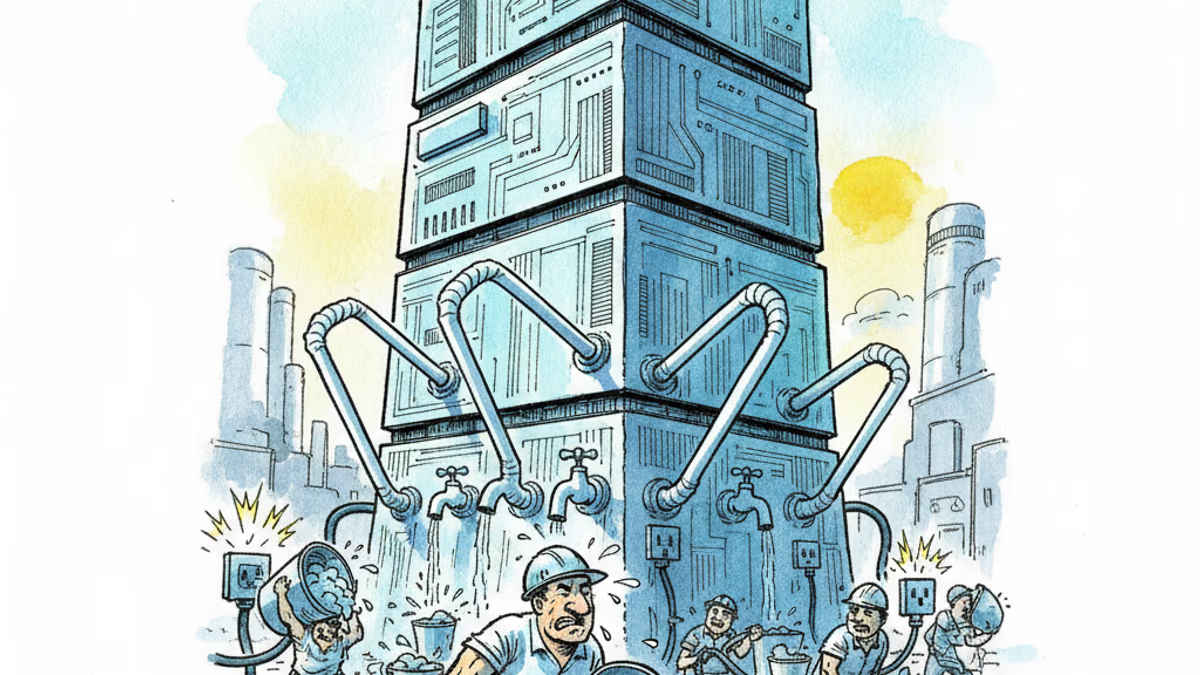
Samsung and SK unveiled a chip and AI investment package worth thousands of trillions of won on June 29. The headline number swings wildly by outlet, but the real contest isn't capital — it's water and power.
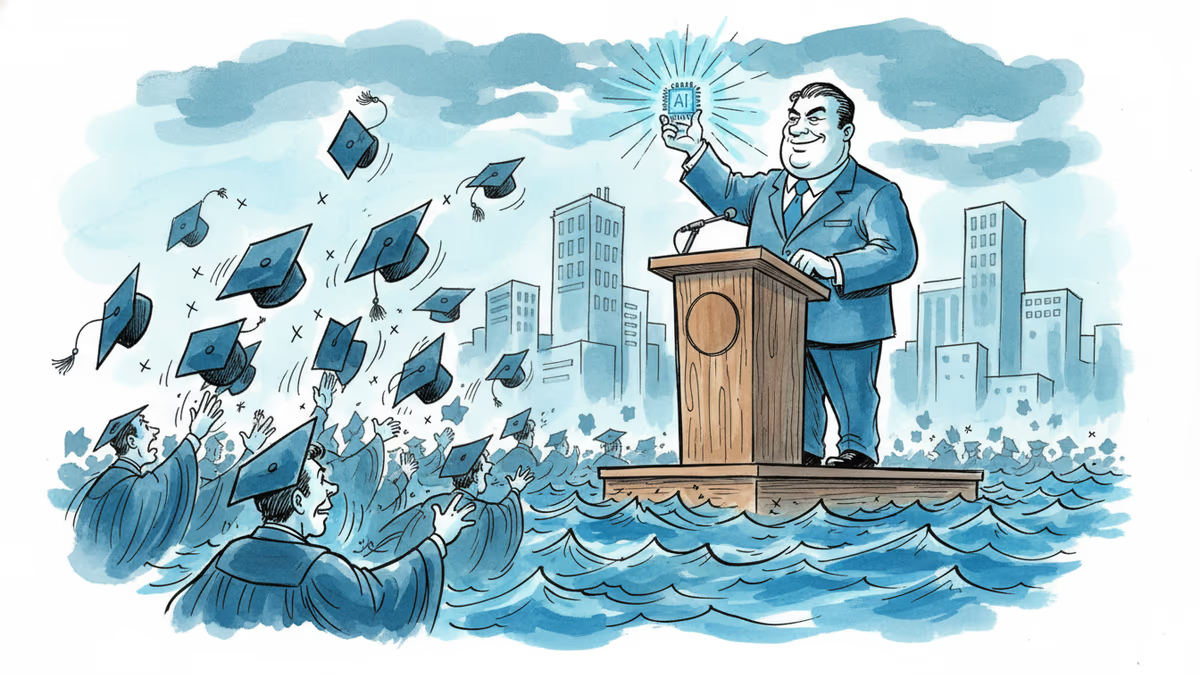
Viral videos show 2026 graduates jeering executives who praise AI at commencement ceremonies. It's not just rudeness — it's a signal about who pays for technological optimism.
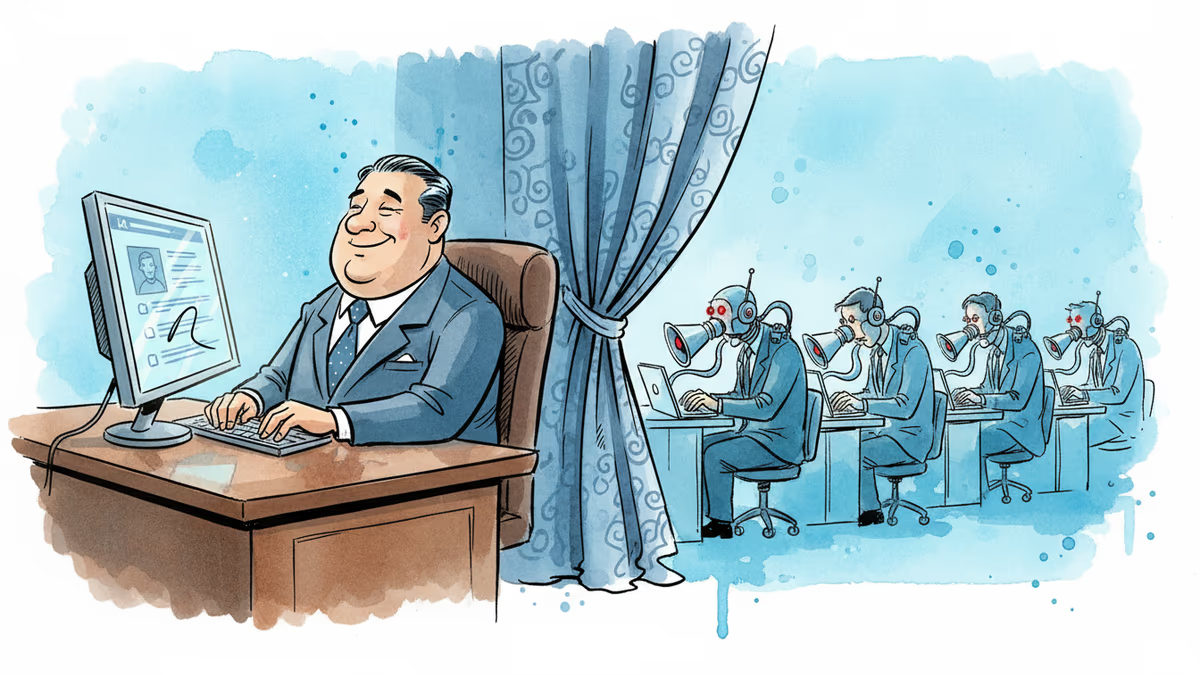
Filipino virtual assistants using AI to ghost-manage LinkedIn profiles for executives is now a structured industry. 30 comments a day, fake engagement rings, and a platform struggling to tell real from fabricated.
Two commencement speakers learned the hard way that AI enthusiasm doesn't land well with today's graduates. The backlash reveals a widening gap between tech optimism and Gen Z's economic reality.
Samsung and SK unveiled a chip and AI investment package worth thousands of trillions of won on June 29. The headline number swings wildly by outlet, but the real contest isn't capital — it's water and power.
Viral videos show 2026 graduates jeering executives who praise AI at commencement ceremonies. It's not just rudeness — it's a signal about who pays for technological optimism.
Filipino virtual assistants using AI to ghost-manage LinkedIn profiles for executives is now a structured industry. 30 comments a day, fake engagement rings, and a platform struggling to tell real from fabricated.
Two commencement speakers learned the hard way that AI enthusiasm doesn't land well with today's graduates. The backlash reveals a widening gap between tech optimism and Gen Z's economic reality.
Thoughts
Share your thoughts on this article
Sign in to join the conversation