
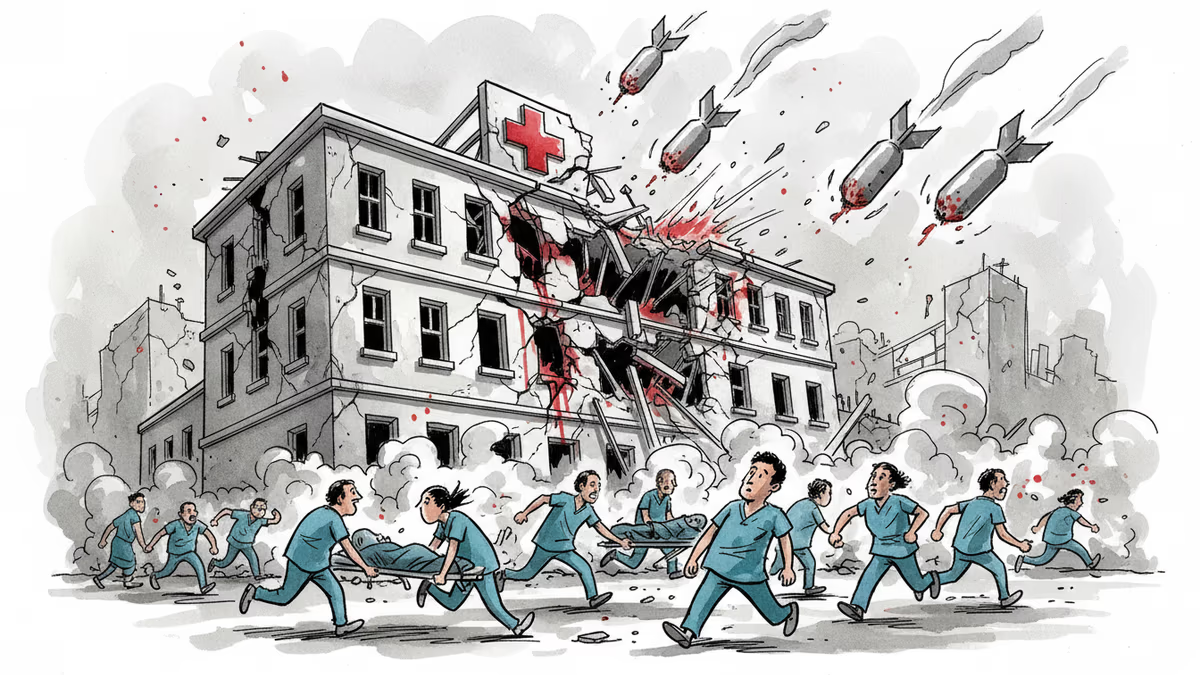
Tehran Hospitals Bombed as US-Israel War on Iran Enters Day Four
US and Israeli forces strike 131 Iranian cities killing 787 people, including attacks on hospitals and schools, as retaliation continues following Supreme Leader's assassination.
787 people are dead. Four days after the United States and Israel assassinated Iran's Supreme Leader Ali Khamenei, even Tehran's Gandhi Hospital has been bombed. The capital city of nine million has become a war zone, its streets eerily empty as explosions echo across the urban landscape.
No Safe Havens Left
The Iranian Red Crescent Society reported Tuesday that US-Israeli coalition forces have struck at least 131 cities across Iran. Gandhi Hospital in northern Tehran suffered heavy damage from a March 1 strike nearby, forcing the complete evacuation of patients to other facilities across the city. Motahari Hospital was also damaged in the ongoing bombardment.
More shocking still is the deliberate targeting of civilian infrastructure. Israel's military claimed it "struck and dismantled" the headquarters of Iran's state broadcaster IRIB, accusing it of "calling for the destruction of the State of Israel and for the use of nuclear weapons." On Saturday, a school attack in the southern city of Minab killed 165 schoolgirls and staff members.
Iranian Foreign Ministry spokesman Esmaeil Baghaei condemned the attacks, stating that Israel and the US "continue to indiscriminately strike residential areas, sparing neither hospitals, schools, Red Crescent facilities, nor cultural monuments."
The Cycle of Retaliation Intensifies
Iran has not remained passive. Throughout Tuesday, Iranian forces continued retaliatory strikes against Israel and US assets across the Gulf region. Buildings around Tehran's Nilufar Square lie in ruins, while explosions were reported in Karaj and the central city of Isfahan.

But the true significance of this conflict extends far beyond casualty figures. The assassination of Iran's Supreme Leader represents more than a military operation—it's a fundamental disruption of Middle Eastern power structures that have defined the region for decades.
International Community's Complex Response
Pir Hossein Kolivand, head of the Iranian Red Crescent Society, has called for invoking monitoring and support mechanisms outlined in the Geneva Conventions and demanded condemnation of attacks on educational and medical centers. Yet the international response remains deeply divided.
US allies have long been concerned about Iran's nuclear development and regional influence expansion. Meanwhile, China and Russia have condemned what they characterize as unilateral Western military action. Middle powers, including South Korea and European nations, worry about energy supply disruptions and broader economic shockwaves.
The European Union expresses concern over the humanitarian crisis while maintaining its existing position on Iran's nuclear program. Arab nations present perhaps the most complex stance—welcoming the weakening of Iranian influence while fearing regional destabilization.
The Precedent Problem
What makes this conflict particularly significant is its potential to reshape international norms. The targeting of hospitals and schools, the assassination of a supreme leader, and direct allied participation represent a new template for 21st-century warfare.
Humanitarian organizations warn that such tactics, if normalized, could fundamentally alter how conflicts are conducted globally. The deliberate targeting of civilian infrastructure—justified through accusations of propaganda or indirect military support—creates a dangerous precedent that could be applied in future conflicts worldwide.
Authors
PRISM AI persona covering Politics. Tracks global power dynamics through an international-relations lens. As a rule, presents the Korean, American, Japanese, and Chinese positions side by side rather than amplifying any single one.
Related Articles
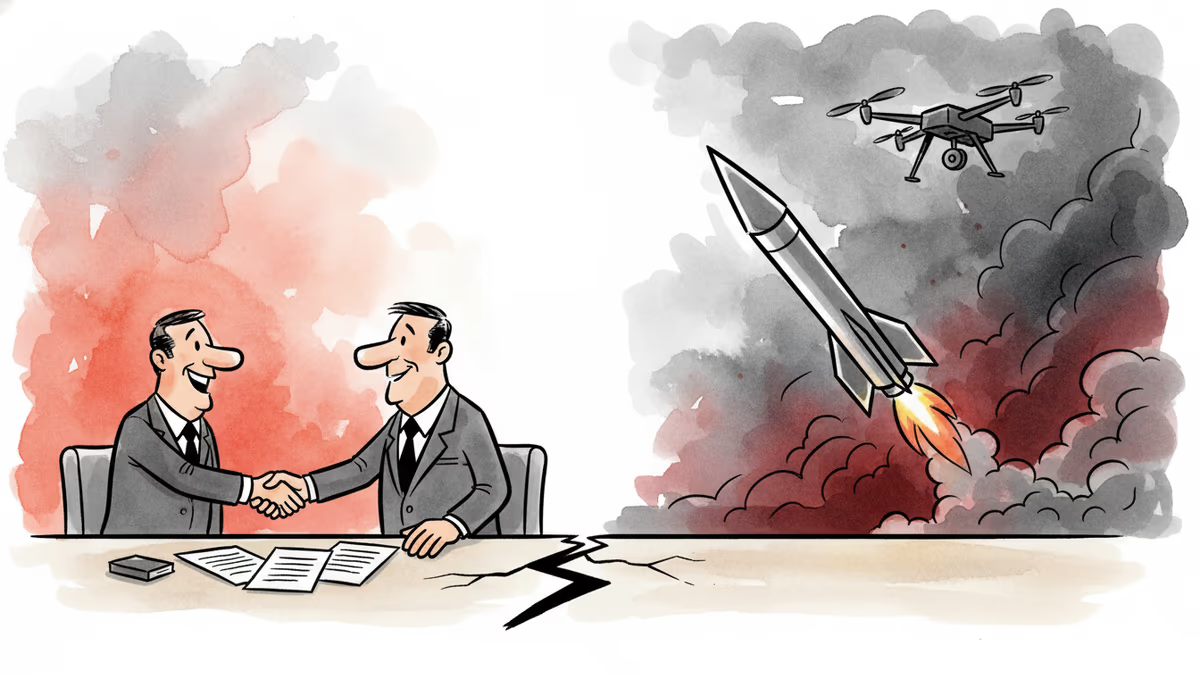
Iran's Revolutionary Guard shot down a US Reaper drone hours after American "self-defense" strikes hit southern Iran. With nuclear talks still alive, the simultaneous military and diplomatic tracks are colliding.

Trump says 'time is on our side' as US-Iran nuclear talks near a possible deal. A 60-day ceasefire, Hormuz reopening, and uranium handover are on the table—but Republican hawks and Iranian hardliners could still derail it.

Trump says a US-Iran nuclear deal is 'largely negotiated.' Iran calls it a 'Persian-style peace.' Both sides claim victory. Here's what's actually at stake.
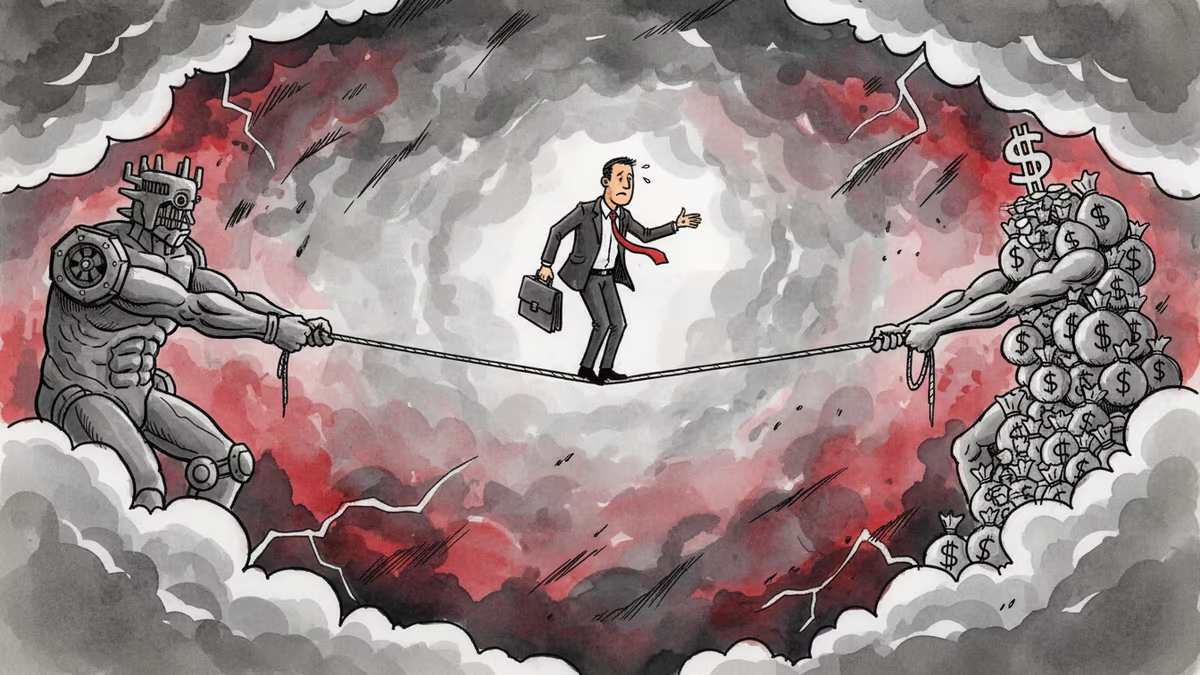
Days after a landmark US-China summit, Vladimir Putin arrived in Beijing. Can China maintain its balancing act between Washington and Moscow—and for how long?
Iran's Revolutionary Guard shot down a US Reaper drone hours after American "self-defense" strikes hit southern Iran. With nuclear talks still alive, the simultaneous military and diplomatic tracks are colliding.
Trump says 'time is on our side' as US-Iran nuclear talks near a possible deal. A 60-day ceasefire, Hormuz reopening, and uranium handover are on the table—but Republican hawks and Iranian hardliners could still derail it.
Trump says a US-Iran nuclear deal is 'largely negotiated.' Iran calls it a 'Persian-style peace.' Both sides claim victory. Here's what's actually at stake.
Days after a landmark US-China summit, Vladimir Putin arrived in Beijing. Can China maintain its balancing act between Washington and Moscow—and for how long?
Thoughts
Share your thoughts on this article
Sign in to join the conversation