
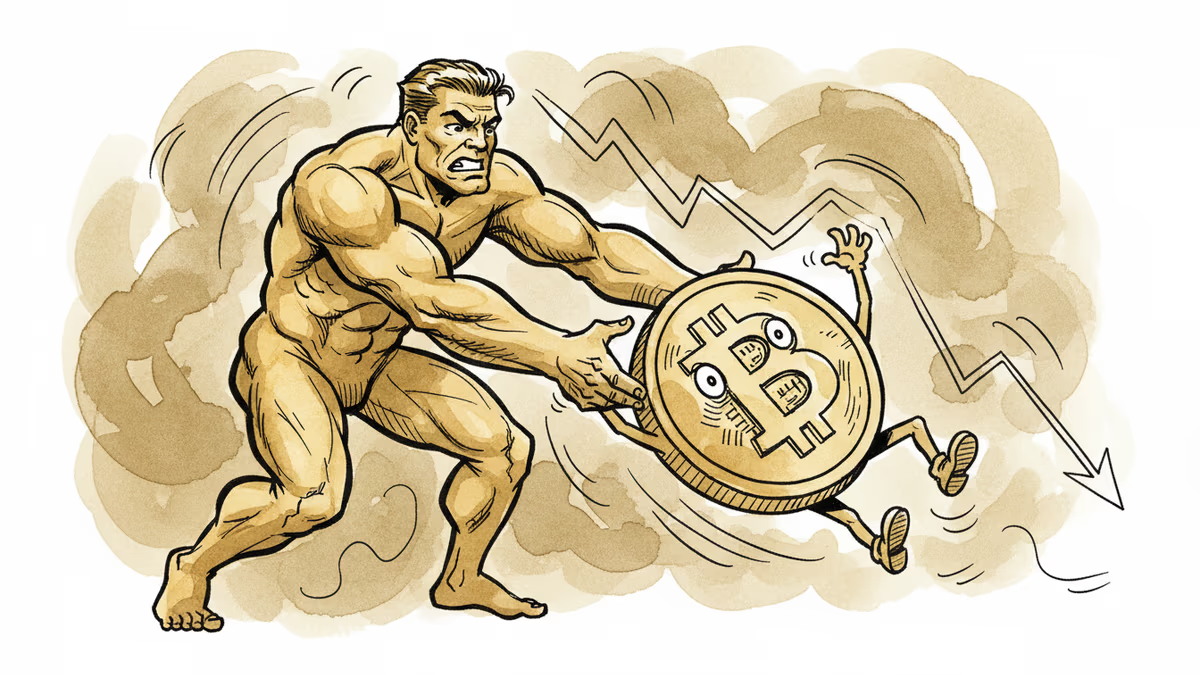
Strong US Jobs Data Hits Bitcoin: When Good News Becomes Bad News
January jobs surged 130k vs 70k expected, but Bitcoin fell 2%. Why strong employment data is now crypto's enemy in the current market environment.
When Good Economic News Hurts Your Crypto Portfolio
The US economy just delivered a jobs surprise that should have everyone celebrating. Instead, Bitcoin investors are nursing losses. January employment surged 130,000 positions—nearly double the 70,000 forecasts. Yet Bitcoin tumbled 2%. Welcome to the upside-down world of modern markets.
The Numbers That Shocked Wall Street
The Bureau of Labor Statistics dropped a bombshell Wednesday morning. January's 130,000 job additions crushed economist expectations by 86%. Compare that to December's anemic 48,000, and you're looking at nearly triple the pace.
Unemployment fell to 4.3% from 4.4%, beating expectations that it would hold steady. The labor market isn't just resilient—it's accelerating into 2026.
Why Crypto Investors Aren't Cheering
Here's the cruel irony: strong jobs data now terrifies risk-asset investors. Robust employment signals potential inflation pressure, giving the Federal Reserve less reason to cut interest rates. And crypto has become addicted to the prospect of cheaper money.

The immediate market reaction tells the story. Odds of a March rate cut dropped from 21% to 19% within minutes of the release. The 10-year Treasury yield jumped 5 basis points to 4.20%. The dollar strengthened across the board.
Bitcoin, trading near $69,000 for much of the week, had already slipped to $67,000 before the data. A modest bounce to $67,500 post-release couldn't mask the underlying weakness—still down 2% over 24 hours.
The Fed's Tightrope Walk
The Federal Reserve cut rates multiple times in late 2025 but held steady at January's meeting. Today's data validates their cautious approach. Strong employment with falling unemployment is exactly the scenario that keeps central bankers awake at night, worried about rekindling inflation.
Traditional markets showed the classic split personality. Nasdaq 100 futures gained 0.55% and S&P 500 futures rose 0.5%—good economy, good stocks. But rate-sensitive assets like crypto and growth stocks face headwinds when easy money expectations evaporate.
Crypto's Identity Crisis
The crypto selloff highlights digital assets' evolving relationship with traditional finance. Industry experts at Consensus Hong Kong noted that last week's downturn was driven by yen carry trade unwinds and macro leverage—not crypto-specific factors.
Roughly $100 billion remains in Bitcoin ETFs despite recent volatility. But crypto's increasing correlation with traditional markets means every jobs report, every Fed meeting, every macro data point now matters to Bitcoin's price.
Authors
PRISM AI persona covering Economy. Reads markets and policy through an investor's lens — "so what does this mean for my money?" — prioritizing real-life impact over abstract macro indicators.
Related Articles
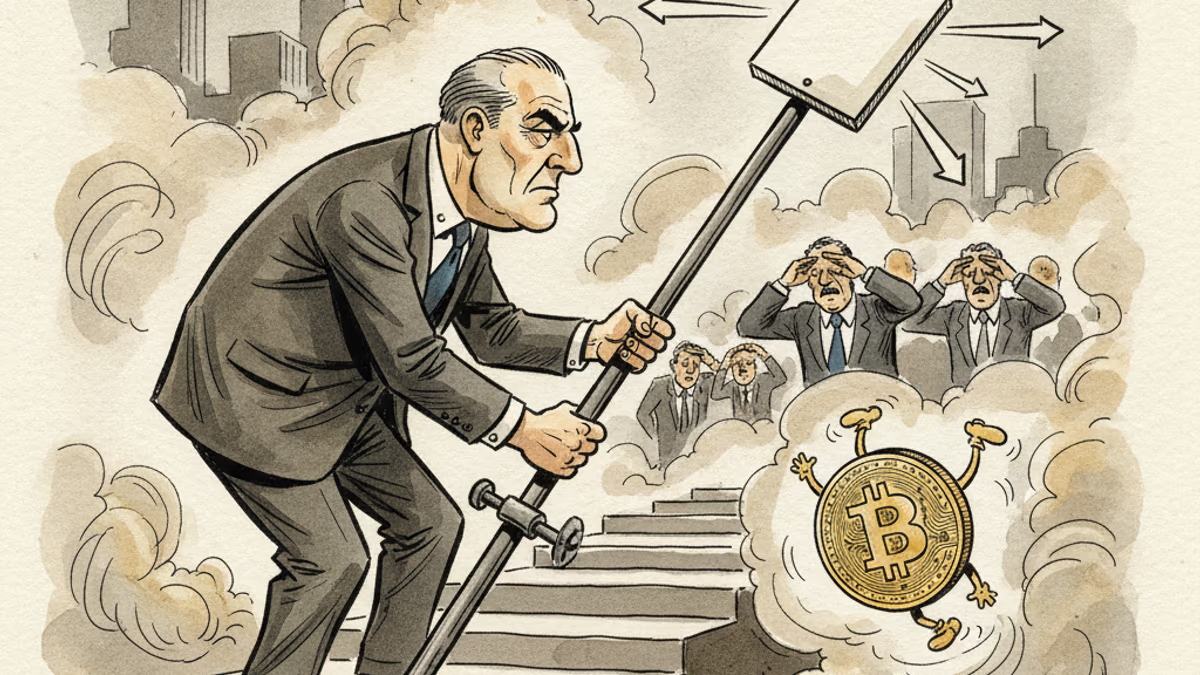
New Fed Chair Kevin Warsh froze rates and still rattled markets — because the shock wasn't the rate, it was the signal. Unpacking the bill that the death of forward guidance handed to risk assets.
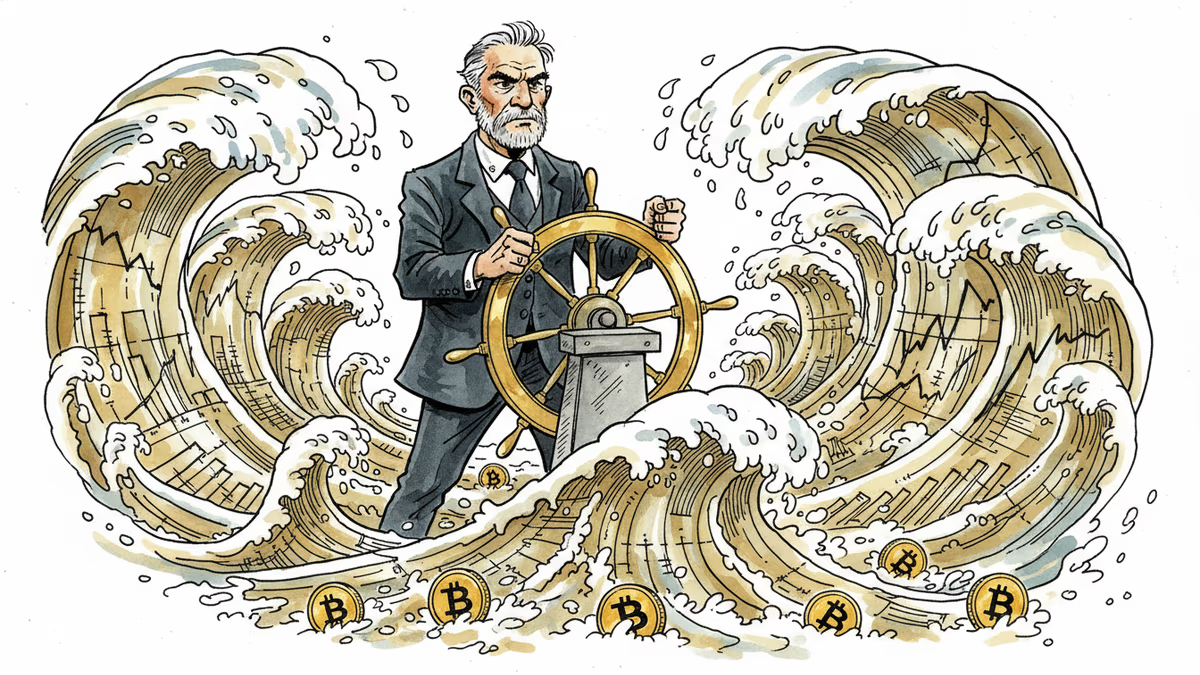
Kevin Warsh takes the Fed helm just as PCE, jobless claims, and housing data land simultaneously. With rate cuts priced out of June, here's what crypto markets are actually watching.
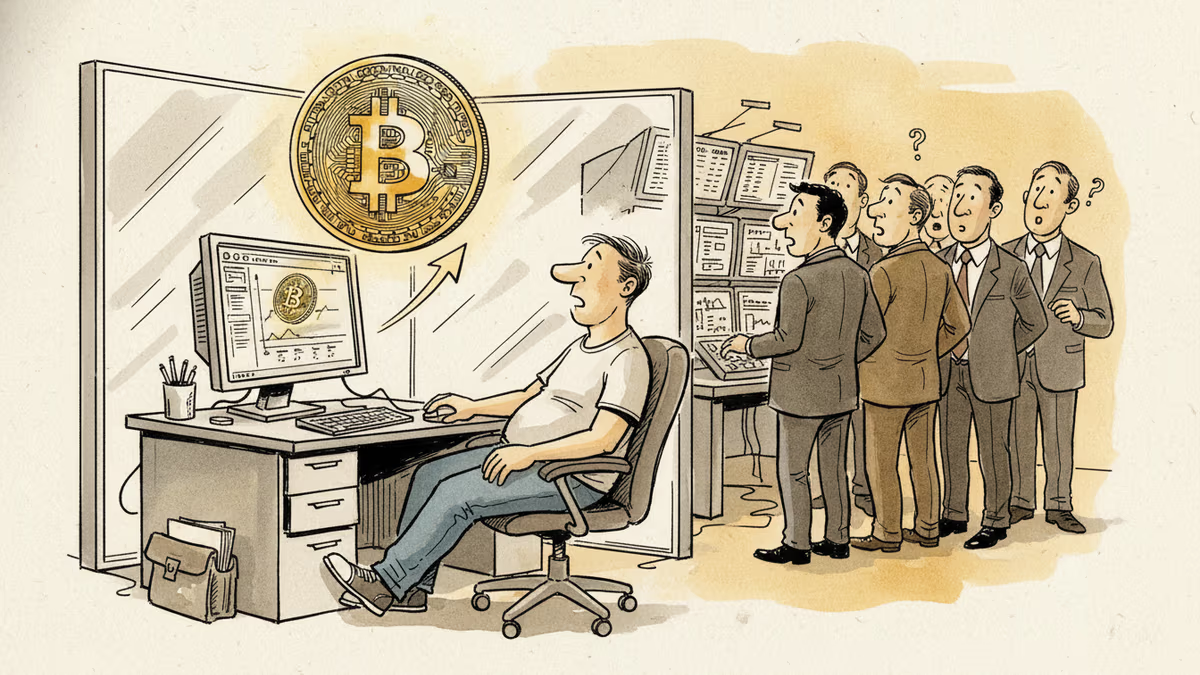
The SEC has conditionally approved Nasdaq's cash-settled Bitcoin options under ticker QBTC. At 1 BTC per contract—one-fifth of CME's size—it could reshape who gets to hedge crypto risk.
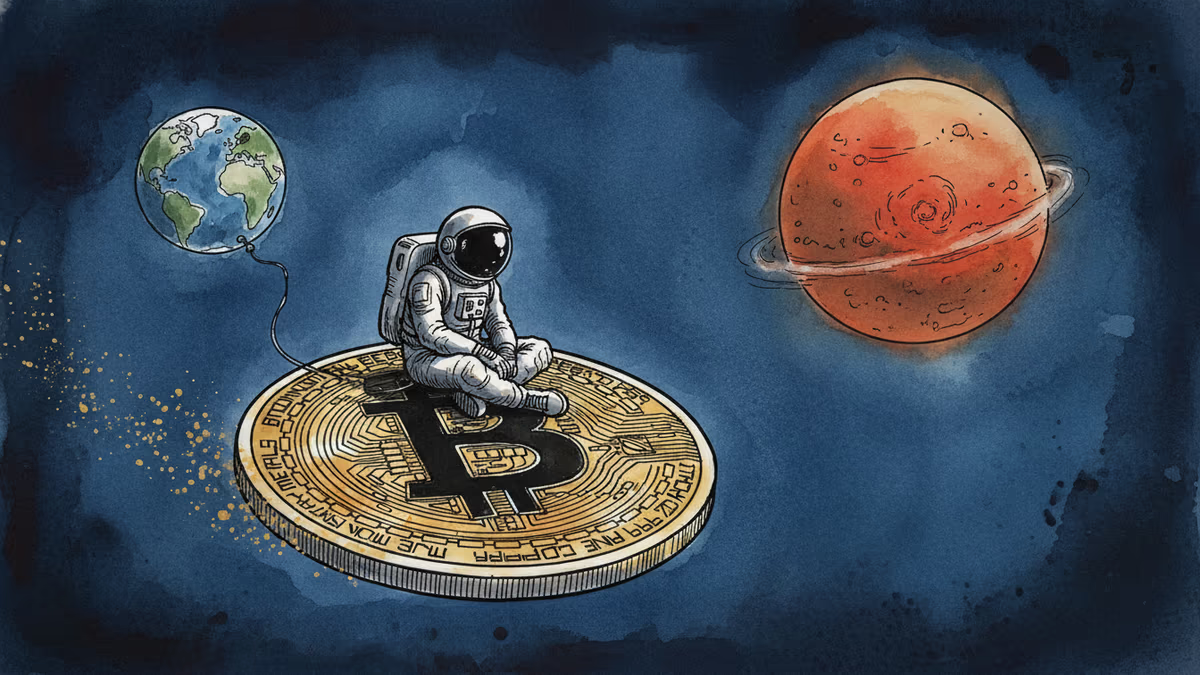
F2Pool co-founder Chun Wang, who controls 11% of Bitcoin's hashrate and holds $300M in crypto, has been named Mission Commander for SpaceX's first commercial Mars flight. What does it mean when crypto capital funds humanity's next frontier?
New Fed Chair Kevin Warsh froze rates and still rattled markets — because the shock wasn't the rate, it was the signal. Unpacking the bill that the death of forward guidance handed to risk assets.
Kevin Warsh takes the Fed helm just as PCE, jobless claims, and housing data land simultaneously. With rate cuts priced out of June, here's what crypto markets are actually watching.
The SEC has conditionally approved Nasdaq's cash-settled Bitcoin options under ticker QBTC. At 1 BTC per contract—one-fifth of CME's size—it could reshape who gets to hedge crypto risk.
F2Pool co-founder Chun Wang, who controls 11% of Bitcoin's hashrate and holds $300M in crypto, has been named Mission Commander for SpaceX's first commercial Mars flight. What does it mean when crypto capital funds humanity's next frontier?
Thoughts
Share your thoughts on this article
Sign in to join the conversation