

China Unveils World's Most Powerful Smart DC Transformer to Neutralize Renewable Shocks
Following a near-total blackout in 2023, China has developed a world-leading smart DC transformer to stabilize renewable energy shocks to its national grid.
Just over a year after a near-miss with a nationwide blackout, Chinese engineers have delivered a solution. In August 2023, low-frequency swings from wind energy in the Xinjiang region almost triggered a cascading grid failure. Today, they've launched the world's most powerful smart DC transformer, designed to absorb these energy shocks and stabilize the future of green power.
The Crisis That Redefined Stability
The incident wasn't just a technical glitch; it was a wake-up call for the global energy sector. As nations rush toward Net Zero, the inherent instability of renewable sources like wind and solar becomes a major liability. According to reports from the SCMP, the 2023 event highlighted how poorly integrated energy can destabilize even the most robust national grids.

Engineering a Smart Shield
This new innovation isn't your grandfather's transformer. It acts as a digital brain for the grid, using auto-sensing technology to monitor fluctuations in real-time. By neutralizing low-frequency swings before they propagate, this transformer allows for a much higher density of renewable energy without risking a total system collapse.
- Capable of managing high-voltage Direct Current (DC) loads.
- Instantaneous response to renewable energy surges.
- Developed within just one year of the Xinjiang crisis.
Authors
Related Articles

OpenClaw, an open-source AI agent, has sparked a cottage industry in China—from installation services to pre-loaded hardware. What does this grassroots AI adoption wave reveal about where the technology is really headed?
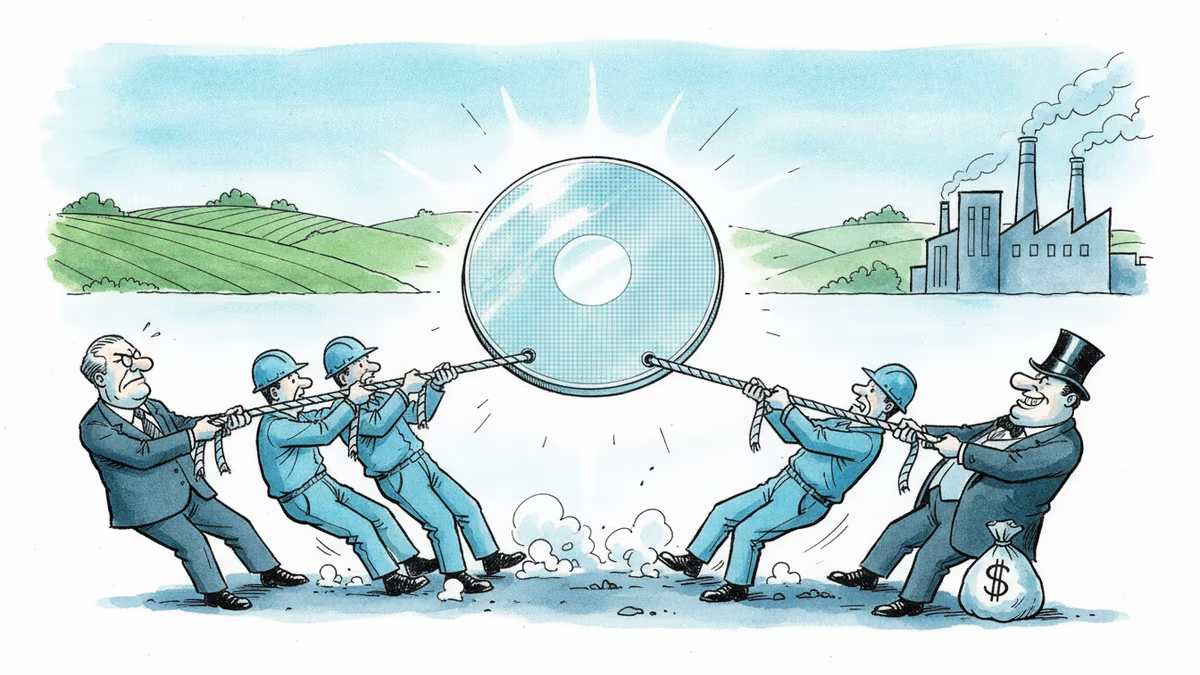
Samsung Electronics' union branch revealed that 84% of survey respondents oppose the government's roughly $290 billion (₩400 trillion) semiconductor megaproject in Gwangju. Government, management, the union and shareholders are all reading the same national project in sharply different ways.

Nvidia shipped roughly a billion RISC-V cores in 2024, then announced it would run CUDA on the open standard. We break down how royalty-free instruction sets and open software stacks are trying to route around CUDA's lock-in. Part 2 of the Semiconductor Sovereignty series.
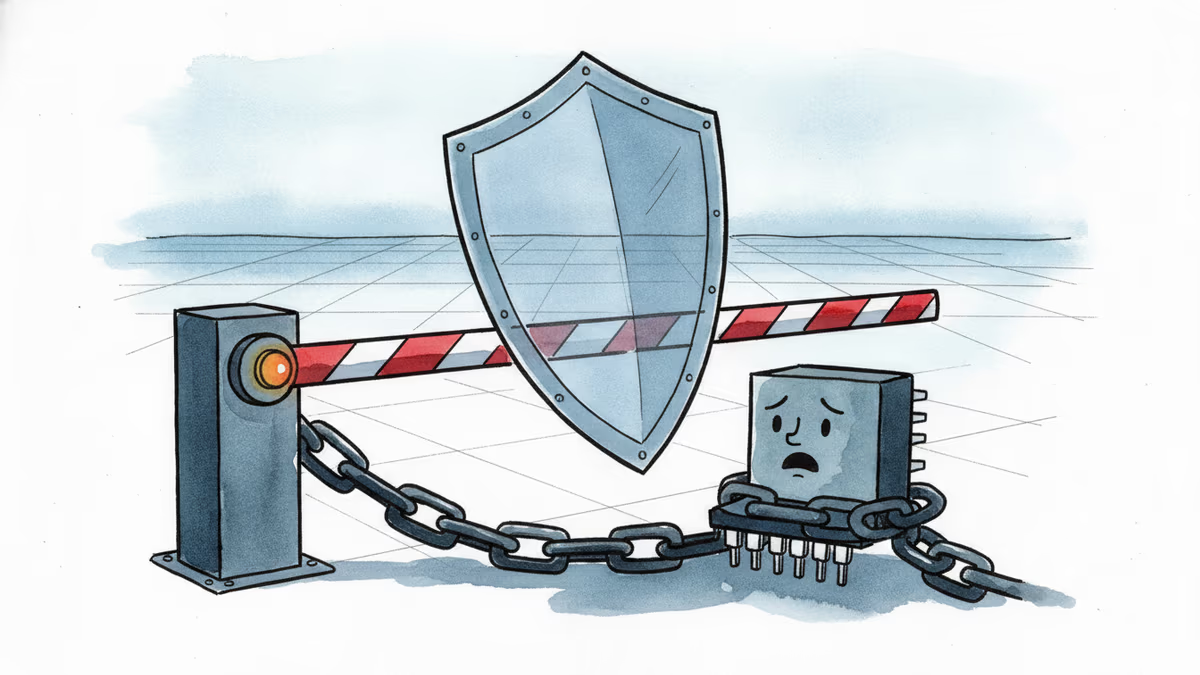
US AI-chip export controls split into three layers in the first half of 2026 — January easing, a May crackdown on circumvention, and a pending bill. Nvidia erased China from its guidance and still posted a record $81.6 billion quarter. A look at the export policy that both shields and cages it.
OpenClaw, an open-source AI agent, has sparked a cottage industry in China—from installation services to pre-loaded hardware. What does this grassroots AI adoption wave reveal about where the technology is really headed?
Samsung Electronics' union branch revealed that 84% of survey respondents oppose the government's roughly $290 billion (₩400 trillion) semiconductor megaproject in Gwangju. Government, management, the union and shareholders are all reading the same national project in sharply different ways.
Nvidia shipped roughly a billion RISC-V cores in 2024, then announced it would run CUDA on the open standard. We break down how royalty-free instruction sets and open software stacks are trying to route around CUDA's lock-in. Part 2 of the Semiconductor Sovereignty series.
US AI-chip export controls split into three layers in the first half of 2026 — January easing, a May crackdown on circumvention, and a pending bill. Nvidia erased China from its guidance and still posted a record $81.6 billion quarter. A look at the export policy that both shields and cages it.
Thoughts
Share your thoughts on this article
Sign in to join the conversation