
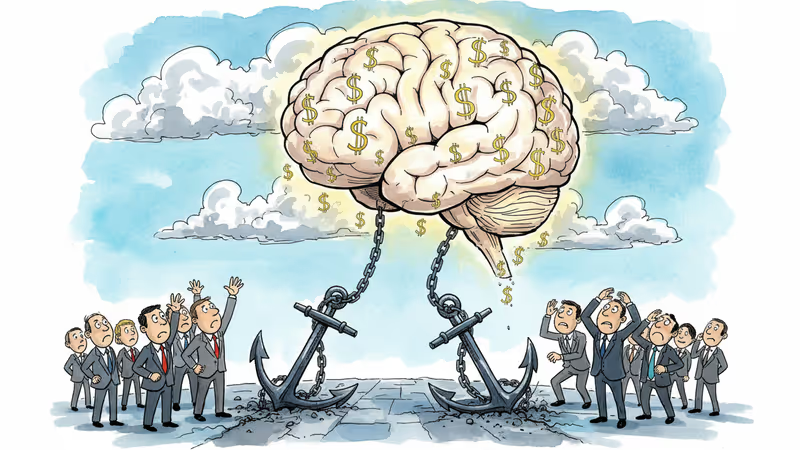
2025 AI Revolution: The Year in Numbers
The AI industry grew to $758 billion in 2025, yet MIT research shows 95% of businesses found zero value in it. We break down a year of explosive growth amid bubble concerns.
In 2025, AI became the present, not the future. 900 million people worldwide now use AI tools, and 78% of companies have adopted AI for at least one business function. But behind these dazzling numbers lies a sobering reality.
Market Size: Beyond the Manhattan Project
The global AI market hit $758 billion in 2025, up 22% from $621 billion in 2024. According to PBS, current AI investment exceeds the combined budgets of the Manhattan Project and Apollo missions. By 2031, the market is projected to reach $1.68 trillion.
5 Keywords That Defined 2025

- AI Agents — The buzzword in every product launch. A new paradigm of AI that autonomously executes tasks
- Vibe Coding — Coined by OpenAI co-founder Andrej Karpathy. Building apps with AI, zero coding knowledge required
- Superintelligence — The ultimate goal that Meta and Microsoft are investing hundreds of billions to achieve
- AI Bubble — MIT research found 95% of companies that tried AI found zero value
- Gemini 3 — Google's next-gen AI model, launched in December and deployed to search in 120 countries
Winners and Shadows
NVIDIA dominated with 92% of the generative AI GPU market. The AI agent market is set to grow from $7.4 billion to $47.1 billion by 2030. Healthcare became the #1 industry for AI adoption, with $1.6 billion invested in digital health AI startups alone.
But shadows loom. The explosion in AI chip demand created a memory chip shortage, which could drive up prices for all electronics. NPR noted that "AI has changed the nature of demand itself."
Jobs: More Created Than Lost
Contrary to fears of AI stealing jobs, the 2025 data tells a different story. AI will eliminate 92 million jobs but create 170 million new ones—a net gain of 78 million. However, the new jobs require AI-related skills.
Authors
Related Articles
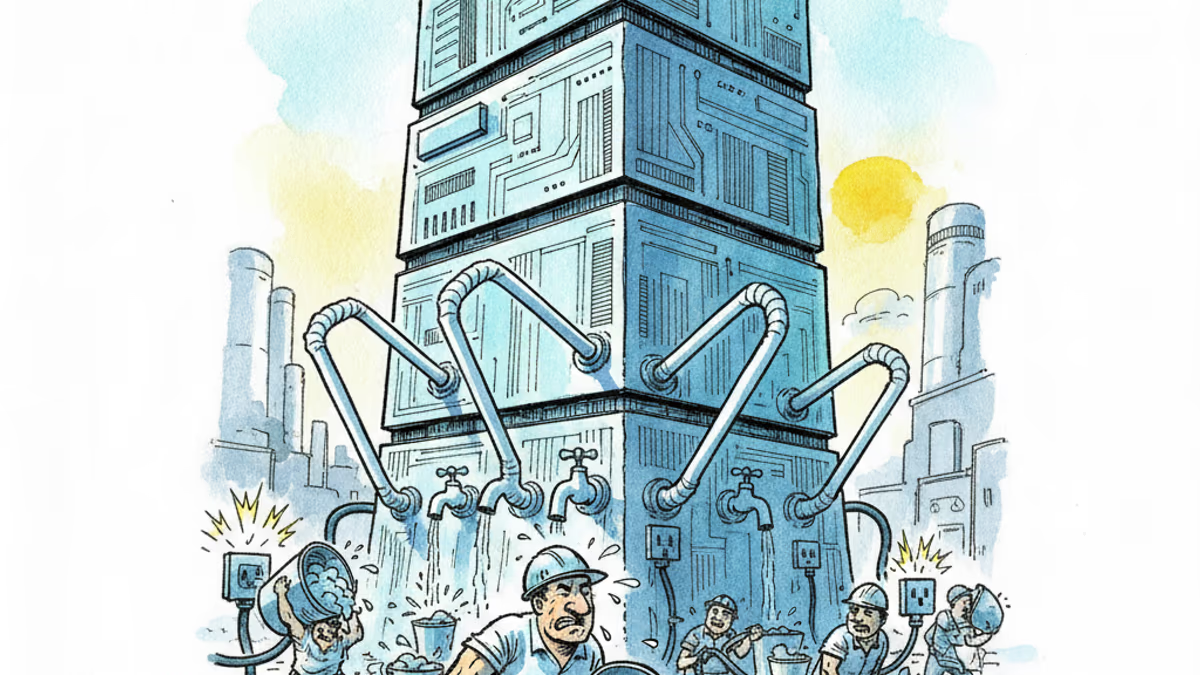
Samsung and SK unveiled a chip and AI investment package worth thousands of trillions of won on June 29. The headline number swings wildly by outlet, but the real contest isn't capital — it's water and power.
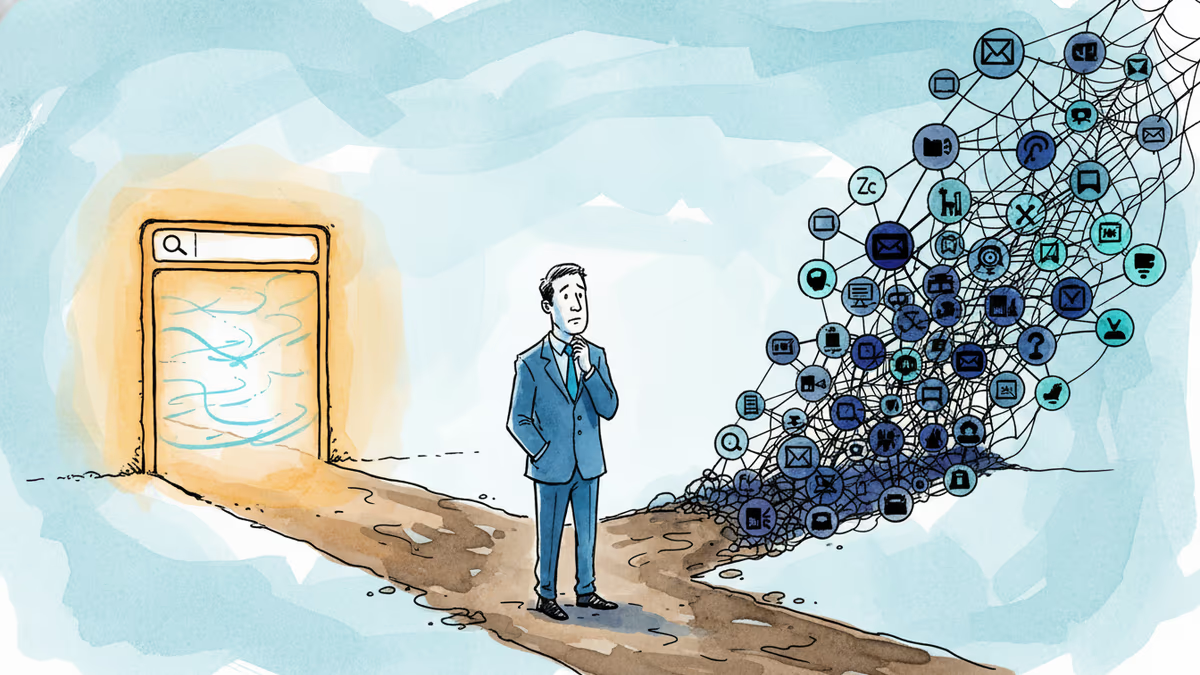
In a post-Google I/O interview, Sundar Pichai acknowledged flawed search results, real AI anxiety, and an AGI timeline that makes the label irrelevant. Here's what he said — and what it means.
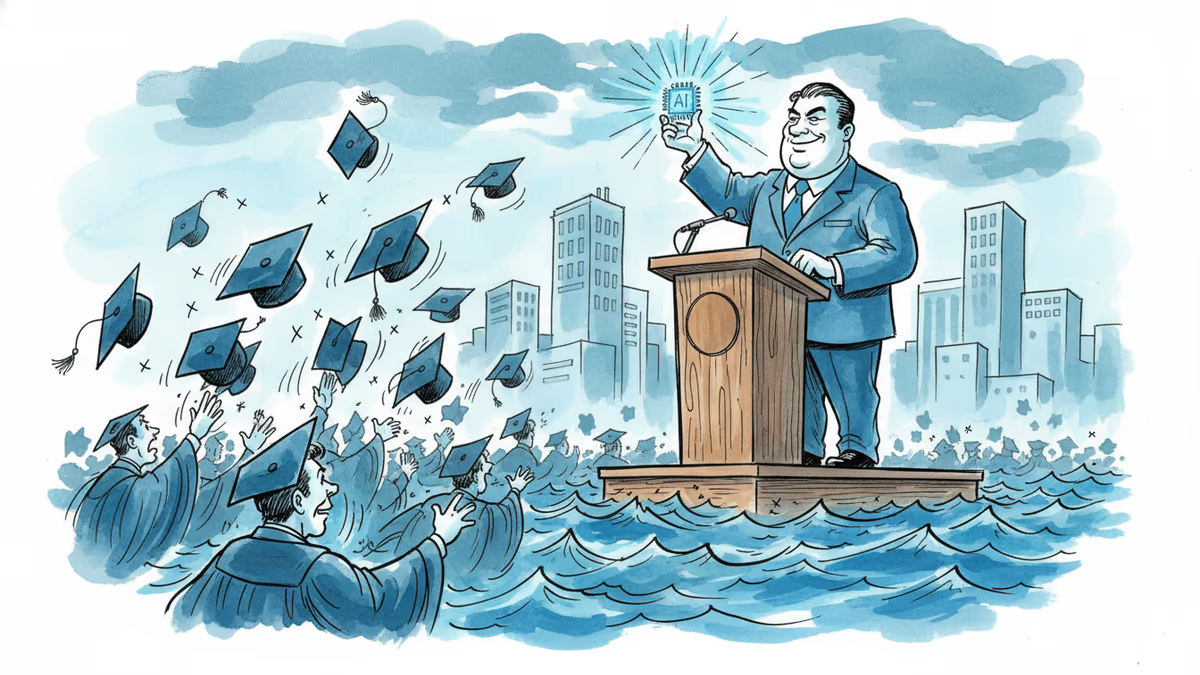
Viral videos show 2026 graduates jeering executives who praise AI at commencement ceremonies. It's not just rudeness — it's a signal about who pays for technological optimism.
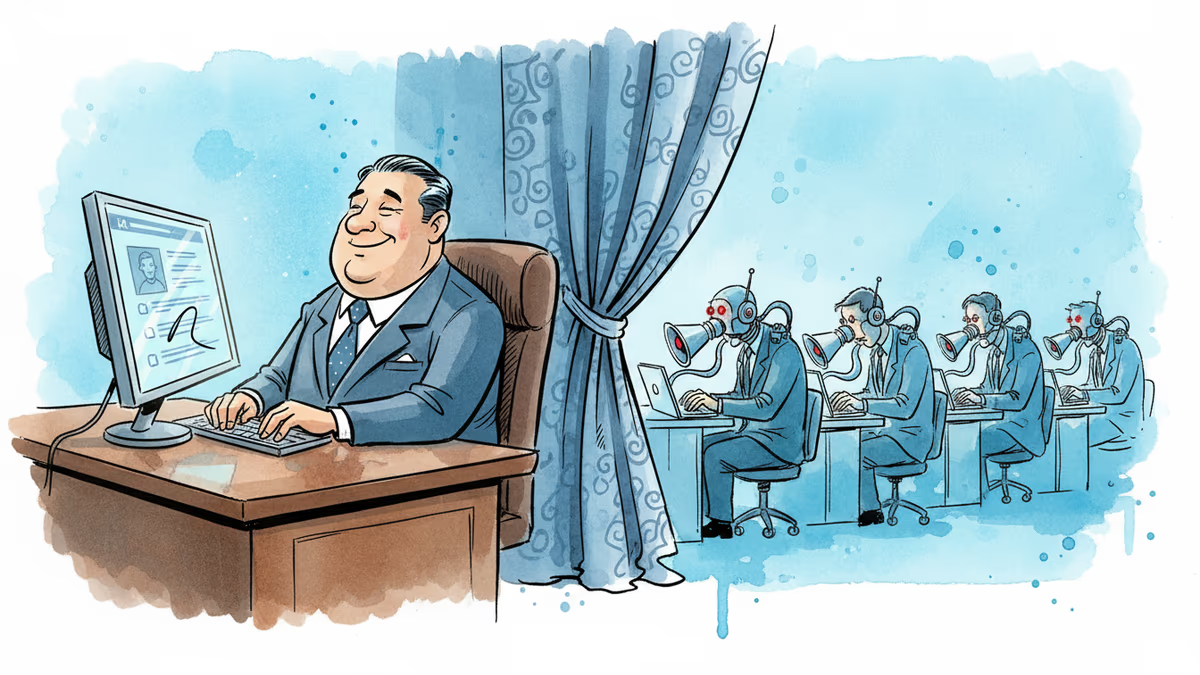
Filipino virtual assistants using AI to ghost-manage LinkedIn profiles for executives is now a structured industry. 30 comments a day, fake engagement rings, and a platform struggling to tell real from fabricated.
Samsung and SK unveiled a chip and AI investment package worth thousands of trillions of won on June 29. The headline number swings wildly by outlet, but the real contest isn't capital — it's water and power.
In a post-Google I/O interview, Sundar Pichai acknowledged flawed search results, real AI anxiety, and an AGI timeline that makes the label irrelevant. Here's what he said — and what it means.
Viral videos show 2026 graduates jeering executives who praise AI at commencement ceremonies. It's not just rudeness — it's a signal about who pays for technological optimism.
Filipino virtual assistants using AI to ghost-manage LinkedIn profiles for executives is now a structured industry. 30 comments a day, fake engagement rings, and a platform struggling to tell real from fabricated.
Thoughts
Share your thoughts on this article
Sign in to join the conversation