
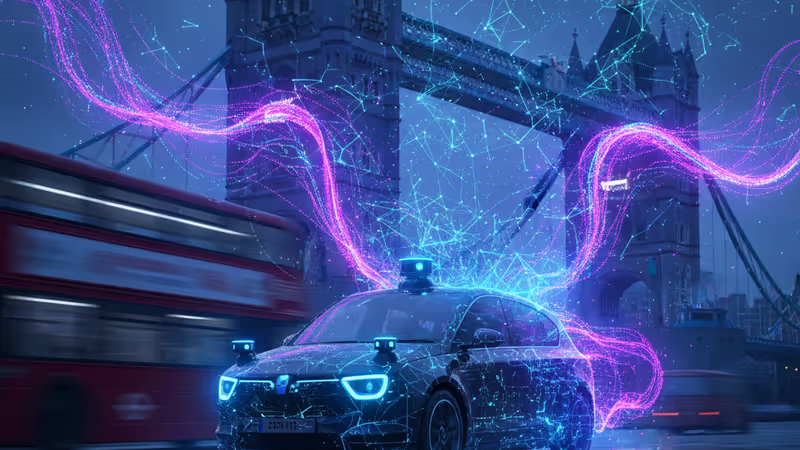
London's 2026 Robotaxi Race Heats Up: Uber and Lyft to Deploy Baidu's Self-Driving Cars
Uber and Lyft are bringing Baidu's Apollo Go robotaxis to London in 2026, joining Waymo and Wayve in a heated race to dominate the city's autonomous vehicle market.
London is shaping up to be the next major battleground for autonomous vehicles. Ride-hailing giants Uber and Lyft both confirmed they will begin testing Baidu's Apollo Go robotaxis in the city in 2026, joining an increasingly crowded field that already includes Waymo and local startup Wayve. The move signals that the race for self-driving dominance is shifting from Silicon Valley test tracks to the complex streets of a global megacity.
In a post on X, Lyft CEO David Risher stated his company will launch its test program as soon as it secures local regulatory approval. He noted that Lyft "plans to scale to hundreds" of Baidu's all-electric RT6 SUVs, though he didn't provide a timeline for a full commercial launch. Uber, confirming its own deal with Baidu first announced in July, said it expects to begin testing there in the first half of 2026.
• **Incumbents:** Waymo (Google/Alphabet), Wayve (UK-based startup) • **New Challengers:** Uber (with Baidu), Lyft (with Baidu) • **Key Vehicle:** Baidu's RT6 electric SUV
These twin rollouts aren't isolated events; they're the latest in a clear strategic pivot across the industry. Instead of burning billions to develop their own AV tech from scratch, Uber and Lyft are acting as aggregators, striking deals with specialists like Baidu and Waymo to stand up operations in cities around the world. For these companies, the path to profitability isn't owning the car—it's owning the customer relationship on the app.
본 콘텐츠는 AI가 원문 기사를 기반으로 요약 및 분석한 것입니다. 정확성을 위해 노력하지만 오류가 있을 수 있으며, 원문 확인을 권장합니다.
관련 기사

일본 대기업 아스쿠, 하우스텐보스, 아사히가 연쇄 사이버 공격을 당해 230만 명의 정보가 유출되고 맥주 사업 매출이 20% 급감하는 등 막대한 피해가 발생했습니다. 단순 데이터 유출을 넘어 기업 운영을 마비시키는 새로운 공격 트렌드를 분석합니다.
레이밴 메타 1세대 스마트 안경이 아마존에서 25% 할인된 역대 최저가 246.75달러에 판매 중입니다. 디자인, AI 기능, 음질, 카메라 등 핵심 스펙과 전문가 평가를 확인하세요.
로봇청소기 룸바 제조사 아이로봇이 파산 신청을 했습니다. 내 룸바는 계속 쓸 수 있을까요? CEO의 답변과 앱, 워런티, 업데이트에 대한 최신 정보를 확인하세요.
미국 정치의 중심 워싱턴 D.C. K 스트리트에 비트코인 테마 펍 '펍키'가 등장했습니다. 중앙 권력과 탈중앙 문화의 충돌이 상징하는 바를 분석합니다.