
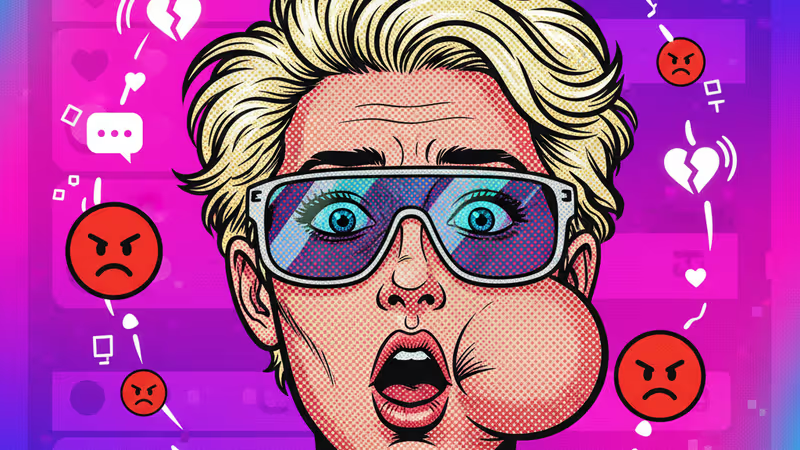
One Swollen Cheek, A Million Angry Fans: Why an Idol's Dental Drama Became a Global Debate
A K-pop idol's post-surgery appearance sparked global outrage. We analyze why this viral moment is about more than a swollen face—it's about labor, fans, and the reality of the idol industry.
TL;DR: Why This Blew Up
A K-pop idol from the group tripleS attended a fan event with her face severely swollen from wisdom teeth surgery. The jarring images went viral, sparking a global conversation that goes far beyond her health—it's a raw look into the relentless demands of the modern entertainment machine and the powerful role of digital fandoms.
The Story: The Fansign Seen 'Round the World
In the hyper-polished world of K-pop, perfection is the baseline. Every hair is in place, every performance is flawless, and every public appearance is carefully curated. That's why photos of tripleS member SeoAh from a December 15th fansign event hit the internet like a system shock. Fans who attended the event immediately noticed her visibly swollen cheek and uncomfortable expression, a stark contrast to the typical bright energy expected of an idol.
The cause? A recent wisdom teeth extraction. Anyone who has undergone the procedure knows the recovery involves pain, swelling, and a strong recommendation to rest. Yet, there she was, signing albums and interacting with fans. The images spread like wildfire from fan accounts to major discussion forums, with the initial concern quickly escalating into a full-blown critique of her agency, Modhaus, and the K-pop industry at large.
The Internet Reacts: Curating the Outrage (and the Humor)
The online reaction was a masterclass in modern fan culture, blending fierce protection with sharp-witted commentary. Here are some of the standout takes that fueled the viral fire:
-
The Protective Fan: User @KpopSentinel captured the core sentiment of many: "This is not professionalism, this is neglect. Let the girl rest! An idol's health should be priority #1, not the schedule. What is Modhaus thinking?"
-
The Dark Humorist: Leaning into the absurdity, user @StanCulturePod tweeted, "She's serving 'just fought a squirrel and lost' but still has to smile for a living. I'm laughing through the tears. This is late-stage capitalism in one photo."
-
The Relatable Everyperson: Many chimed in with their own dental horror stories, like @DentalDramaQueen: "I looked like a literal pumpkin for 5 days and couldn't leave my couch. The fact that she's working is actually insane. The pain is no joke."
-
The Industry Analyst: Zooming out, accounts like @SeoulAnalyst provided a broader perspective: "For those asking why they'd make her work: in a saturated market, every event is critical. This isn't just about one fansign; it's a symptom of an industry that views idols as products with uptime requirements, not people who need sick days."
Cultural Context: Why This Moment Hit Different
SeoAh's swollen cheek became a global symbol for several reasons. Firstly, it punctured the meticulously crafted illusion of K-pop. For a moment, the curtain was pulled back, revealing not a flawless star, but a young person in pain, being made to work. This raw, unfiltered reality is jarring and deeply empathetic.
Secondly, it taps into a growing, global conversation about labor rights and "hustle culture." The image of someone pushing through visible physical discomfort for their job resonates far beyond K-pop, striking a chord with anyone who's felt pressured to work while unwell. It's a powerful visual metaphor for a system that often prioritizes profit over people.
Finally, it showcases the evolving power of fandoms. They are no longer just passive consumers; they are active, vocal stakeholders who function as part-promoter, part-watchdog. Their collective outrage can create significant PR pressure, forcing companies to address issues they might have previously ignored.
PRISM Insight: The Idol as an Uncancellable Service
From our perspective, this incident is a critical case study in what we call "The Idol as an Uncancellable Service." In the digital age, the relationship between a fan and an idol is increasingly transactional. Fansigns, live streams, and constant social media updates are part of the 'service' package. Missing a scheduled event is like a service outage—it breaks the contract with the consumer and risks losing engagement in a fiercely competitive market.
This model creates a paradox. While the industry sells a dream of personal connection and authenticity, its underlying mechanics can be brutally rigid. SeoAh's appearance highlights the tension when human reality (like a painful dental surgery) collides with the 24/7 uptime demanded by the platform economy of entertainment. Her discomfort wasn't a bug; it was a feature of a system that cannot easily accommodate human fragility. The global fan reaction is a pushback against this very premise, demanding that the 'human' be re-centered in the artist-as-a-service equation.
관련 기사
엑소 레이의 갑작스러운 팬미팅 불참 공지가 단순한 해프닝이 아닌 이유. 10년간 이어진 팬들의 희망과 좌절, 그리고 그 이면에 숨겨진 문화적, 지정학적 맥락을 분석합니다.
BTS 정국의 인스타그램 셀카 한 장이 전 세계 K팝 팬덤을 뒤흔들었습니다. 단순한 사진이 아닌, '에스파화' 밈과 4세대 아이돌 문화의 상징이 된 이유를 분석합니다.
댄서 타잔의 '뉴진스 손절' 발언이 K팝 씬을 뒤흔들었습니다. 단순한 취향 변화가 아닌, 팬덤 정치와 업계 역학을 드러낸 이 사건에 대한 해외 팬들의 날카로운 반응과 문화적 분석.
10년 만에 돌아온 '응답하라 1988' 배우들의 OST 프로젝트. 이것이 단순한 팬서비스를 넘어 K-드라마 역사에 남을 문화 현상이 된 이유와 해외 반응을 심층 분석합니다.