
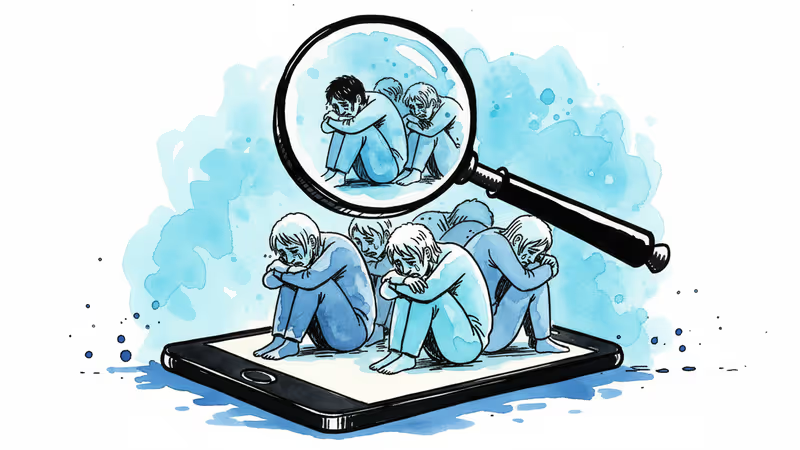
Meta Considered Stopping Research After Damaging Findings Leaked
Internal emails reveal Mark Zuckerberg contemplated changing Meta's research approach after The Wall Street Journal exposed Instagram's harmful effects on teen girls, raising questions about corporate transparency and accountability.
The day after The Wall Street Journal published damaging revelations about Instagram's impact on teen girls' mental health, Mark Zuckerberg sent an email that would raise uncomfortable questions about corporate research ethics. "Recent events have made me consider whether we should change our approach to research and analytics around social issues," the Meta CEO wrote to top executives on September 15th, 2021.
The timing wasn't coincidental. Just 24 hours earlier, the Journal had published explosive findings based on internal documents provided by whistleblower Frances Haugen, revealing that Meta knew its platform was harming teenage users—particularly girls.
When Research Becomes a Liability
Zuckerberg's email, sent to then-COO Sheryl Sandberg and global affairs head Nick Clegg, suggests a troubling corporate reflex: when research reveals uncomfortable truths, perhaps it's better not to research at all. This wasn't speculation or external criticism—these were Meta's own systematic studies documenting potential harm from their platforms.
The leaked documents showed that Meta had conducted rigorous internal research on Instagram's effects on young users. The company knew, through its own data, that the platform could negatively impact teen mental health. Yet instead of using these findings to improve the platform, the CEO's immediate response was to question whether such research should continue.
The Corporate Transparency Paradox
This incident highlights a fundamental paradox in corporate accountability. On one hand, Meta deserves some credit for conducting research into its platform's effects—many companies avoid such studies entirely. On the other hand, the instinct to suppress or halt research when it reveals problems undermines the entire purpose of corporate responsibility initiatives.

The situation mirrors broader challenges facing tech platforms worldwide. How much self-examination should companies conduct? And when they discover problems, what obligations do they have to address them publicly? Zuckerberg's email suggests that at least some executives view research as a potential legal and PR liability rather than a tool for improvement.
Implications for Platform Governance
This revelation comes at a critical time for social media regulation. Lawmakers and regulators have been pushing for greater transparency from tech companies, demanding they share more data about their platforms' effects on users. But if companies respond by conducting less research rather than more, these efforts could backfire.
The incident also raises questions about how other major platforms approach similar research. Do companies like TikTok, Snapchat, or YouTube conduct comparable studies? And if they do, how do they handle findings that might reflect poorly on their products?
For parents and educators, this case underscores the importance of independent research on social media's effects. If companies can't be trusted to transparently investigate their own platforms, external researchers and regulatory bodies must fill that gap.
The Cost of Willful Ignorance
Perhaps most troubling is what Zuckerberg's email reveals about corporate decision-making priorities. The suggestion to "change our approach" to research implies that discovering problems is seen as worse than the problems themselves. This mindset prioritizes legal protection over user safety—a calculation that may serve shareholders but fails the millions of young people using these platforms daily.
The leaked email also demonstrates how quickly corporate attitudes can shift when faced with public scrutiny. Rather than doubling down on research and transparency, the instinct was to retreat and reconsider whether such investigations were worth the risk.
Authors
Related Articles
A law firm marketing itself on AI-powered legal success submitted fake citations in a federal appeal. Now its lawyers face sanctions — and the broader AI legal industry faces a credibility crisis.
Snap, YouTube, and TikTok settled a landmark school district lawsuit over social media addiction. With 1,000+ similar cases pending, this could reshape Big Tech's liability landscape.
Five major publishers and author Scott Turow have filed a class action lawsuit against Meta, alleging the company used illegal pirate sites like LibGen to train its Llama AI models without permission.
New Mexico already won $375 million from Meta. Now it wants something harder to give: a court order forcing Facebook, Instagram, and WhatsApp to redesign themselves. A three-week trial starts Monday.
A law firm marketing itself on AI-powered legal success submitted fake citations in a federal appeal. Now its lawyers face sanctions — and the broader AI legal industry faces a credibility crisis.
Snap, YouTube, and TikTok settled a landmark school district lawsuit over social media addiction. With 1,000+ similar cases pending, this could reshape Big Tech's liability landscape.
Five major publishers and author Scott Turow have filed a class action lawsuit against Meta, alleging the company used illegal pirate sites like LibGen to train its Llama AI models without permission.
New Mexico already won $375 million from Meta. Now it wants something harder to give: a court order forcing Facebook, Instagram, and WhatsApp to redesign themselves. A three-week trial starts Monday.
Thoughts
Share your thoughts on this article
Sign in to join the conversation