
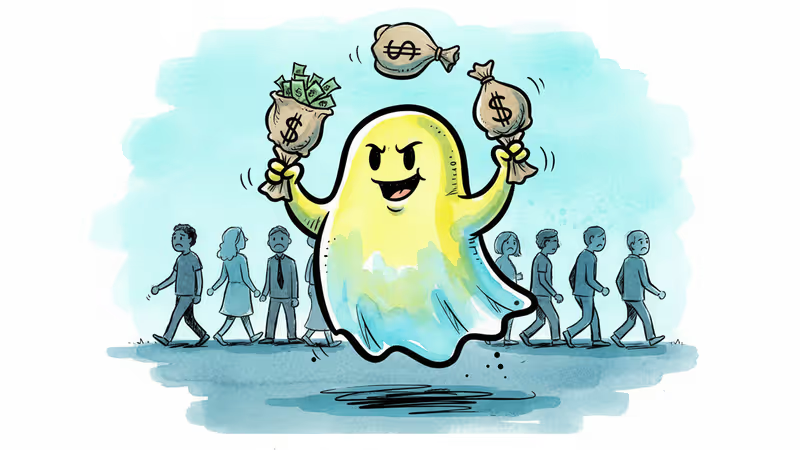
Snapchat's Subscription Surge Can't Stop User Exodus
Snap reports 71% growth in paid subscribers while losing daily active users, highlighting the platform's struggle to diversify beyond advertising revenue.
What happens when your subscription business is booming but your users are walking away? Snapchat is finding out the hard way.
The Revenue Diversification Paradox
Snap reported $1.7 billion in Q4 revenue, up 10% year-over-year, with net income jumping to $45 million from just $9 million the previous year. The company's average revenue per user also climbed from $3.44 to $3.62.
The real star of the show was Snap+, the platform's paid subscription service launched in 2022. Subscribers surged 71% year-over-year to reach 24 million users. For a company desperately trying to reduce its dependence on advertising revenue, this represents a significant win.
But here's the catch: while subscribers are paying up, overall daily active users dropped from 477 million to 474 million. That's 3 million fewer people opening the app each day, with losses concentrated in North America and Europe—Snap's most lucrative markets.
The Competition Squeeze
The user decline isn't happening in a vacuum. Facebook, Instagram, and TikTok are aggressively competing for both users and advertising dollars. This pressure is forcing Snap to lower its Q1 2026 revenue expectations below analyst estimates.
CEO Evan Spiegel acknowledged during Wednesday's earnings call that competition from these platforms is "cutting into advertising earnings." It's a frank admission that Snap's traditional revenue model is under serious threat.

The company is responding by expanding its monetization toolkit. Beyond Snap+, the platform now charges users for Memories storage—a feature that lets users save and store their Snaps. It's a classic freemium play: hook users with free features, then charge for premium storage and functionality.
The AR Glasses Gambit
Perhaps most intriguingly, Snap is preparing to relaunch its augmented reality glasses, Specs, later this year. The company hasn't released a public version since 2019, but it's betting big on AR as the next frontier.
To signal its commitment, Snap created a new subsidiary, Specs Inc., dedicated solely to developing the glasses. Spiegel explained that the hardware could appeal "to a different audience segment" than the "core Snapchat audience," necessitating a "strong standalone brand."
"Our long-term vision for augmented reality extends beyond the smartphone to a future when computing is more natural, contextual and seamlessly integrated into the real world," Spiegel said.
However, the strategy still seems fluid. Spiegel admitted they're "so close to launch" that the focus is simply "nailing the launch and making sure that we deliver an extraordinary product." The monetization strategy? That's apparently still being figured out.
The Platform Evolution Challenge
Snap's situation reflects a broader challenge facing social media platforms: how to evolve beyond advertising-dependent business models while maintaining user engagement. The company's approach—subscriptions, hardware, and premium features—represents one path forward, but it's fraught with risks.
The subscription growth is encouraging, but 24 million paying users out of 474 million daily actives represents just 5% conversion rate. Meanwhile, the user decline in key markets suggests that Snap's core product may be losing its appeal to competitors with deeper pockets and more sophisticated algorithms.
The answer may determine whether Snap becomes a cautionary tale or a blueprint for platform transformation.
Authors
Related Articles
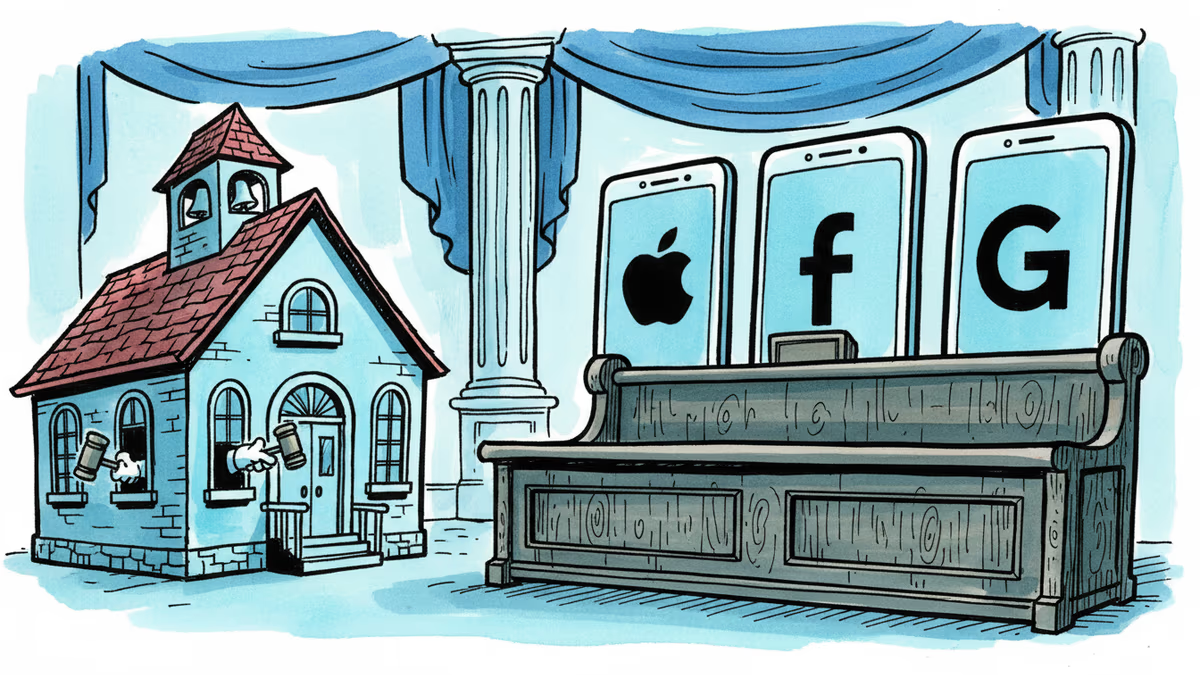
Snap, YouTube, and TikTok settled a landmark school district lawsuit over social media addiction. With 1,000+ similar cases pending, this could reshape Big Tech's liability landscape.

New Mexico already won $375 million from Meta. Now it wants something harder to give: a court order forcing Facebook, Instagram, and WhatsApp to redesign themselves. A three-week trial starts Monday.
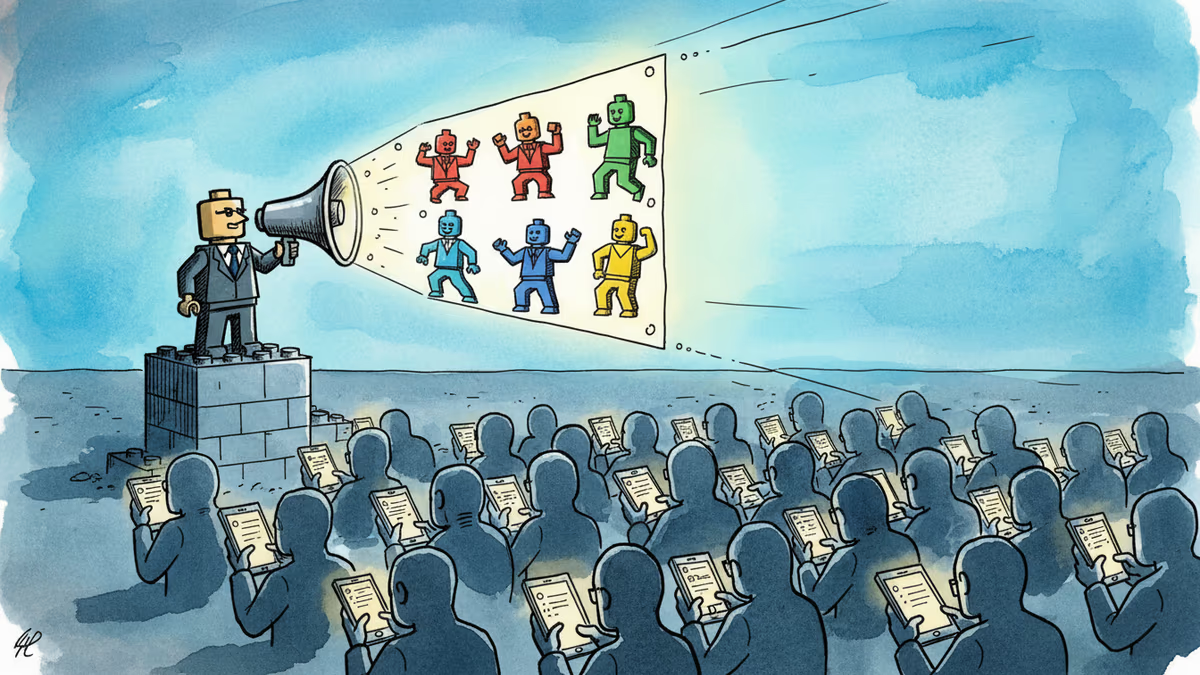
A small pro-Iran team is racking up millions of views with AI-generated Lego videos that mock Trump — and Americans are sharing them. What does that tell us about information warfare?
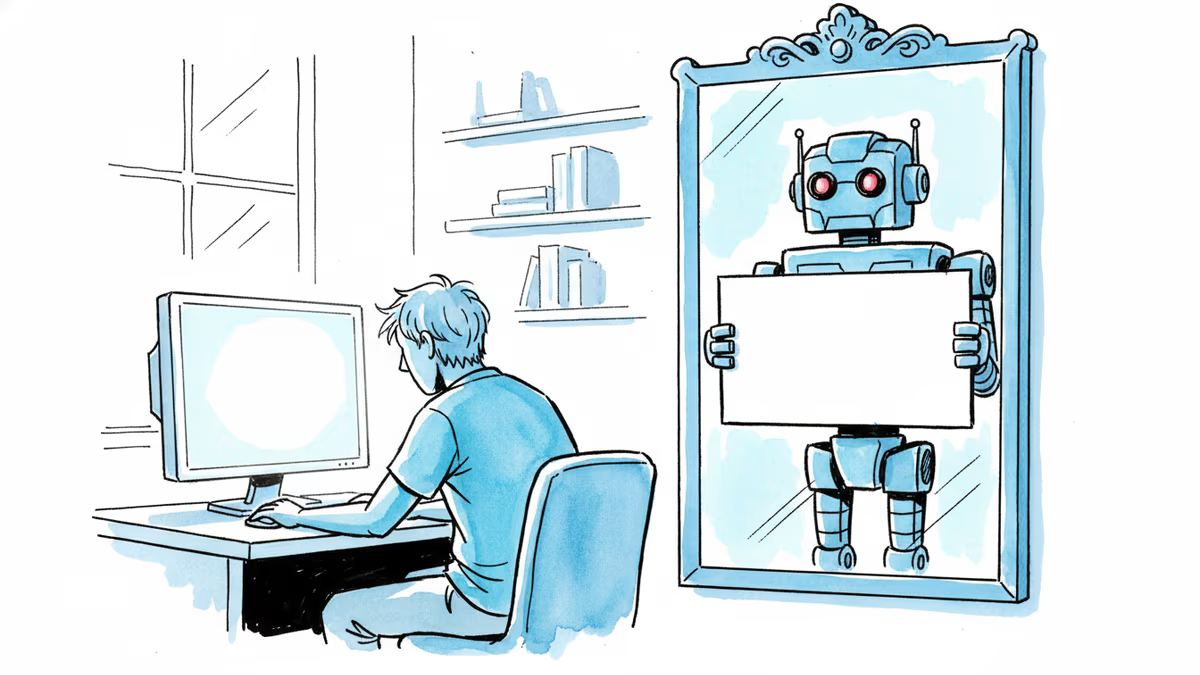
Reddit CEO Steve Huffman announced human verification for suspicious accounts. As AI bots flood the internet, one platform is drawing a line — but the line keeps moving.
Snap, YouTube, and TikTok settled a landmark school district lawsuit over social media addiction. With 1,000+ similar cases pending, this could reshape Big Tech's liability landscape.
New Mexico already won $375 million from Meta. Now it wants something harder to give: a court order forcing Facebook, Instagram, and WhatsApp to redesign themselves. A three-week trial starts Monday.
A small pro-Iran team is racking up millions of views with AI-generated Lego videos that mock Trump — and Americans are sharing them. What does that tell us about information warfare?
Reddit CEO Steve Huffman announced human verification for suspicious accounts. As AI bots flood the internet, one platform is drawing a line — but the line keeps moving.
Thoughts
Share your thoughts on this article
Sign in to join the conversation