
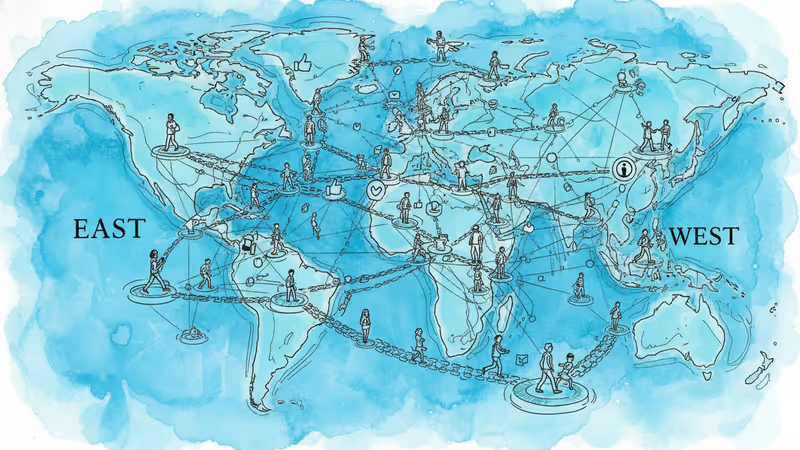
The Chinese Internet Holds the Keys to Understanding Tomorrow
As American TikTok refugees flood Xiaohongshu, the boundaries between Chinese and Western internet blur. Why reading China's web is essential for global understanding.
When TikTok faced its American ban in early 2025, something unexpected happened. Millions of users didn't just disappear—they migrated. Their destination? Xiaohongshu, a Chinese lifestyle platform most Americans had never heard of. Within days, these digital refugees discovered a vibrant online ecosystem that challenged everything they thought they knew about the Chinese internet.
This mass migration revealed a uncomfortable truth: understanding China today requires understanding its internet. With over 1.1 billion Chinese web users—more than twice the entire U.S. population—the Chinese internet isn't just a national phenomenon. It's a global force that shapes everything from African mobile markets to Los Angeles fashion trends.
Beyond the Great Firewall
The Chinese internet's influence extends far beyond China's borders. Shenzhen-based Transsion dominates Africa's mobile phone market, while Shein has become the world's largest fashion retailer, dictating clothing trends globally. Xiaohongshu influences culinary preferences in Düsseldorf and tourism patterns in Laos. When Sichuanese vlogger Li Ziqi showcased rural Chinese life, The New York Times dubbed her the global web's "Quarantine Queen."
This digital ecosystem operates as both mirror and engine of Chinese society. Social media feeds reveal public sentiment when traditional polling isn't available. Censorship patterns often expose the Communist Party's anxieties more clearly than official statements. Viral memes provide sharper insights into popular mood than any think tank analysis.
The boundaries have become increasingly blurred. Douban dissidents migrate to Reddit. Weibo slang goes viral on Twitter. Douyin videos travel seamlessly to TikTok. The Chinese concept of "lying flat"—opting out of intense work culture—now resonates with burned-out millennials worldwide.
The Knowledge Gap Widens
Yet as China's digital influence grows, Western understanding shrinks. The number of American students studying in mainland China plummeted from 15,000 a decade ago to just 700 in 2023. Foreign correspondents face expulsion, and those who remain struggle to find sources willing to speak openly—not just from fear of government repercussion, but because their words might be misconstrued by an increasingly ignorant global audience.

This ignorance carries real consequences. When The Wall Street Journal published an inflammatory op-ed titled "China Is the Real Sick Man of Asia" in February 2020, it sparked a diplomatic crisis that resulted in mass expulsions of foreign journalists from China. The incident highlighted how cultural misunderstanding can escalate into geopolitical conflict.
Meanwhile, pseudo-analysts who've never visited China dominate social media discourse, drowning out genuine expertise. Even reputable newspapers publish sweeping generalizations—what amounts to twenty-first-century Orientalism—attempting to decode a nation of 1.4 billion people through simplistic narratives.
The Convergence Paradox
Perhaps most ironically, American efforts to distance themselves from Chinese digital influence have made the U.S. internet more like China's, not less. The TikTok ban exemplifies this paradox: while the Biden administration moved to prohibit the platform, the Biden campaign simultaneously used it to reach young voters. A platform once celebrated as a creative outlet for over half the U.S. population became reframed as a geopolitical Trojan horse.
As American blogger Mike Masnick observed, "In trying to 'protect' Americans from China, our gripped-by-moral-panic political class has made us just like China. The government has decided that the only way to combat China's techno-authoritarian censorship model is to emulate it."
The rhetoric has converged too. When Secretary of State Mike Pompeo urged allies to build a "clean fortress" around the internet in 2020, he was essentially advocating for America's own Great Firewall.
Universal Digital Dilemmas
The forces shaping the Chinese internet aren't uniquely Chinese. They're present in autocracies and democracies alike: the amplification of extreme voices, the contraction of public discourse, and the erosion of shared truth. Today, both autocrats and Silicon Valley CEOs have colonized the once-open web, monitoring private lives, trapping users in endless feeds, and extracting attention for influence and profit.
As Silicon Valley's attention moguls align with political power, they're centralizing control beyond democratic oversight. We find ourselves constrained by the very technologies that promised liberation—technologies that shape our behavior in ways we can't even perceive, dictating what we click, consume, and discuss.
Authors
Related Articles
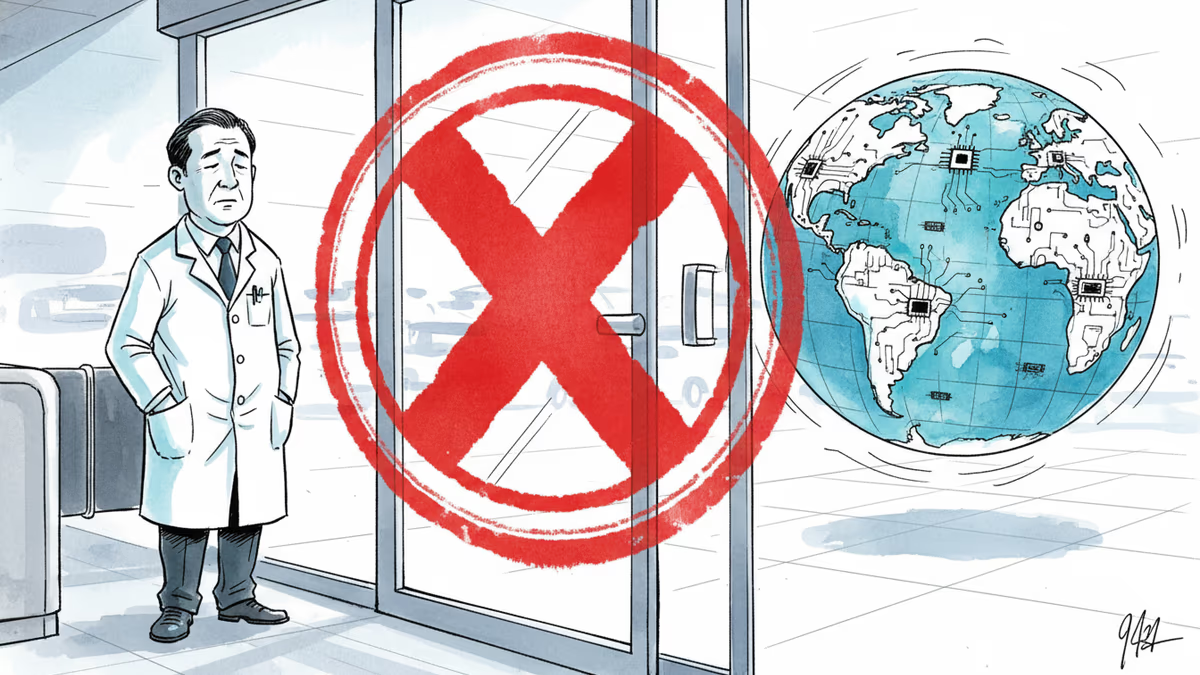
China is restricting AI researchers and startup founders from traveling abroad as the U.S.-China AI performance gap narrows to just 2.7%. What Beijing's talent lockdown means for the global AI race.
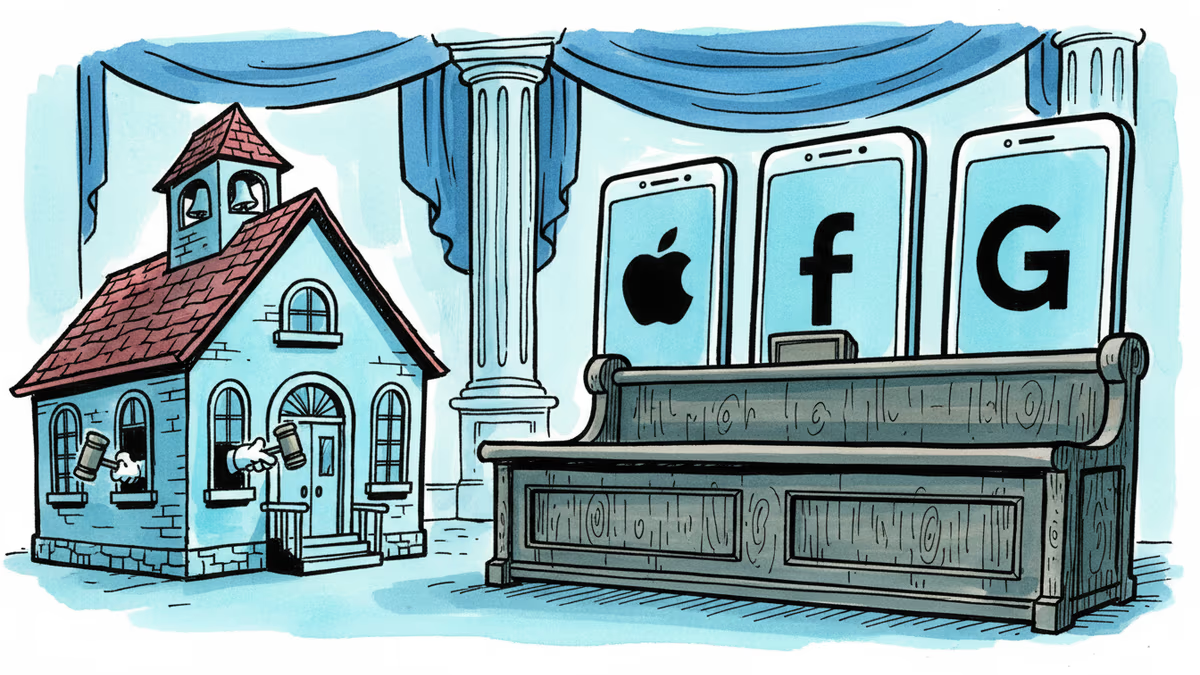
Snap, YouTube, and TikTok settled a landmark school district lawsuit over social media addiction. With 1,000+ similar cases pending, this could reshape Big Tech's liability landscape.
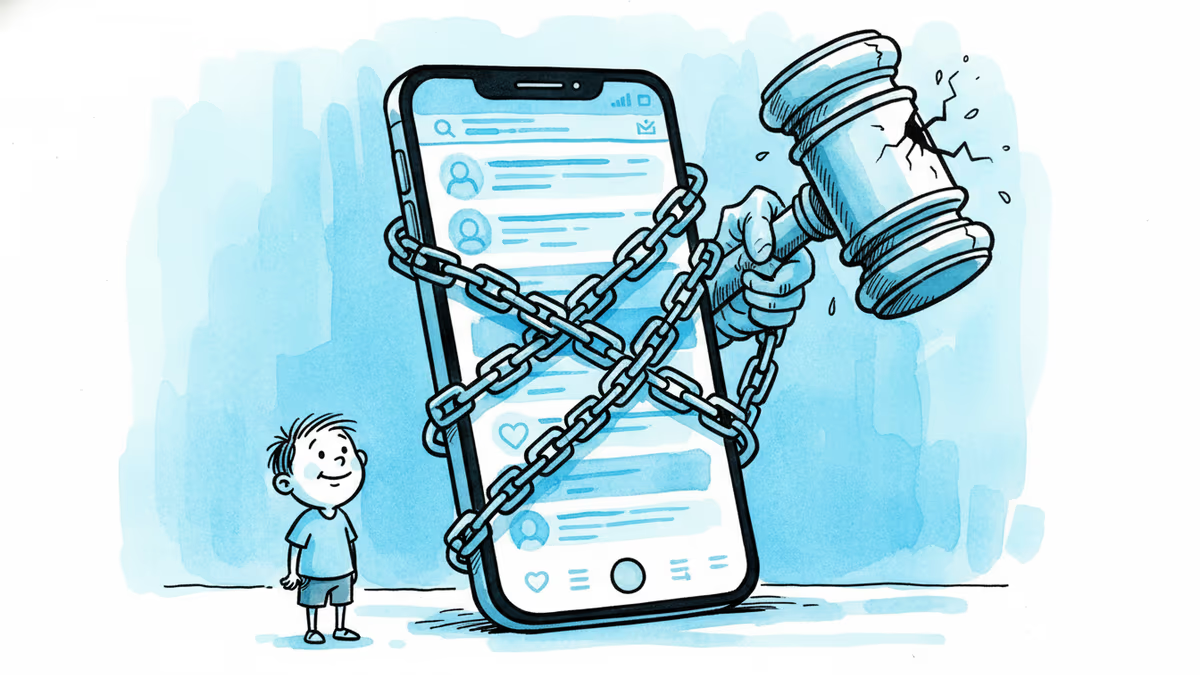
New Mexico already won $375 million from Meta. Now it wants something harder to give: a court order forcing Facebook, Instagram, and WhatsApp to redesign themselves. A three-week trial starts Monday.
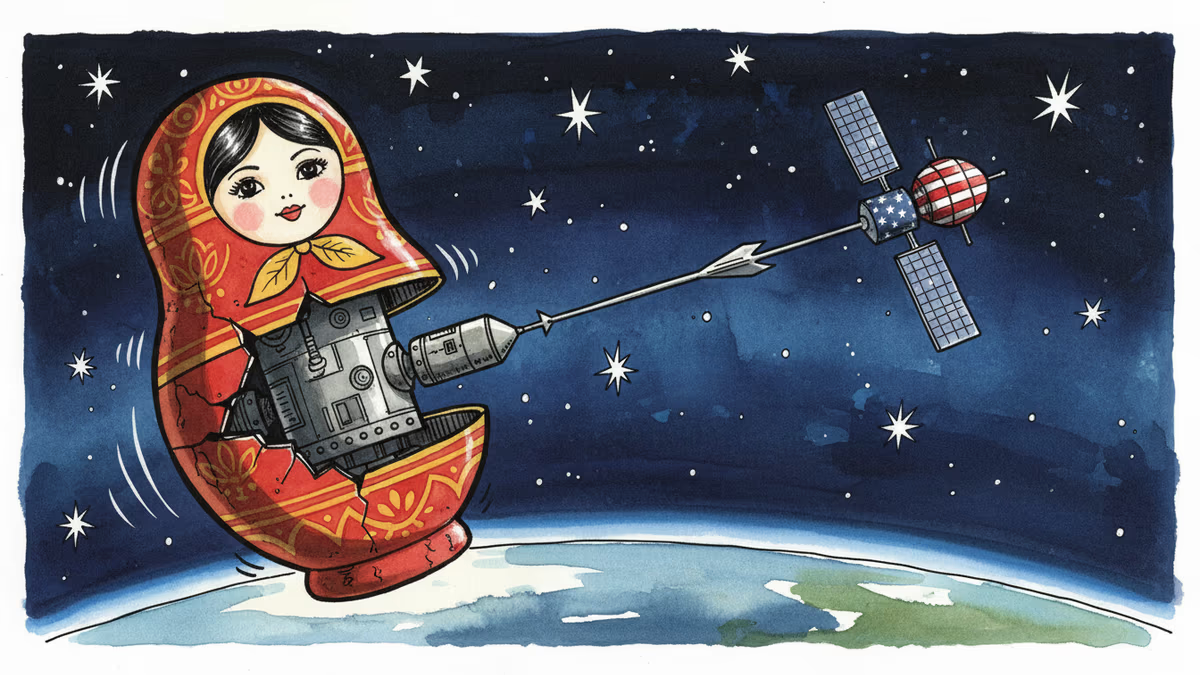
US Space Command confirms Russia has deployed operational anti-satellite weapons tracking American spy satellites in low-Earth orbit. What does this mean for space security?
China is restricting AI researchers and startup founders from traveling abroad as the U.S.-China AI performance gap narrows to just 2.7%. What Beijing's talent lockdown means for the global AI race.
Snap, YouTube, and TikTok settled a landmark school district lawsuit over social media addiction. With 1,000+ similar cases pending, this could reshape Big Tech's liability landscape.
New Mexico already won $375 million from Meta. Now it wants something harder to give: a court order forcing Facebook, Instagram, and WhatsApp to redesign themselves. A three-week trial starts Monday.
US Space Command confirms Russia has deployed operational anti-satellite weapons tracking American spy satellites in low-Earth orbit. What does this mean for space security?
Thoughts
Share your thoughts on this article
Sign in to join the conversation