
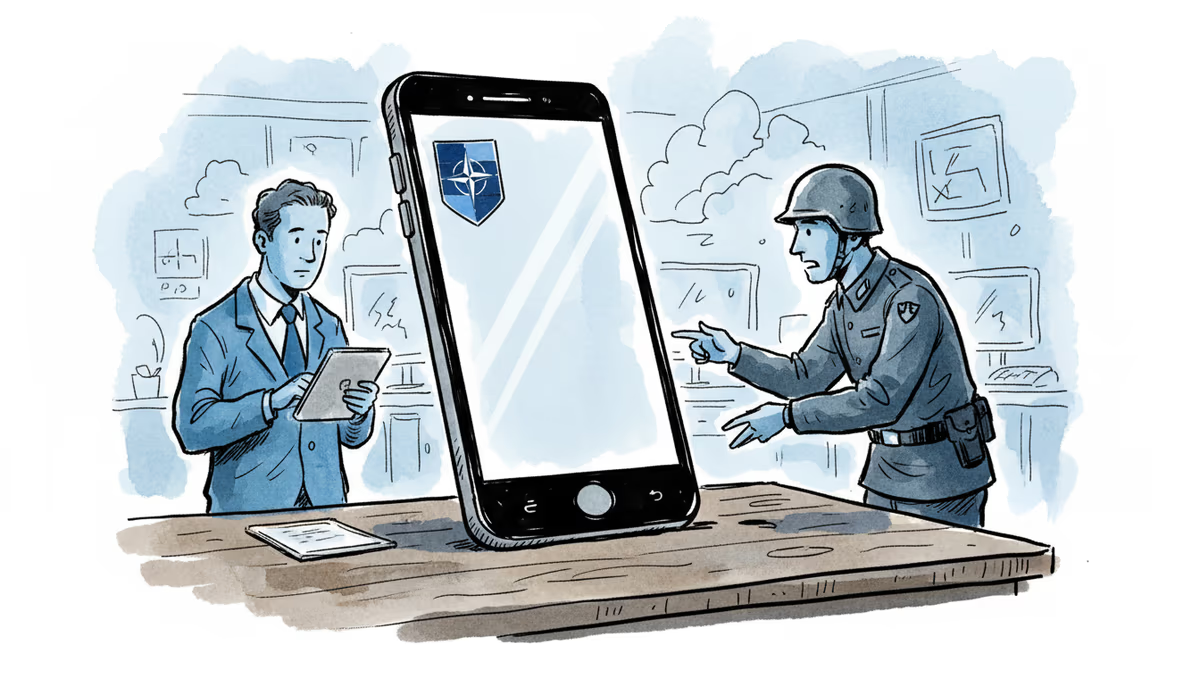
When Your iPhone Becomes a NATO-Approved Device
Apple devices can now handle NATO-restricted information without special software. As consumer tech merges with national security, what questions does this approval raise about privacy, security, and market dynamics?
The 13-Year Gap Just Closed
iPhones and iPads can now handle NATO-restricted information "without requiring special software or settings," Apple announced Thursday. It's the first consumer device to receive this designation since BlackBerry 10 phones got approval back in 2013.
NATO-restricted is the lowest classification level, but it's still information that would be "disadvantageous to NATO's interests" if disclosed. So why now? And what does it mean when your everyday device becomes government-approved for classified work?
From Specialized to Mainstream
Traditionally, military and government agencies relied on purpose-built secure devices. BlackBerry dominated this space for years. But the smartphone ecosystem has fundamentally shifted.
Apple already bakes enterprise-grade security into consumer devices: Face ID, Touch ID, and the Secure Enclave chip. NATO's extensive evaluation apparently concluded that iOS 26 and iPadOS 26 meet their security standards right out of the box. No special modifications needed.
This represents a broader trend: consumer technology becoming sophisticated enough for sensitive government use. But it also raises uncomfortable questions about the blurring lines between personal and state-level security.

Market Implications Run Deep
For Apple, this approval opens doors to lucrative government contracts. NATO's 30 member countries represent a massive procurement market that previously favored specialized vendors like BlackBerry or secure Android variants.
But the ripple effects extend beyond Apple. Traditional cybersecurity companies that built their business on "government-grade" solutions now face competition from mainstream consumer tech. Meanwhile, other smartphone makers will likely pursue similar approvals, potentially reshaping the entire enterprise mobility market.
Government IT departments also face a strategic choice: stick with specialized secure devices or embrace the cost savings and user familiarity of consumer hardware?
The Privacy Paradox
Here's where it gets complicated. Apple has built its brand on privacy and user control. But NATO approval suggests these devices can handle classified information securely. How do we reconcile Apple's "what happens on your iPhone stays on your iPhone" messaging with government-grade security capabilities?
The answer likely lies in hardware-level separation and encryption. But it still means your personal device has the technical capability to process state secrets. That's a significant shift in how we think about consumer technology.
Authors
Related Articles
A critical vulnerability in Starlette—downloaded 325 million times per week—puts millions of AI agent servers at risk, exposing stored credentials for email, databases, and third-party services.
GitHub confirmed hackers stole data from 3,800 internal repositories via a poisoned VS Code extension. Here's why developer tools are now the most dangerous attack surface in tech.
A Utah woman was sentenced to life in prison partly because of her Google searches and deleted texts. The Kouri Richins case reveals how digital footprints have become the courtroom's most reliable witness.
Dirty Frag gives low-privilege users root access on virtually every Linux distro. The exploit code leaked three days ago. Microsoft says attackers are already experimenting with it.
A critical vulnerability in Starlette—downloaded 325 million times per week—puts millions of AI agent servers at risk, exposing stored credentials for email, databases, and third-party services.
GitHub confirmed hackers stole data from 3,800 internal repositories via a poisoned VS Code extension. Here's why developer tools are now the most dangerous attack surface in tech.
A Utah woman was sentenced to life in prison partly because of her Google searches and deleted texts. The Kouri Richins case reveals how digital footprints have become the courtroom's most reliable witness.
Dirty Frag gives low-privilege users root access on virtually every Linux distro. The exploit code leaked three days ago. Microsoft says attackers are already experimenting with it.
Thoughts
Share your thoughts on this article
Sign in to join the conversation