
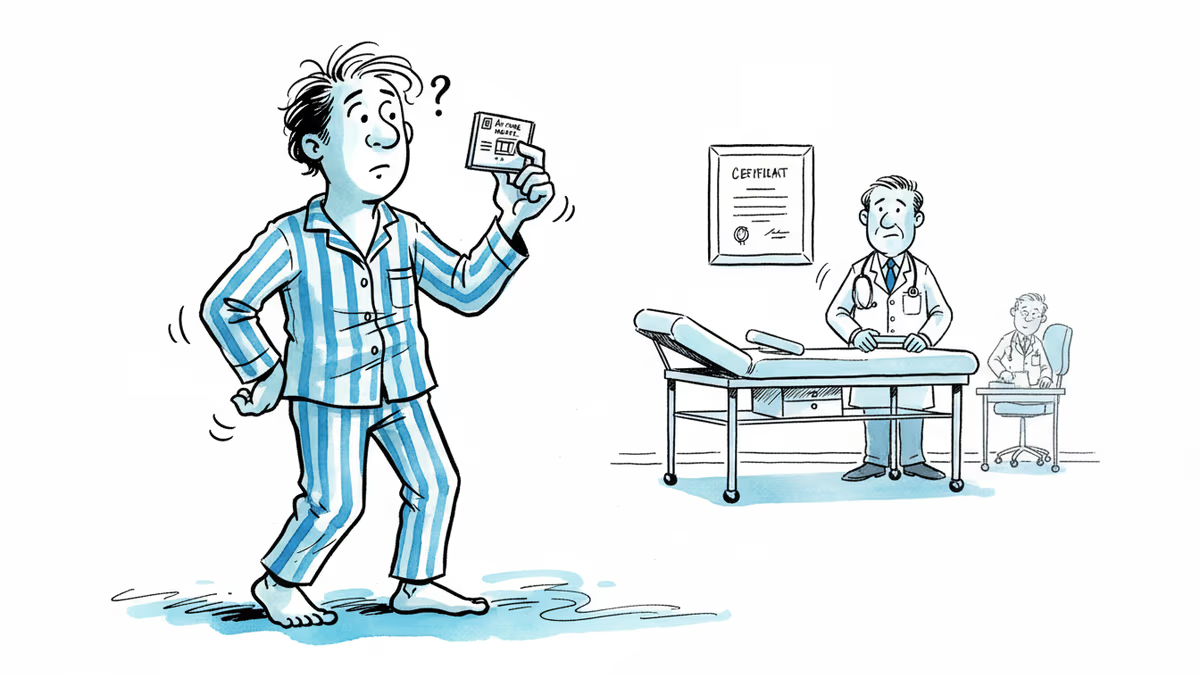
Your Bedroom, Your Lab: The STI Testing Revolution
At-home STI tests promise convenience and privacy, but are they replacing traditional healthcare or creating new blind spots? We examine the trade-offs.
2.2 Million Reasons to Rethink Testing
Sexually transmitted infections hit a record 2.2 million reported cases in 2024, according to the CDC. Yet many people still avoid getting tested. The reasons are familiar: scheduling hassles, waiting rooms, and that uncomfortable conversation with a healthcare provider. Enter at-home STI tests—a $100-$400 solution that promises to eliminate these barriers entirely.
These kits work like other at-home medical tests you might know. You collect samples of blood, urine, or vaginal/rectal swabs using provided tools, then either mail them to a lab or process them at home with a dedicated device. The appeal is obvious: test on your schedule, in your space, without judgment.
The Medical Verdict: "Just as Accurate"
Dr. Shannon Chatham, Medical Director at Wisp, cuts straight to the chase: "At-home STI tests can be just as accurate as those performed in a doctor's office when used correctly, since they often use the same laboratory testing methods."
The key phrase? "When used correctly." These tests work best for bacterial infections like chlamydia, gonorrhea, and syphilis. Viral infections—herpes, HIV, hepatitis—are trickier and generally more reliable when tested by healthcare professionals due to specific incubation periods and symptom patterns.
Dame, known for sex toys, now offers STI testing kits that check for gonorrhea, chlamydia, and syphilis. You can choose single-site testing (urine or vaginal swab) or go comprehensive with their three-site kit covering oral and rectal collection. Results arrive in 3-5 business days via discrete packaging.
30-Minute Results Change the Game
Everlywell's rapid PCR test represents the cutting edge. Like a COVID-19 home test, it delivers results to your phone in 30 minutes. The company even includes tea to sip while you wait—a thoughtful touch that signals how routine this process has become.

For those suddenly single and wanting to responsibly navigate hookup culture despite their doctor having a two-week waitlist, this speed matters. Though currently, these rapid tests are only available for people with vaginas.
The Hidden Costs of Convenience
Price presents the first reality check. While many kits are FSA/HSA-eligible, they're expensive compared to free testing at city health departments or Planned Parenthood clinics. You're essentially paying a premium for privacy and convenience.
More concerning is the risk of user error. Dr. Gary Schoolnik, Chief Medical Officer at Visby Medical, emphasizes following instructions exactly: "You should avoid factors that can interfere with results, including incorrect kit storage or use of certain products in the last 48 hours."
Variables like menstruation or recent antibiotic use can skew results—factors a healthcare provider would account for but that you might miss at home.
The Privacy Paradox
Ironically, choosing at-home testing for privacy might backfire. Test kit packaging in your trash could be more conspicuous than a routine doctor's visit. And receiving positive results while opening mail in your kitchen lacks the support system of hearing such news from a healthcare professional.
Sexologist Sofie Roos warns: "I still recommend people who're having symptoms or know they've been with someone that has an STI to seek professional sexual health care to be completely sure, as a false result from a do-it-at-home-kit can make you think you're okay and therefore dismiss or overlook symptoms."
Different Stakes for Different People
Context matters enormously. If you're immunocompromised, pregnant, experiencing symptoms, or know you've been exposed, at-home testing isn't appropriate. These situations require professional medical attention, not DIY diagnostics.
But for routine screening among healthy adults? The convenience factor is compelling. No appointment scheduling, no waiting rooms, no awkward conversations—just you, a kit, and results.
Authors
Related Articles

CurrentBody's LED Hair Growth Helmet delivers real results with just 10 minutes daily use. But is the convenience worth the premium price tag?

Disabled bodies have long been absent from sex tech conversations, but new accessible devices are changing the landscape of inclusive pleasure technology.

Over-the-counter glucose monitors are transforming weight management. Explore how real-time blood sugar tracking is reshaping personalized health.

Five stories from late September, traced to where the paper trail stops: Korea's export record, Nvidia's Hugging Face 8-K, a US-China AI channel, the UN on AI, and rising births.
CurrentBody's LED Hair Growth Helmet delivers real results with just 10 minutes daily use. But is the convenience worth the premium price tag?
Disabled bodies have long been absent from sex tech conversations, but new accessible devices are changing the landscape of inclusive pleasure technology.
Over-the-counter glucose monitors are transforming weight management. Explore how real-time blood sugar tracking is reshaping personalized health.
Five stories from late September, traced to where the paper trail stops: Korea's export record, Nvidia's Hugging Face 8-K, a US-China AI channel, the UN on AI, and rising births.
Thoughts
Share your thoughts on this article
Sign in to join the conversation