
The 1973 Prophecy That's Shaking Silicon Valley Today
A 53-year-old government report predicted today's digital privacy crisis with uncanny accuracy. Why tech leaders are suddenly revisiting this forgotten document.
When 1973 Meets 2026
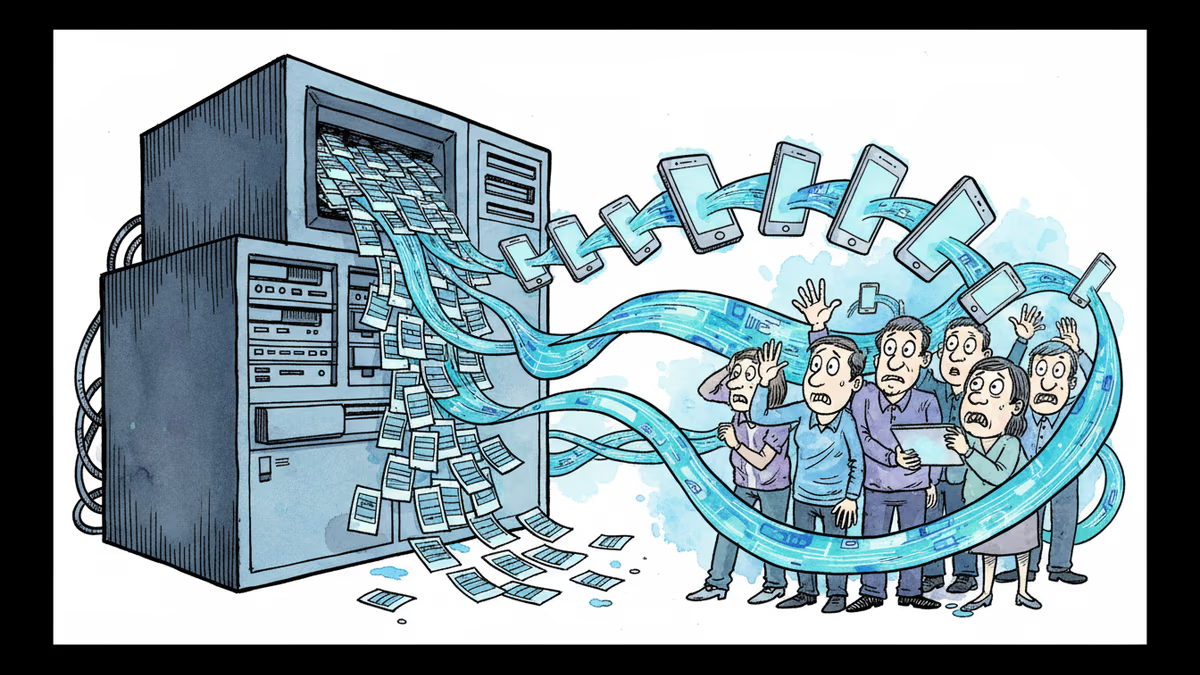
A single line from a 53-year-old government report is making Silicon Valley executives nervous. "Networked computers seemed destined to become the principal medium for making, storing, and using records about people." What sounded like science fiction in 1973 became your daily reality without you noticing.
The Verge's spotlight on this forgotten Department of Health, Education, and Welfare report isn't just historical curiosity. It's become the intellectual foundation for America's emerging "Digital Bill of Rights" – and tech companies are scrambling to understand what that means.
The Uncanny Accuracy of Old Warnings
"Records, Computers, and the Rights of Citizens" reads like a modern privacy advocate's manifesto, despite being written when the internet was still a Pentagon experiment. The 1973 recommendations included:
- Clear disclosure of data collection purposes
- Individual access rights to personal records
- Accuracy guarantees for stored information
- Consent requirements for third-party sharing

Sound familiar? These principles form the backbone of today's GDPR and state privacy laws that tech giants spend billions complying with.
The Corporate Perspective: Déjà Vu or New Territory?
Tech executives are split on how to interpret this historical parallel. Some see it as validation – "We've been dealing with these issues for decades," argues one Silicon Valley privacy officer. Others worry it signals a fundamental shift in how Americans view digital rights.
The timing matters. As Congress considers comprehensive federal privacy legislation, this 1973 blueprint offers lawmakers a ready-made framework that predates Big Tech's influence. That's either reassuring continuity or a regulatory nightmare, depending on your business model.
Beyond American Borders
The global implications extend far beyond US policy. European regulators, already ahead with GDPR, see the American awakening as validation of their approach. Meanwhile, authoritarian governments are watching closely – if America strengthens digital rights protections, it complicates their own surveillance ambitions.
For multinational corporations, the prospect of a US federal privacy law based on 1973 principles means another layer of compliance complexity. The question isn't whether to adapt, but how quickly.
Authors
Related Articles
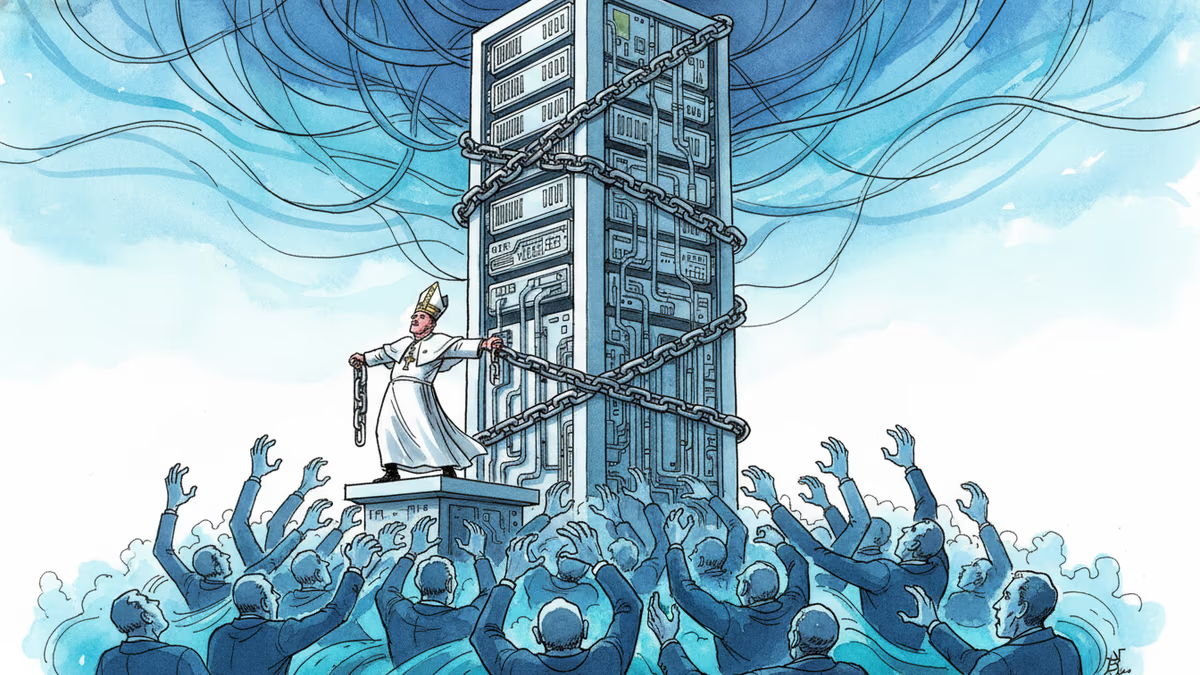
Pope Leo XIV's first encyclical frames AI not as a technology problem but a power problem. Who controls the algorithm controls reality—and that's a political question, not a spiritual one.
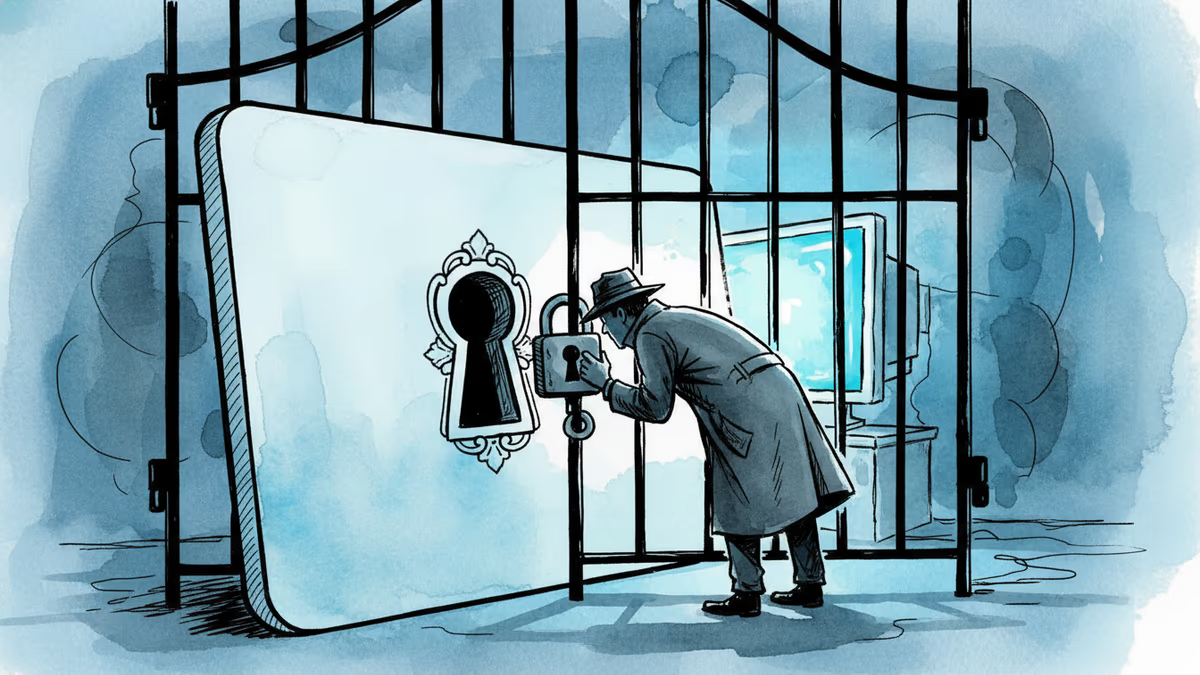
Wisconsin Governor Tony Evers vetoed an age verification bill for adult sites, citing privacy concerns. With 25+ states going the other way, the debate cuts to the heart of online freedom vs. child protection.

For Iranian diaspora families, digital communication isn't convenience—it's survival. What happens when staying connected becomes a political act?
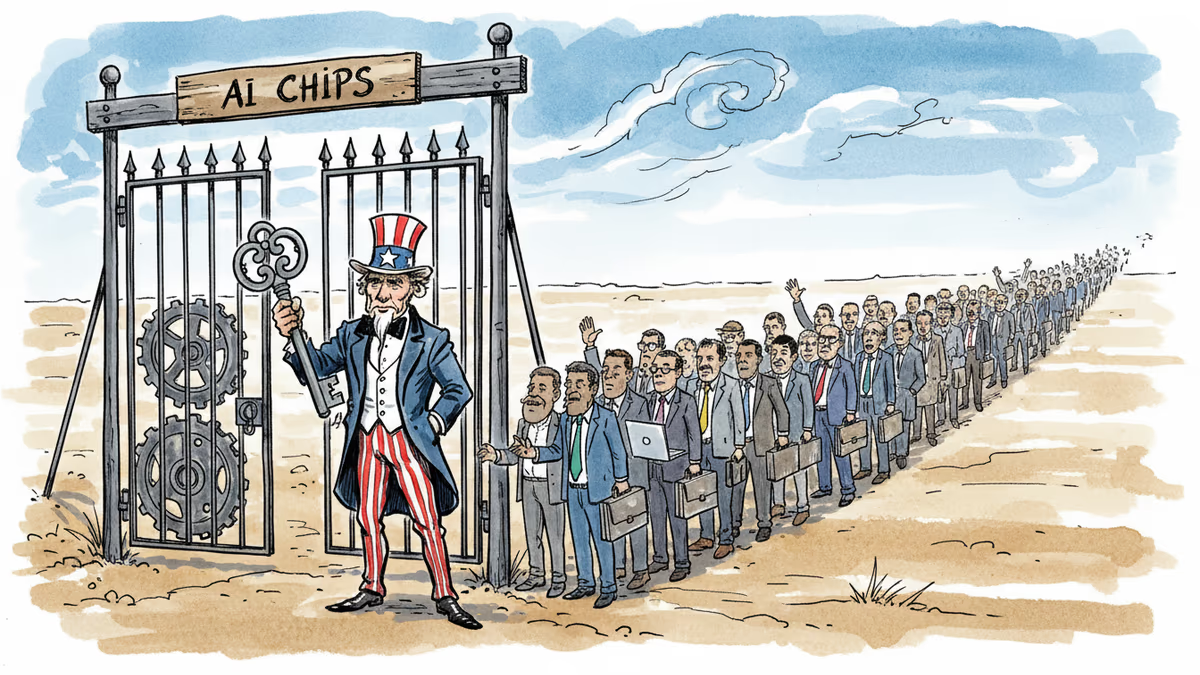
Trump administration drafts rules requiring US approval for all AI chip exports worldwide. While aimed at control, the move might accelerate global tech fragmentation.
Pope Leo XIV's first encyclical frames AI not as a technology problem but a power problem. Who controls the algorithm controls reality—and that's a political question, not a spiritual one.
Wisconsin Governor Tony Evers vetoed an age verification bill for adult sites, citing privacy concerns. With 25+ states going the other way, the debate cuts to the heart of online freedom vs. child protection.
For Iranian diaspora families, digital communication isn't convenience—it's survival. What happens when staying connected becomes a political act?
Trump administration drafts rules requiring US approval for all AI chip exports worldwide. While aimed at control, the move might accelerate global tech fragmentation.
Thoughts
Share your thoughts on this article
Sign in to join the conversation