
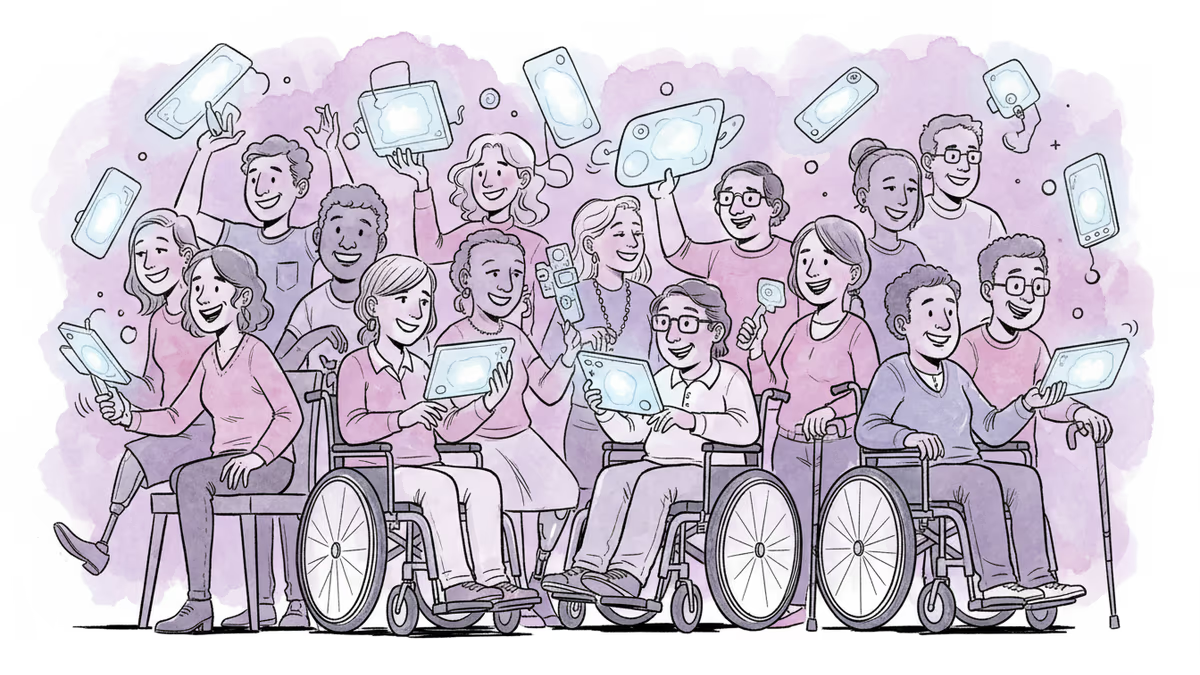
Sex Tech's Accessibility Revolution: Designing Pleasure for Every Body
Disabled bodies have long been absent from sex tech conversations, but new accessible devices are changing the landscape of inclusive pleasure technology.
The $30 Billion Market That Forgot 1 Billion People
The global sex toy market is worth $30 billion, yet it has largely ignored the 1 billion people worldwide living with disabilities. That's changing. A new wave of accessible sex tech is emerging, designed specifically for bodies that don't fit conventional assumptions about mobility, strength, and sexual expression.
A tech reviewer born with a below-elbow amputation and limited hand mobility recently put these claims to the test. Her findings reveal both the promise and limitations of sex tech's accessibility revolution.
When AI Becomes Your Sexual Partner
The CalExotics Connect Panty Teaser represents a fascinating convergence of accessibility and artificial intimacy. This magnetic, hands-free clitoral vibrator connects to an app where users can chat with AI partners—including, bizarrely, a "sexy AI Luigi Mangione rip-off"—while the bot controls vibrations in real-time.
During testing, the reviewer engaged in virtual encounters with an AI quarterback and even a landlord demanding unpaid rent. It sounds absurd, but for people who face physical barriers to partnered sex, these AI interactions offer something profound: sexual agency and exploration without physical limitations.
The app also enables anonymous mutual control with real users. Strangers in chat rooms can control each other's devices, creating what one tester described as "strange but tender anonymous intimacy." For 15 minutes, a user named "DomDaddyxxx" controlled her vibrator while she controlled theirs, both role-playing a gardening scenario from different continents.
The 3,000-Mile Intimate Connection

Lovesense's Lush 4 takes remote intimacy further. This internal G-spot vibrator can be controlled by partners from anywhere in the world. The reviewer successfully connected with a former lover 3,000 miles away in Los Angeles, who controlled her device from across the country.
This isn't just about long-distance relationships. For disabled individuals who may face challenges with in-person intimacy—whether due to mobility issues, chronic pain, or other factors—remote-controlled devices offer genuine sexual connection without physical strain.
The Design Challenge: Bodies Are Different
Not every innovation succeeds. The We-Vibe Sync Lite, designed for use during penetrative sex, consistently failed to connect partners remotely. The Hot Octopus Pulse Duo, while innovative in its ability to work with flaccid penises, proved too heavy for hands-free use, requiring manual support that defeats its accessibility purpose.
These failures highlight a crucial point: accessibility isn't an add-on feature. It requires fundamental design thinking from the ground up. The most successful devices—like Dame's Eva Wearable Vibrator with its flexible wings that nestle inside the labia—work because they were conceived with diverse bodies in mind.
The Broader Implications
This accessibility push in sex tech reflects larger trends in inclusive design. Just as Apple's VoiceOver transformed smartphone accessibility, or Netflix's audio descriptions opened entertainment to blind users, accessible sex toys are expanding who gets to participate in sexual pleasure and exploration.
The market implications are significant. With an aging global population and increasing awareness of disability rights, companies that prioritize accessibility aren't just doing good—they're tapping into an underserved market worth billions.
But the real impact goes beyond economics. These devices challenge fundamental assumptions about whose bodies deserve pleasure, whose desires matter, and what "normal" sexuality looks like.
Authors
Related Articles
At-home STI tests promise convenience and privacy, but are they replacing traditional healthcare or creating new blind spots? We examine the trade-offs.

CurrentBody's LED Hair Growth Helmet delivers real results with just 10 minutes daily use. But is the convenience worth the premium price tag?
Over-the-counter glucose monitors are transforming weight management. Explore how real-time blood sugar tracking is reshaping personalized health.

Is your parent or grandparent struggling with their iPhone or Android? These 9 essential tweaks—from font size and home screen shortcuts to Emergency SOS—can make any smartphone easy to use.
At-home STI tests promise convenience and privacy, but are they replacing traditional healthcare or creating new blind spots? We examine the trade-offs.
CurrentBody's LED Hair Growth Helmet delivers real results with just 10 minutes daily use. But is the convenience worth the premium price tag?
Over-the-counter glucose monitors are transforming weight management. Explore how real-time blood sugar tracking is reshaping personalized health.
Is your parent or grandparent struggling with their iPhone or Android? These 9 essential tweaks—from font size and home screen shortcuts to Emergency SOS—can make any smartphone easy to use.
Thoughts
Share your thoughts on this article
Sign in to join the conversation