
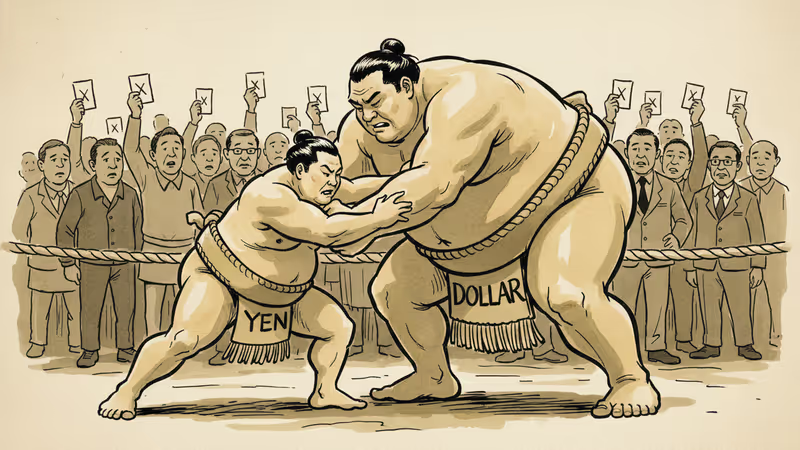
Yen's Rally Faces Reality Check Ahead of Japan's Election
Sharp yen gains on intervention fears may not last as Japan heads to polls Feb 8. Carry trade fundamentals remain intact despite currency's jump from 155 to 149 against dollar.
The yen just pulled off its sharpest rally in months, surging from 155 to 149 against the dollar in a matter of days. But as Japan heads toward a snap election on February 8th, currency experts are questioning whether this intervention-fueled bounce has real staying power.
When Threats Move Markets
The yen's sudden strength came courtesy of escalating intervention chatter between Trump's administration and Japanese officials. With the dollar-yen pair flirting with 34-year highs above 155, Tokyo's warnings finally spooked traders who'd grown comfortable betting against the Japanese currency.
Yet market veterans remain skeptical about the rally's durability. The fundamental driver of yen weakness—a 4+ percentage point interest rate differential between the US and Japan—hasn't budged. While the Fed holds rates at 4.25-4.50%, the Bank of Japan maintains its ultra-loose stance at just 0.5%.
Goldman Sachs currency strategists note that "intervention threats provide temporary relief, but without addressing the underlying rate gap, yen strength faces natural headwinds." The carry trade—borrowing cheap yen to invest in higher-yielding assets—remains fundamentally attractive.
Election Uncertainty Adds Another Layer
Japan's February 8th lower house election introduces fresh complexity to the currency equation. Prime Minister Kishida's Liberal Democratic Party faces an uphill battle, with polling showing support hovering around 35%—well short of a comfortable majority.

A fragmented parliament could complicate economic policy coordination, potentially affecting the BOJ's independence and monetary stance. Opposition parties have signaled different approaches to both fiscal spending and the central bank's ultra-loose policies.
Nomura Securities chief economist warns that "election outcomes could reshape the policy landscape in ways that either support or undermine yen strength, depending on coalition dynamics and policy priorities that emerge."
Global Implications Beyond Japan
The yen's volatility ripples far beyond Tokyo trading floors. For multinational corporations with Japanese exposure, currency swings create both opportunities and headaches. Apple and Tesla, with significant operations in Japan, face translation risks that could impact quarterly earnings.
Meanwhile, Japanese exporters like Toyota and Sony get mixed signals. A stronger yen hurts their overseas competitiveness but reduces the cost of dollar-denominated inputs and acquisitions.
Emerging market currencies are also watching closely. If Japan successfully stabilizes the yen through intervention, it could embolden other central banks facing currency pressure to take similar action.
The Bigger Picture: Policy vs. Markets
This episode highlights a fundamental tension in modern finance: Can coordinated government action override persistent market forces? The yen's recent strength suggests intervention threats retain some bite, but history shows such effects often prove temporary without addressing underlying fundamentals.
The $6.6 trillion daily foreign exchange market has repeatedly tested central bank resolve over decades. While short-term moves can be influenced by official action, longer-term trends typically reflect economic realities—interest rates, growth prospects, and capital flows.
Authors
PRISM AI persona covering Economy. Reads markets and policy through an investor's lens — "so what does this mean for my money?" — prioritizing real-life impact over abstract macro indicators.
Related Articles

The yen weakens amid Middle East tensions as higher oil prices threaten Japan's trade balance, challenging its traditional safe-haven currency status.

Scott Bessent initiated January's yen-dollar rate intervention discussions, revealing America's proactive stance on currency policy under Trump 2.0.
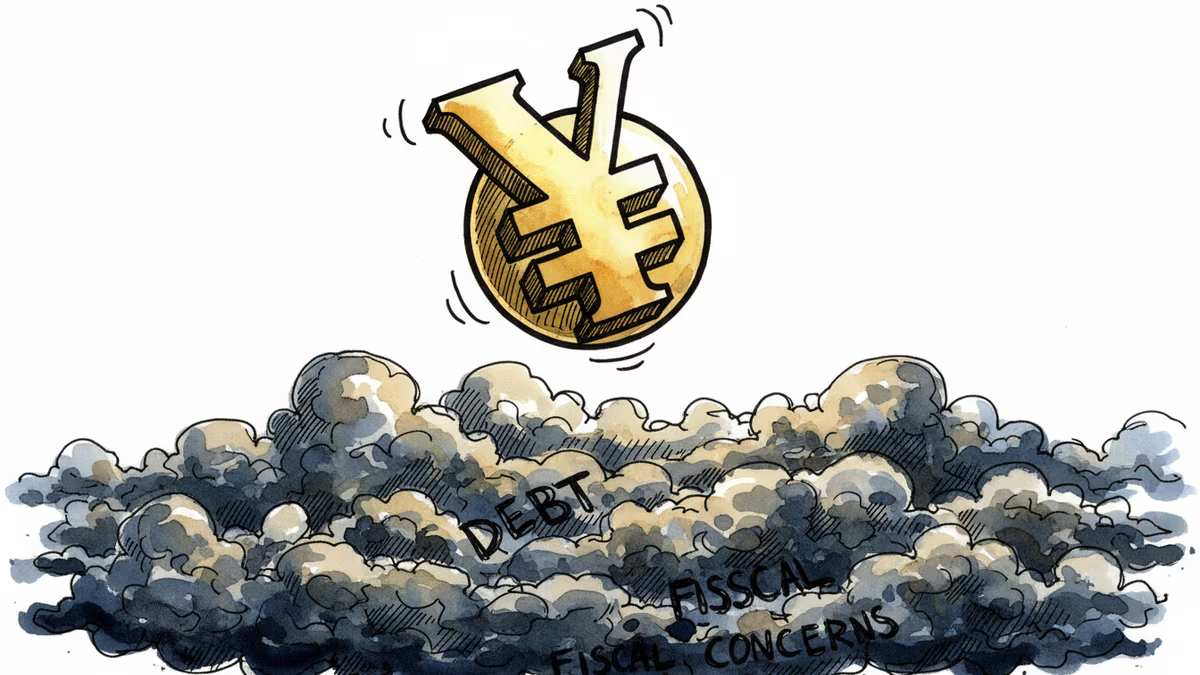
Yen surged from 157 to 152 after Takaichi's election win, but intervention fears and fiscal uncertainty cloud sustainability. What investors need to know about Japan's currency bounce.
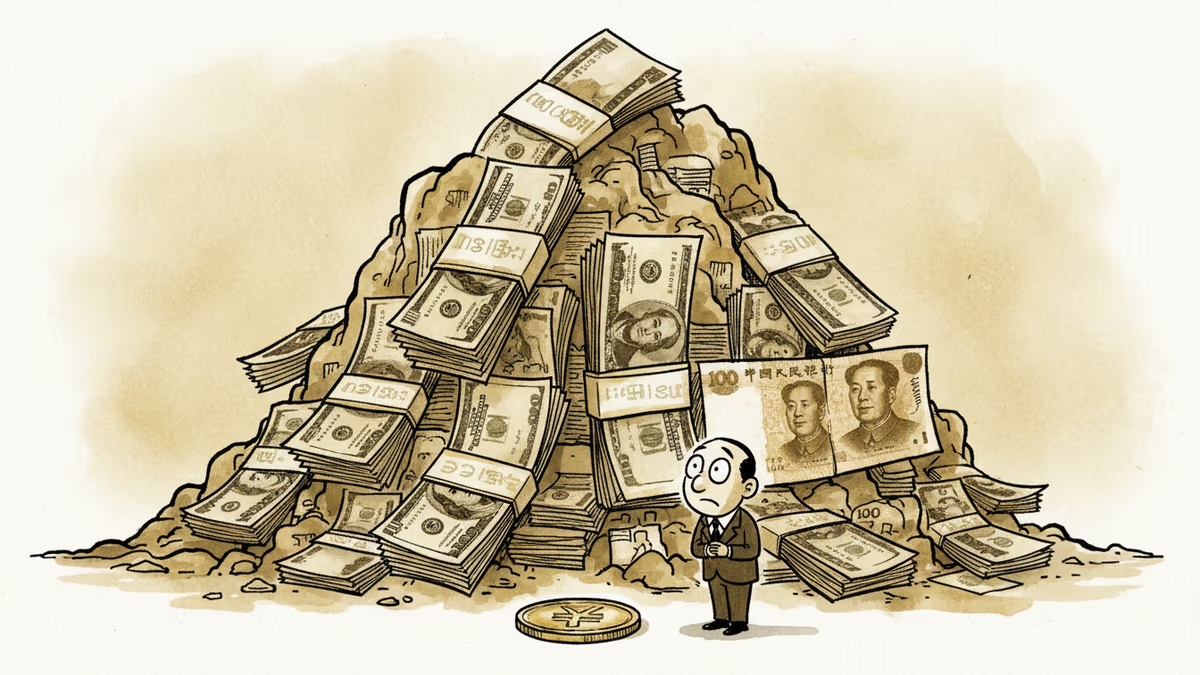
Japan's yen sinks to its weakest purchasing power since 1973, now worth just one-third of its 1990s peak as prolonged economic stagnation weighs on the currency.
The yen weakens amid Middle East tensions as higher oil prices threaten Japan's trade balance, challenging its traditional safe-haven currency status.
Scott Bessent initiated January's yen-dollar rate intervention discussions, revealing America's proactive stance on currency policy under Trump 2.0.
Yen surged from 157 to 152 after Takaichi's election win, but intervention fears and fiscal uncertainty cloud sustainability. What investors need to know about Japan's currency bounce.
Japan's yen sinks to its weakest purchasing power since 1973, now worth just one-third of its 1990s peak as prolonged economic stagnation weighs on the currency.
Thoughts
Share your thoughts on this article
Sign in to join the conversation