
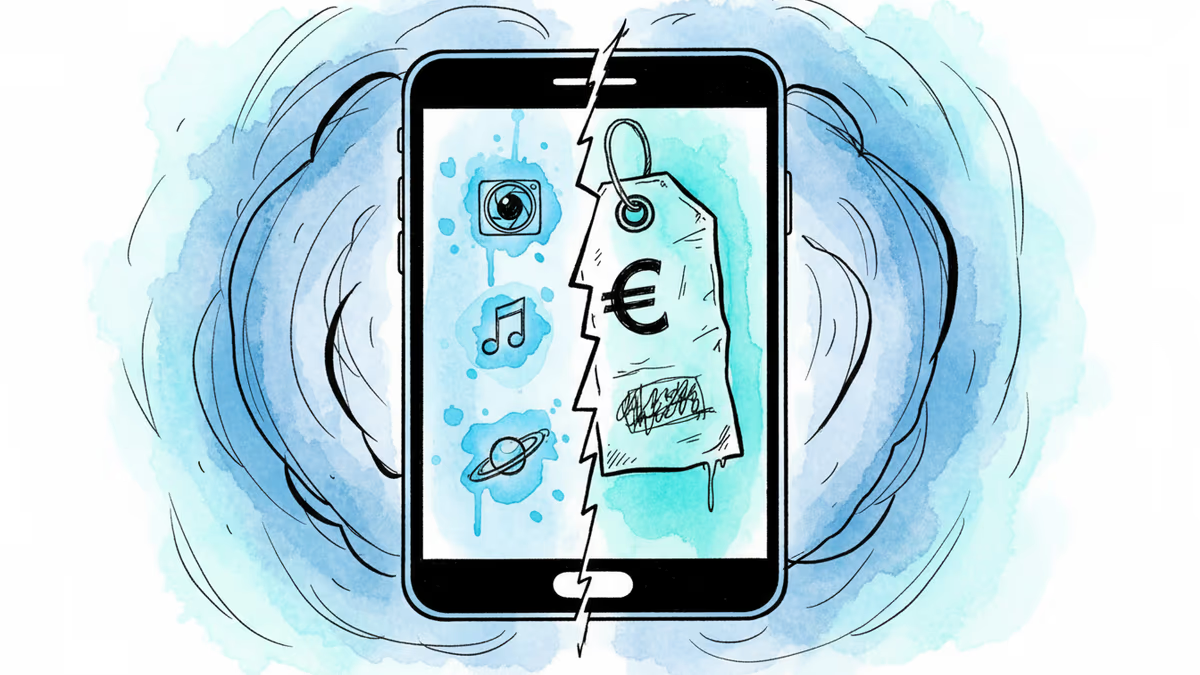
Xiaomi 17 Targets Premium Market, But Skips Its Most Innovative Model
Xiaomi launches flagship 17 series globally at aggressive pricing, but excludes the dual-screen 17 Pro from international markets in a strategic bet on mainstream appeal.
£899 vs £1,200: Xiaomi's Price War Declaration
Xiaomi just fired a shot across the bow of the premium smartphone market. The Xiaomi 17 launches globally at £899 (€999), directly challenging the expected £1,200+ price points of the iPhone 17 and Samsung Galaxy S26. The 17 Ultra starts at £1,299, still undercutting competitors by 15-20%.
But here's the twist: the most innovative model from Xiaomi's China launch—the 17 Pro with its rear secondary display—didn't make the global cut. This isn't an oversight. It's strategy.
The Missing Pro: Innovation vs. Market Reality
The 17 Pro's exclusion from global markets reveals Xiaomi's calculated gamble. In China, that secondary display next to the rear cameras was marketed as revolutionary—perfect for selfies, notifications, and multitasking. Chinese consumers embraced it as cutting-edge tech.
Western markets? Different story. Focus groups likely showed what industry insiders suspected: European and American consumers view such features as "gimmicky" rather than practical. They want proven functionality, not experimental interfaces.
"Chinese consumers are early adopters of new form factors," explains a former Xiaomi executive. "Western consumers want to see the iPhone or Galaxy do it first."

Leica Partnership: Borrowed Premium Credibility
The Leitzphone edition represents Xiaomi's most ambitious premium play yet. By partnering with Leica, the German camera legend, Xiaomi borrows decades of photography credibility. It's the same playbook Huawei used successfully before US sanctions derailed its global ambitions.
But partnerships have limits. OnePlus tried similar strategies with Hasselblad, and Vivo with Zeiss. The photography improvements were real, but brand perception moved slowly. Premium positioning requires more than borrowed heritage—it demands consistent execution across software, support, and ecosystem integration.
The Samsung-Apple Duopoly Under Pressure
Xiaomi's timing is strategic. Samsung faces margin pressure from economic uncertainty, while Apple grapples with innovation fatigue and regulatory scrutiny. The £899 price point hits the sweet spot where consumers want flagship features but balk at £1,200+ prices.
Early reviews praise the 17's camera system and build quality. If Xiaomi can deliver on software updates and customer service—traditional Chinese brand weak points in Western markets—they could capture market share from both directions: premium buyers seeking value and mid-range buyers wanting to upgrade.
The China Strategy Paradox
Xiaomi's global approach reveals a fundamental tension. In China, they can be experimental, pushing boundaries with features like dual displays and aggressive AI integration. Globally, they must be conservative, focusing on proven value propositions.
This creates a product development paradox: their most innovative work stays in China, while global markets get "safer" versions. It's the opposite of how Apple and Samsung operate, using global launches to showcase their most advanced technology.
Authors
Related Articles

The Xiaomi 17 Ultra, Honor Magic 8 Pro, and other global flagships are outspeccing Samsung and Apple—but US consumers can't legally buy them. Here's what that means.
Xiaomi Tag supports both Apple Find My and Google Find My Device networks, comes with built-in metal loop, and challenges the ecosystem lock-in strategy of big tech companies.

Xiaomi partners with Leica to launch the €1,999 17 Ultra, challenging premium smartphone leaders with 200MP telephoto and 6000mAh battery. Can the Chinese brand shed its budget image?

Leica grants Xiaomi its iconic red dot logo for the first time, marking a new phase in their 3-year partnership. What this means for the premium smartphone market.
The Xiaomi 17 Ultra, Honor Magic 8 Pro, and other global flagships are outspeccing Samsung and Apple—but US consumers can't legally buy them. Here's what that means.
Xiaomi Tag supports both Apple Find My and Google Find My Device networks, comes with built-in metal loop, and challenges the ecosystem lock-in strategy of big tech companies.
Xiaomi partners with Leica to launch the €1,999 17 Ultra, challenging premium smartphone leaders with 200MP telephoto and 6000mAh battery. Can the Chinese brand shed its budget image?
Leica grants Xiaomi its iconic red dot logo for the first time, marking a new phase in their 3-year partnership. What this means for the premium smartphone market.
Thoughts
Share your thoughts on this article
Sign in to join the conversation