
Xiaomi Just Made a Smarter AirTag Than Apple
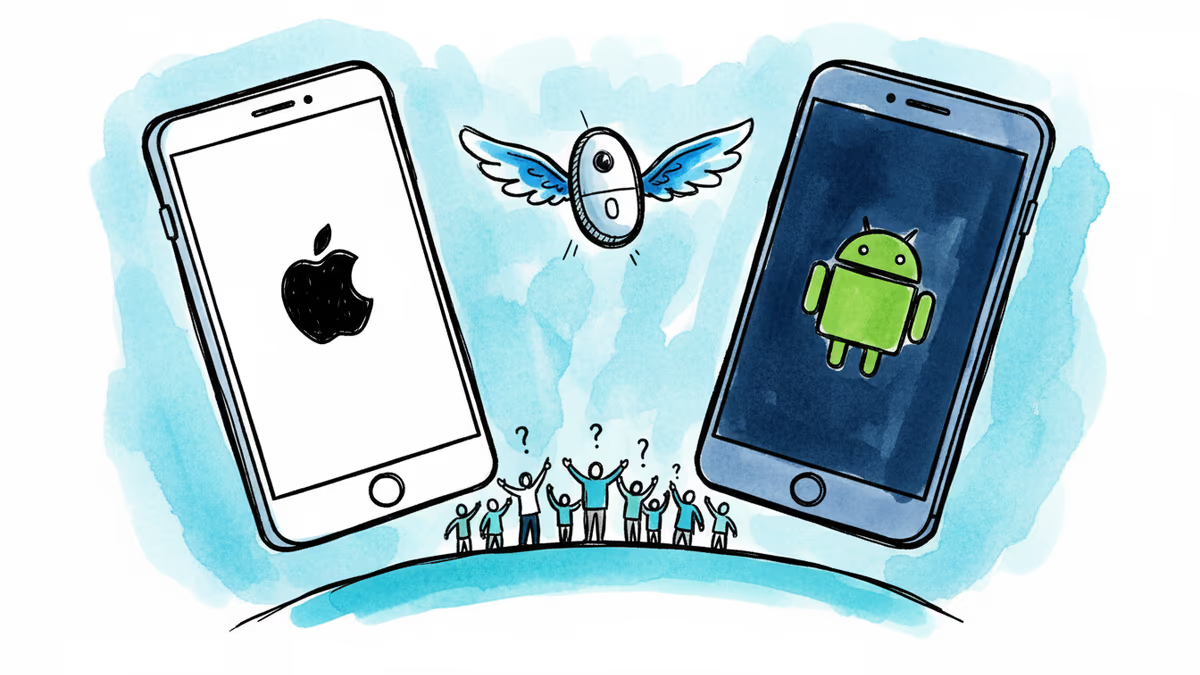
Xiaomi Tag supports both Apple Find My and Google Find My Device networks, comes with built-in metal loop, and challenges the ecosystem lock-in strategy of big tech companies.
Two Networks, One Choice, Zero Extra Cases
Xiaomi just dropped its first Bluetooth tracker, and it's taking a swing at Apple's ecosystem playbook. The Xiaomi Tag supports both Apple's Find My and Google's Find My Device networks—though you'll have to pick your side during setup. It's like being offered citizenship in two countries, but you can only hold one passport.
This isn't just another AirTag clone. That elongated design isn't just for looks—it comes with an integrated metal loop that clips straight onto your keyring. No $29 leather case required, thank you very much.
The Case Against Cases
Here's where Xiaomi gets clever. While Apple sells you a $29 AirTag and then expects you to shell out another $35+ for a decent case, Xiaomi built the attachment point right into the device. It's a small detail that reveals a bigger philosophy: why make users pay twice for basic functionality?
The CR2032 battery lasts up to one year—same as AirTag—and it's user-replaceable. No genius bar appointments needed.
Ecosystem Agnostic, Sort Of

Xiaomi's playing a different game here. Instead of forcing you into their ecosystem (what ecosystem?), they're letting you choose between the big two. Google's Find My Device network spans 2+ billion Android devices. Apple's Find My covers over 1 billion Apple devices. Either way, you're tapping into a massive tracking network.
But there's a catch—and it's a big one. You can't switch between networks without resetting the device. Mixed households with both iPhone and Android users? You'll need to pick a team.
The Regulatory Angle
Timing matters here. As regulators worldwide scrutinize big tech's ecosystem lock-in strategies, Xiaomi's approach looks almost prescient. The EU's Digital Markets Act explicitly targets these "walled garden" practices. A tracker that works across ecosystems? That's the kind of interoperability regulators love to see.
Apple and Google have spent years building these moats around their tracking networks. Xiaomi just built a bridge.
Market Reality Check
Of course, Xiaomi isn't doing this out of altruism. They're the world's third-largest smartphone maker but still lag behind in accessories. The tracker market is dominated by ecosystem players—Samsung for Android users, Apple for iPhone users. Xiaomi needs a different angle to break in.
The real test will be pricing. Xiaomi typically undercuts competitors by 20-30%. If they can deliver similar functionality at a lower price point while offering cross-platform compatibility, they might just carve out a meaningful market share.
Authors
Related Articles

The Xiaomi 17 Ultra, Honor Magic 8 Pro, and other global flagships are outspeccing Samsung and Apple—but US consumers can't legally buy them. Here's what that means.
Xiaomi partners with Leica to launch the €1,999 17 Ultra, challenging premium smartphone leaders with 200MP telephoto and 6000mAh battery. Can the Chinese brand shed its budget image?
Xiaomi launches flagship 17 series globally at aggressive pricing, but excludes the dual-screen 17 Pro from international markets in a strategic bet on mainstream appeal.
Leica grants Xiaomi its iconic red dot logo for the first time, marking a new phase in their 3-year partnership. What this means for the premium smartphone market.
The Xiaomi 17 Ultra, Honor Magic 8 Pro, and other global flagships are outspeccing Samsung and Apple—but US consumers can't legally buy them. Here's what that means.
Xiaomi partners with Leica to launch the €1,999 17 Ultra, challenging premium smartphone leaders with 200MP telephoto and 6000mAh battery. Can the Chinese brand shed its budget image?
Xiaomi launches flagship 17 series globally at aggressive pricing, but excludes the dual-screen 17 Pro from international markets in a strategic bet on mainstream appeal.
Leica grants Xiaomi its iconic red dot logo for the first time, marking a new phase in their 3-year partnership. What this means for the premium smartphone market.
Thoughts
Share your thoughts on this article
Sign in to join the conversation