

AirTag 2 Extends Its Reach by 50%
Apple launches AirTag 2 with 50% longer Bluetooth range, louder speaker, and enhanced Precision Finding. Despite keeping prices unchanged, Apple maintains its 70% market dominance in the tracking device space.
With 70% market share already in its pocket, Apple just made finding your lost keys even easier. The tech giant unveiled AirTag 2 on Monday, marking the first major upgrade since the original's 2021 launch.
The new tracker packs three key improvements: extended Bluetooth range, a 50% louder speaker, and enhanced Precision Finding capabilities powered by Apple's second-generation Ultra Wideband chip—the same one found in the iPhone 17 series and Apple Watch Series 11.
Farther, Louder, Smarter
The most significant upgrade is range. AirTag 2 can guide you to lost items from 50% farther away than its predecessor, thanks to that new Ultra Wideband chip. Combined with improved Bluetooth connectivity, this means your morning hunt for missing car keys just got a lot shorter.
The speaker upgrade is equally practical. At 50% louder volume, you can now hear the AirTag's beep from twice the distance. Anyone who's ever crawled under couch cushions listening for a faint chirp will appreciate this improvement.
Precision Finding now works on Apple Watch Series 9 and later models, plus Apple Watch Ultra 2 and beyond. The feature uses haptic feedback, visual cues, and audio to guide you directly to your lost item with remarkable accuracy.
Same Price, Bigger Dominance
Despite these upgrades, Apple kept pricing unchanged: $29 for a single AirTag, $99 for a four-pack. Free personalized engraving remains available.

This pricing strategy reflects Apple's commanding market position. Third-party estimates suggest nearly 70% of tracking devices sold in late 2024 were AirTags—a remarkable achievement for a product that essentially didn't exist five years ago.
The original AirTag's launch in 2021 devastated existing players like Tile, which had dominated the space for years. Apple's instant advantage was obvious: its Find My network became as large as the iPhone install base overnight, something competitors couldn't match.
Beyond Personal Items
AirTag 2 integrates with Share Item Location, an iOS feature letting users temporarily share tracking data with others. This proves especially valuable for travel—50 airlines now partner with Apple for luggage tracking services.
Some competitors adapted rather than fought. Chipolo embraced Apple's Find My platform, creating products that work across iOS and Android or feature rechargeable batteries. But these remain niche players in Apple's dominated market.
The integration with airline systems highlights how AirTag has evolved beyond personal item tracking into a broader location services platform. Lost luggage claims have reportedly dropped at participating airlines, though specific data remains proprietary.
The Network Effect Advantage
Apple doesn't disclose AirTag sales figures, but the product's success illustrates the power of ecosystem integration. Every iPhone user becomes a potential beacon in the Find My network, creating a tracking system that competitors can't replicate without similar device penetration.
This raises questions about market competition. While consumers benefit from AirTag's effectiveness, the barriers to entry for rivals continue rising as Apple's network grows stronger.
Authors
Related Articles
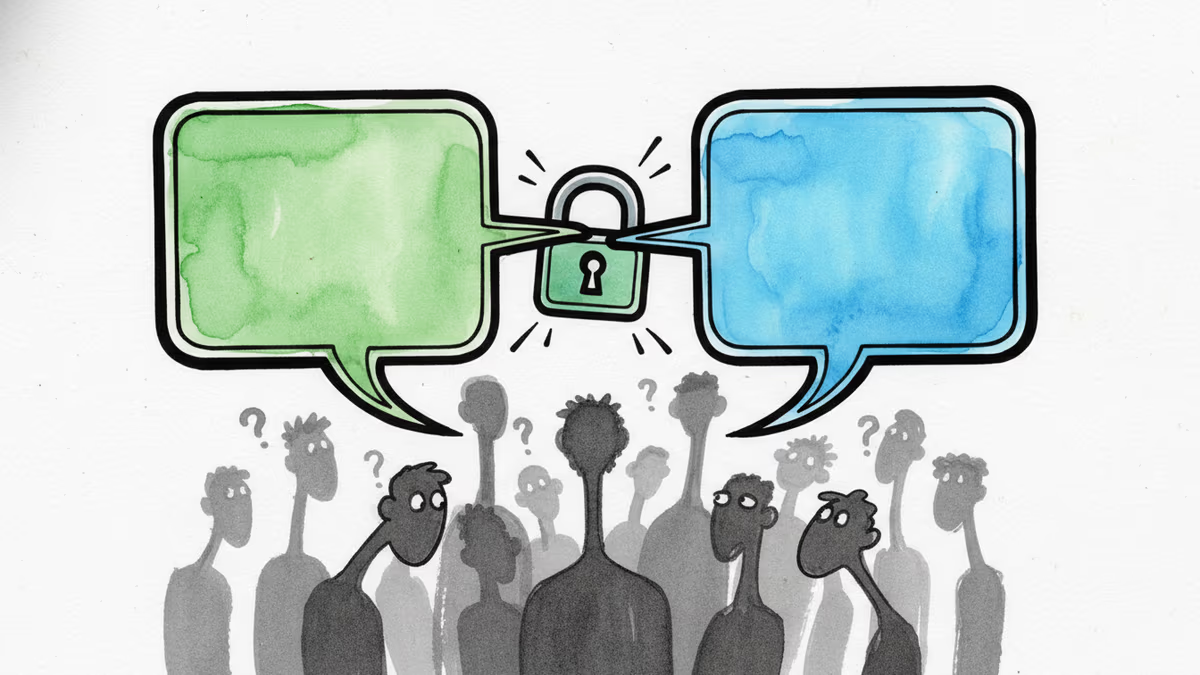
After 15 years of fragmented mobile messaging, Apple and Google are rolling out end-to-end encrypted RCS messaging between iPhones and Android devices. Here's what changed, why it took so long, and what it means for your privacy.
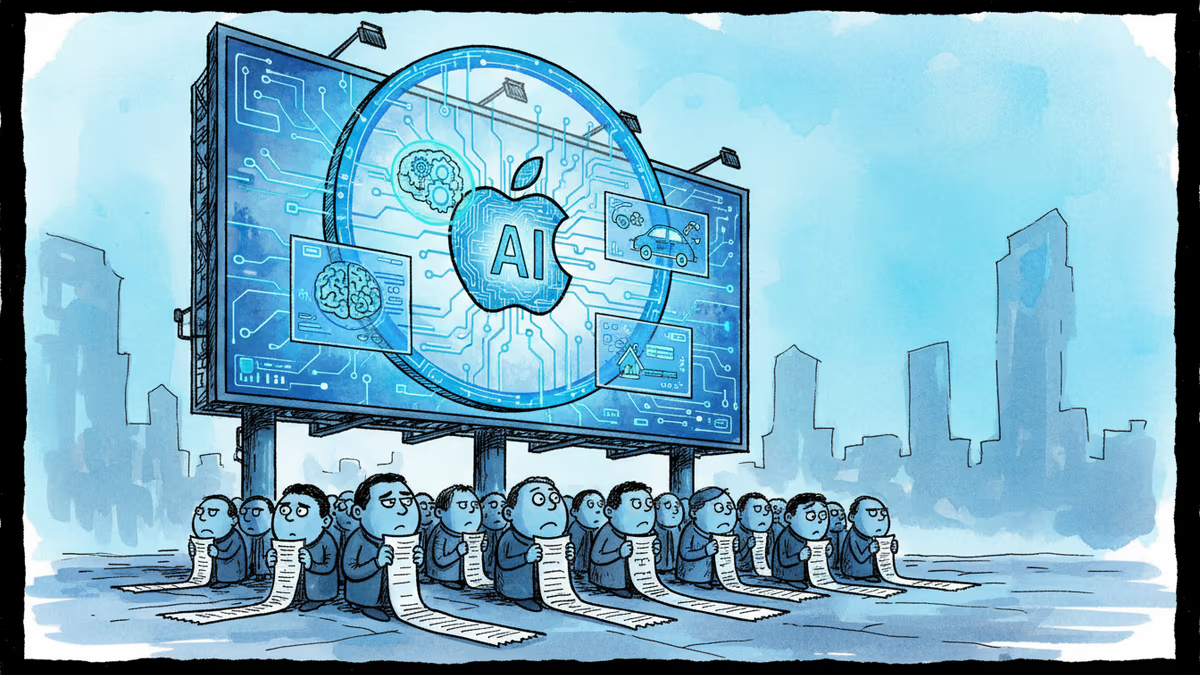
Apple agreed to pay $250 million to settle claims it misled iPhone 16 buyers about Apple Intelligence features. What this means for consumers, Big Tech marketing, and the AI industry.
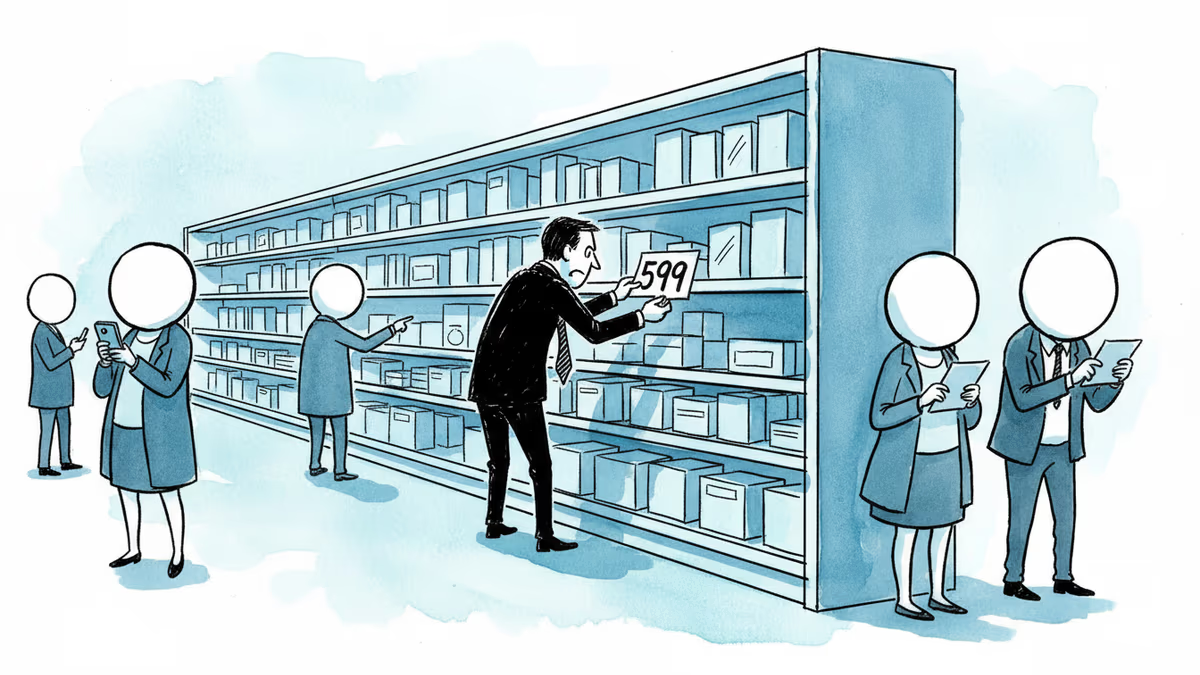
Apple quietly removed the entry-level $599 Mac Mini, raising the starting price to $799 — just one day after Tim Cook warned of chip supply constraints on the earnings call.
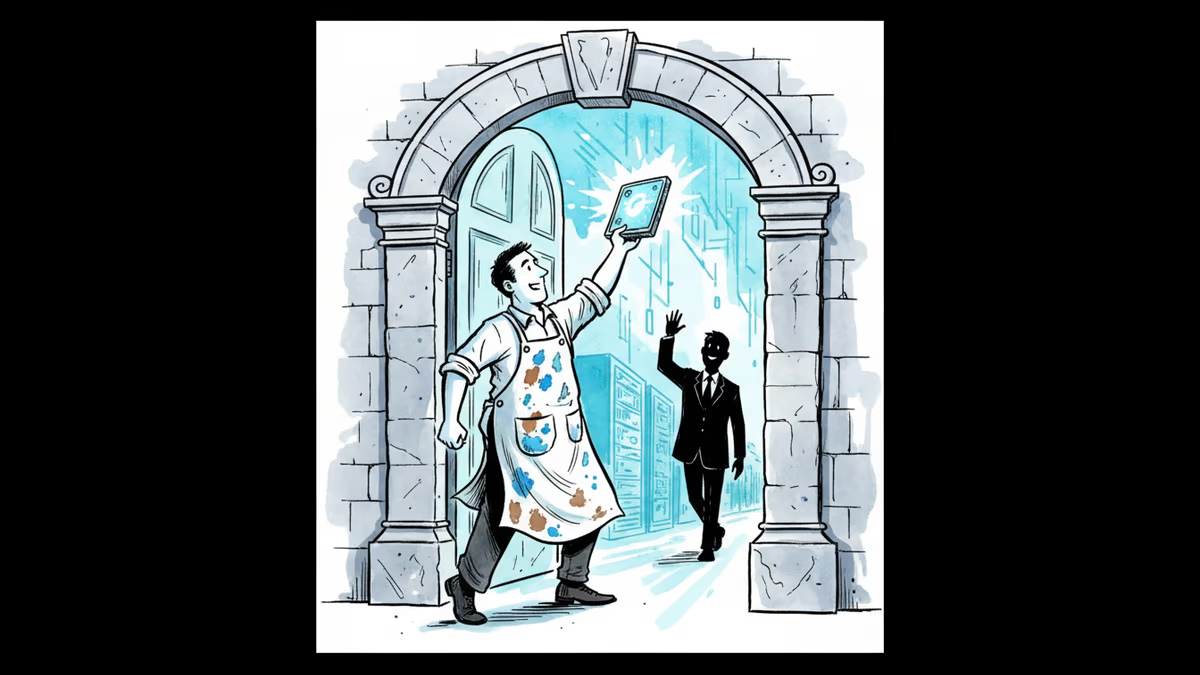
Apple names John Ternus, its hardware engineering chief, as the next CEO. The shift from operator to product person signals where Apple thinks its next decade of growth will come from — and raises real questions about what comes next.
After 15 years of fragmented mobile messaging, Apple and Google are rolling out end-to-end encrypted RCS messaging between iPhones and Android devices. Here's what changed, why it took so long, and what it means for your privacy.
Apple agreed to pay $250 million to settle claims it misled iPhone 16 buyers about Apple Intelligence features. What this means for consumers, Big Tech marketing, and the AI industry.
Apple quietly removed the entry-level $599 Mac Mini, raising the starting price to $799 — just one day after Tim Cook warned of chip supply constraints on the earnings call.
Apple names John Ternus, its hardware engineering chief, as the next CEO. The shift from operator to product person signals where Apple thinks its next decade of growth will come from — and raises real questions about what comes next.
Thoughts
Share your thoughts on this article
Sign in to join the conversation