
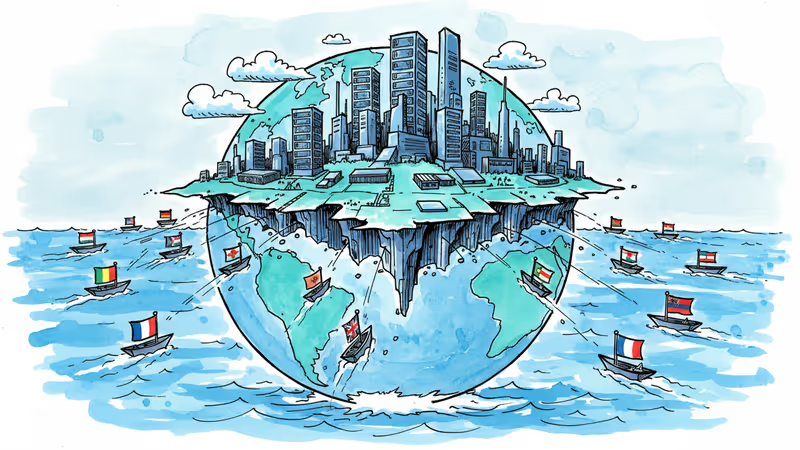
The Great Tech Exodus: Why Countries Are Breaking Up with Silicon Valley
France bans US tech for officials, UpScrolled surges amid TikTok censorship fears. Global push for tech sovereignty challenges American dominance as alternatives gain momentum.
In just one week, France banned its officials from using American technology, TikTok censorship fears drove tens of thousands to alternative platforms, and the world got a glimpse of what tech independence might look like. The honeymoon with Silicon Valley is officially over.
UpScrolled, a new platform promising "free speech haven," hit 1 million users as #TikTokCensorship trended globally. Its Palestinian-Australian founder Issam Hijazi struck gold with perfect timing: "People were asking why there's no alternative to big tech platforms for their content, which was getting censored."
The Awakening Moment
This isn't just another tech trend. When TikTok's U.S. operations were handed to a consortium including Oracle Corp., users in the U.S., U.K., and Australia didn't just complain—they migrated. UpScrolled became one of the most downloaded social media apps almost overnight.
But history is littered with failed challengers to big tech. Hijazi himself admits the brutal truth: "I'll be lying if I tell you I know the answer to how to hold on to the initial interest." The graveyard of Google killers and Facebook alternatives tells a sobering story.
What's different this time? Government backing and genuine user frustration are creating perfect storm conditions for alternatives to actually stick.
Regional Champions Rising
While Silicon Valley dominated headlines, regional players quietly built empires. Japan's Line commands 200 million monthly users, while South Korea's KakaoTalk serves 55 million. Southeast Asia's Grab and Gojek didn't just fend off Uber—they built their own mapping systems and became super-apps.
India's Zoho offers Google-like services at cheaper prices, backed by "Made in India" policy. Government officials actively promote Arattai messaging as a WhatsApp alternative and endorsed Koo as an X replacement.
The European Union is pushing homegrown options through its Digital Markets Act: TomTom and Here for navigation, Visio for video calls. It's not just regulation—it's ecosystem building.

The Kill Switch Reality
Tech sovereignty isn't paranoia—it's practical. When Trump sanctioned the International Criminal Court last year, Microsoft reportedly cancelled prosecutor Karim Khan's email address. Khan switched to Swiss provider Proton Mail, which boasts 100 million users worldwide.
The ICC dropped Microsoft as a service provider entirely. European lawmakers started questioning the security of cloud services from Amazon, Microsoft, and Google. The fear of a U.S. digital "kill switch" became very real, very fast.
"Technology is not neutral," explains Jathan Sadowski from Monash University's Emerging Technologies Research Lab. "The companies that produce and shape this ecosystem have social and political interests in addition to their financial interests."
The Innovation Paradox
Here's the catch: many non-U.S. alternatives still depend on Silicon Valley for venture capital and technical infrastructure. Chinese open-source foundation models are enabling smaller countries to build their own large language models, but the funding pipeline remains largely American.
Mona Shtaya from Digital Action sees the challenge clearly: "U.S. tech companies' policies and products often fail to reflect the needs and realities of users in the global majority." Success will depend on whether new platforms are "genuinely responsive to community needs."
Canadian critic Paris Marx has been documenting his gradual switch to non-U.S. alternatives—a sometimes frustrating journey that highlights both the possibilities and limitations of current options.
The Venture Capital Dilemma
Sadowski identifies the core challenge: "If governments want to take tech sovereignty seriously, that means building capacity for indigenous innovations and ecosystems that are disconnected from the domination of U.S. tech firms."
It's not enough to create alternatives—countries need entire ecosystems. That means local venture capital, technical talent, regulatory frameworks, and user adoption all working together.
The next few years will determine whether we're witnessing a genuine shift in the global tech landscape—or just another wave of alternatives that will eventually fade into obscurity.
Authors
Related Articles
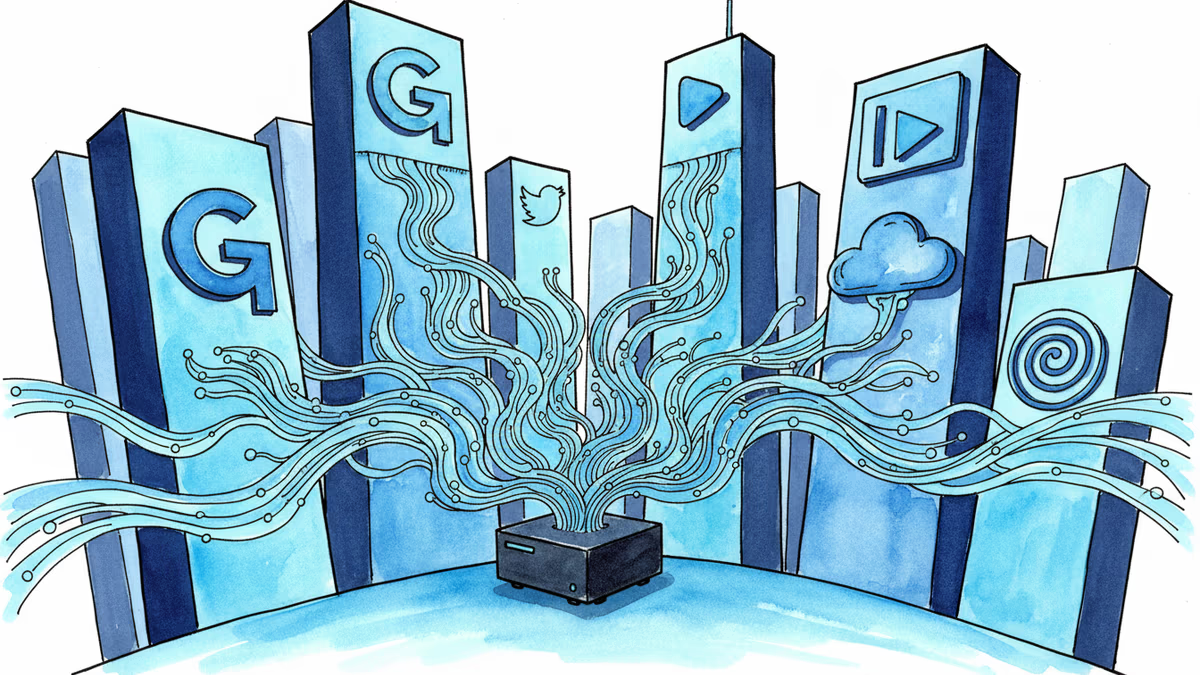
Current AI's open-source device challenges Big Tech's AI monopoly with offline capabilities and 22 Indian languages. Could this spark a new era of decentralized AI?
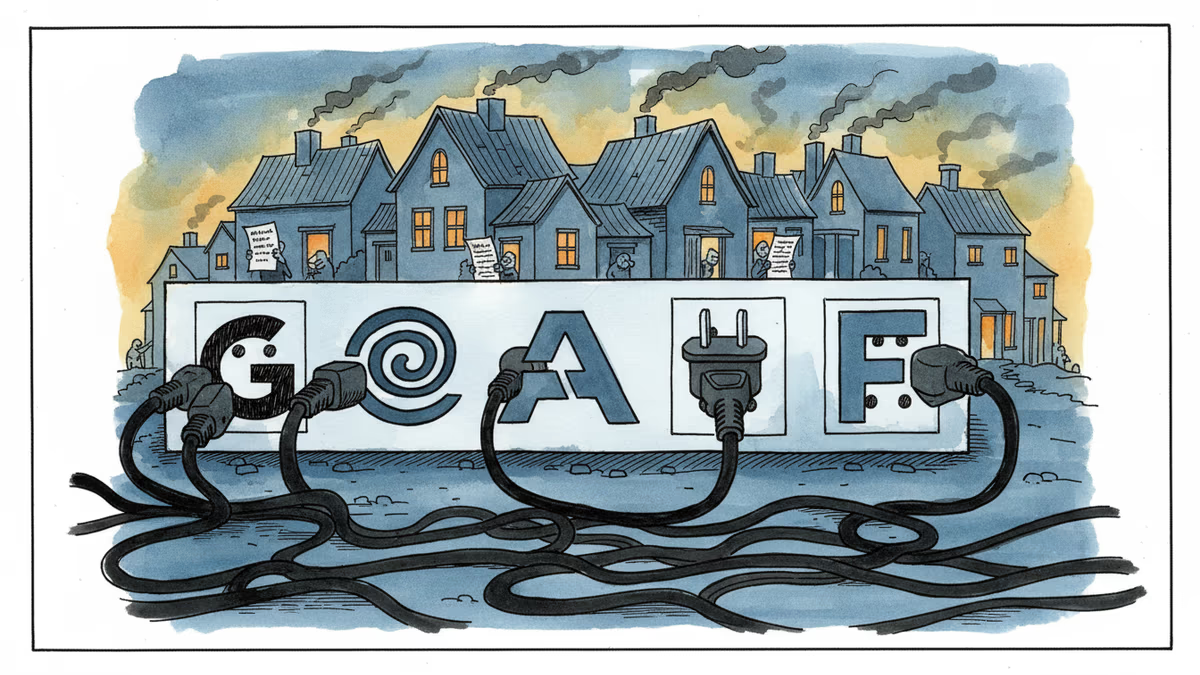
Trump demands tech giants build their own power plants as AI data centers drive electricity prices up 6%. Microsoft, Google, and OpenAI pledge to cover costs, but the devil's in the details—and communities aren't buying it yet.
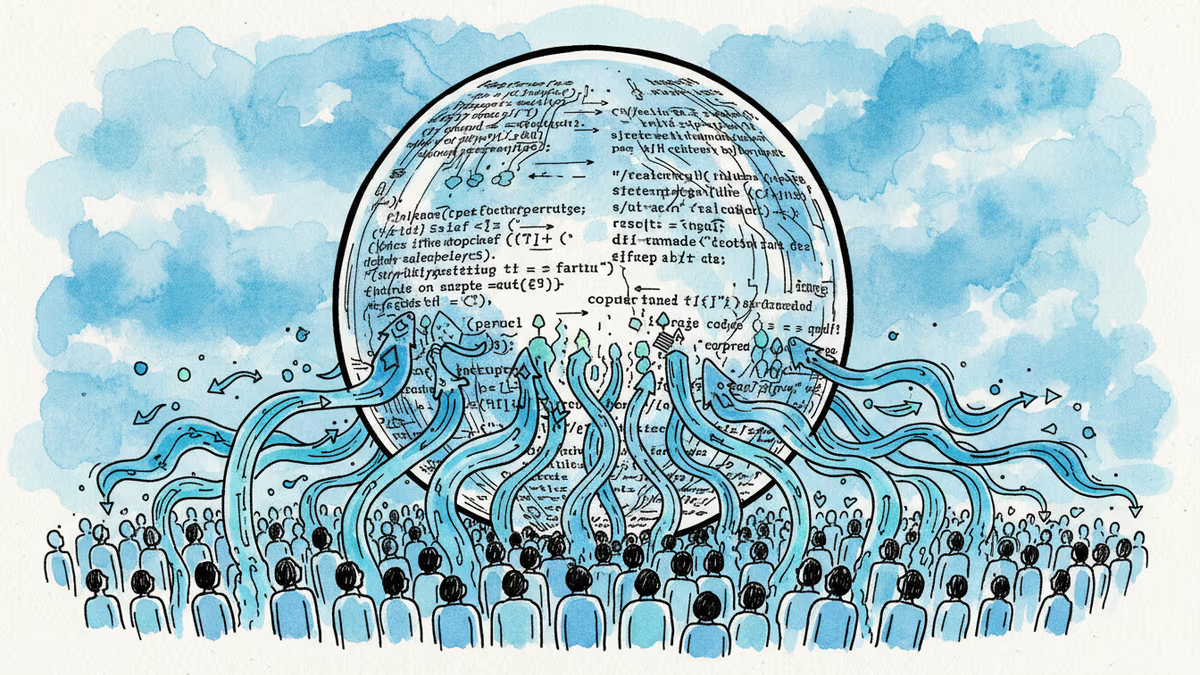
As AI predictions shape every aspect of our lives, three scholars reveal who really benefits from our algorithmic oracle and what we're losing in the process.
Parents who lost children gather in LA courtroom as Meta CEO Zuckerberg prepares to testify in landmark social media mental health lawsuit. A defining moment for tech accountability.
Current AI's open-source device challenges Big Tech's AI monopoly with offline capabilities and 22 Indian languages. Could this spark a new era of decentralized AI?
Trump demands tech giants build their own power plants as AI data centers drive electricity prices up 6%. Microsoft, Google, and OpenAI pledge to cover costs, but the devil's in the details—and communities aren't buying it yet.
As AI predictions shape every aspect of our lives, three scholars reveal who really benefits from our algorithmic oracle and what we're losing in the process.
Parents who lost children gather in LA courtroom as Meta CEO Zuckerberg prepares to testify in landmark social media mental health lawsuit. A defining moment for tech accountability.
Thoughts
Share your thoughts on this article
Sign in to join the conversation