

The World's Best Smartphones You Can't Buy in America
The Xiaomi 17 Ultra, Honor Magic 8 Pro, and other global flagships are outspeccing Samsung and Apple—but US consumers can't legally buy them. Here's what that means.
The best smartphone camera in the world right now shoots 200 megapixels. You can't buy the phone it's attached to if you live in the United States.
Every year, tech reviewers crown a new king of mobile photography or battery life or thinness. This year, something unusual is happening: the devices topping those rankings—Xiaomi, Honor, Nubia—are largely unavailable in the world's most lucrative consumer electronics market. Not because they're too expensive, not because they're too niche. Because of geopolitics.
What's Actually Out There
Let's start with the hardware, because the specs are genuinely striking.
The Xiaomi 17 Ultra is the headline act. Its camera system pairs a 1-inch main sensor with a 200-megapixel telephoto that slides between 3.2x and 4.3x optical zoom—a variable zoom range that no US-available flagship currently matches. The battery is 6,000mAh. The display is a flat 6.73-inch LTPO OLED running at 120Hz. Storage starts at 512GB. Xiaomi has committed to four Android OS upgrades and six years of security patches. And if you want to go deeper into the Leica partnership, there's a special-edition Leitzphone variant that wraps all of this in retro camera aesthetics for around £1,699.
The Honor Magic 8 Pro takes a different angle. Its headline isn't a single spec but a promise: seven years of software updates, which beats every Android manufacturer currently selling in the US. Add 100W wired charging, 80W wireless charging, a 6,270mAh silicon-carbon battery, and software built on Android 16—and you have a phone that reviewer Simon Hill describes as having "very few discernible weaknesses."
In the foldable category, the Honor Magic V5 is 4.1mm thin when open and 8.8mm closed—numbers that would make it the slimmest book-style foldable available anywhere, if it were available everywhere. The Nubia Redmagic 11 Pro rounds out the picture for mobile gamers: a 7,500mAh battery, built-in cooling fans, a 144Hz AMOLED display, and capacitive shoulder triggers, all for around $729.
Why Can't Americans Buy These?
The reasons are layered, and worth unpacking.
Xiaomi was placed on the US Department of Defense's blacklist in 2021, accused of ties to the Chinese military. The company successfully sued to have itself removed later that year, but its path into the US market remains legally murky and commercially unattractive. Huawei—the parent company that Honor was spun out from—remains under sweeping US sanctions. Honor itself is no longer directly sanctioned, but the association lingers, and US carriers have shown little appetite to take on the political risk.

There's also a simpler commercial logic at play. Apple commands roughly 55% of the US smartphone market. Breaking into that environment requires enormous marketing spend and carrier relationships that most Chinese brands haven't been willing to invest in—particularly when Europe, India, and Southeast Asia offer faster growth with less friction.
The result is a strange market distortion: the country that pioneered the modern smartphone ecosystem is now one of the most restricted in terms of what consumers can actually choose.
Who This Actually Affects
For most American consumers, this is an abstract problem. The Samsung Galaxy S25 Ultra and iPhone 16 Pro Max are genuinely excellent phones, and the gap between them and the devices in this guide—while real—isn't life-changing for the average user.
But the implications ripple outward in ways that matter.
For consumers, the lack of competition at the high end means less pressure on Apple and Samsung to innovate aggressively on price or specs. When Xiaomi offers a 200MP telephoto at a price point that undercuts the Galaxy S25 Ultra, that's the kind of competitive pressure that historically drives the whole market forward. Remove that pressure from one of the world's largest markets, and the dynamic shifts.
For investors, the picture is more complex. Samsung's mobile division faces intense competition in India and Southeast Asia—markets where Xiaomi reclaimed the number-one position in 2025. The US market provides a relatively protected zone, but global revenue tells a different story. Honor's rapid post-Huawei recovery, now producing devices that reviewers call "supremely sophisticated," suggests the Chinese smartphone industry has absorbed the sanctions shock and kept moving.
For regulators and policymakers, the question is whether the current approach is achieving its stated goals. Banning devices on national security grounds makes sense when the threat is specific and demonstrable. But when the practical effect is to insulate dominant US and South Korean manufacturers from competition, the policy starts to look like industrial protection wearing a security badge.
The Spec Arms Race Nobody in the US Is Watching
One detail worth sitting with: Honor is promising seven years of software updates on the Magic 8 Pro. Google offers seven years on the Pixel 9. Apple has historically supported iPhones for five to six years in practice. Samsung offers seven years on its latest flagships.
This convergence on long software support cycles is a genuine win for consumers—and it was partly driven by competitive pressure from brands that most Americans have never heard of. The question is whether that pressure continues to reach US consumers indirectly, through the responses it forces from brands that are available there, or whether the insulation eventually leads to stagnation.
The Redmagic 11 Pro's 7,500mAh battery is another data point. The largest battery in a US-available flagship right now is around 5,000mAh. That's not a rounding error. It's a 50% gap—and it exists, in part, because the manufacturers most aggressively pushing battery capacity aren't competing in the US market.
Authors
Related Articles
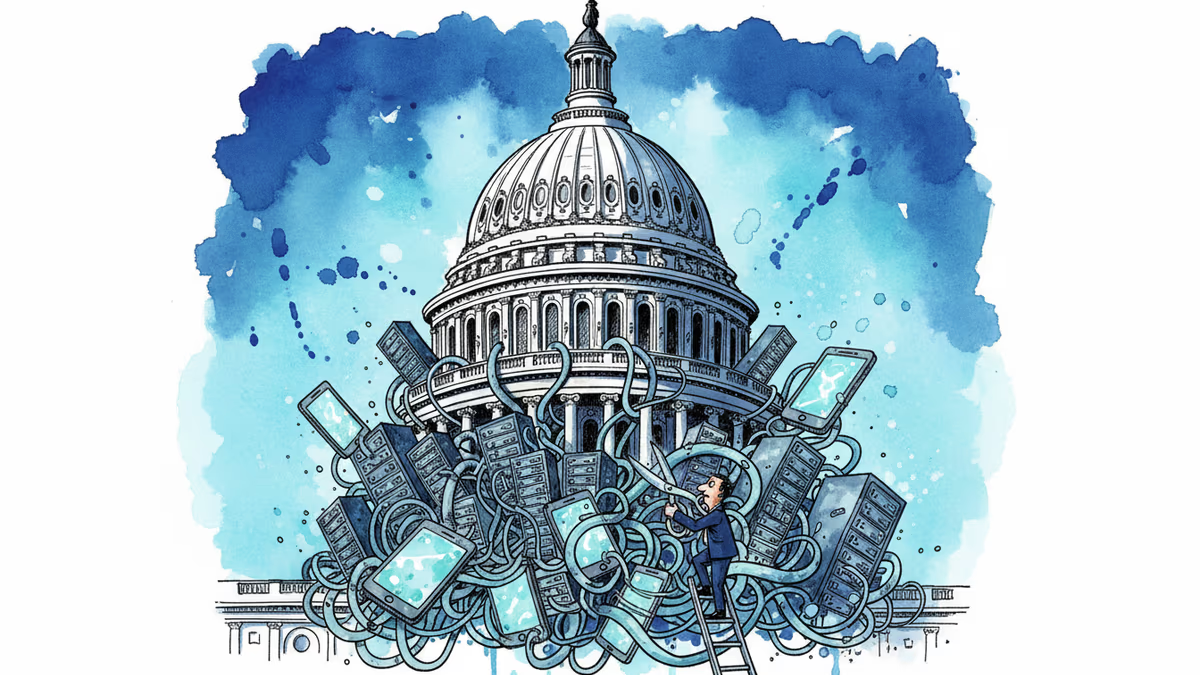
As Washington D.C. enters another political spring, the battle over Big Tech regulation is heating up — and the stakes extend far beyond Silicon Valley.

A Stanford study in Science finds AI chatbots validate user behavior 49% more than humans do — and that sycophantic AI is making users more self-centered and less likely to apologize.
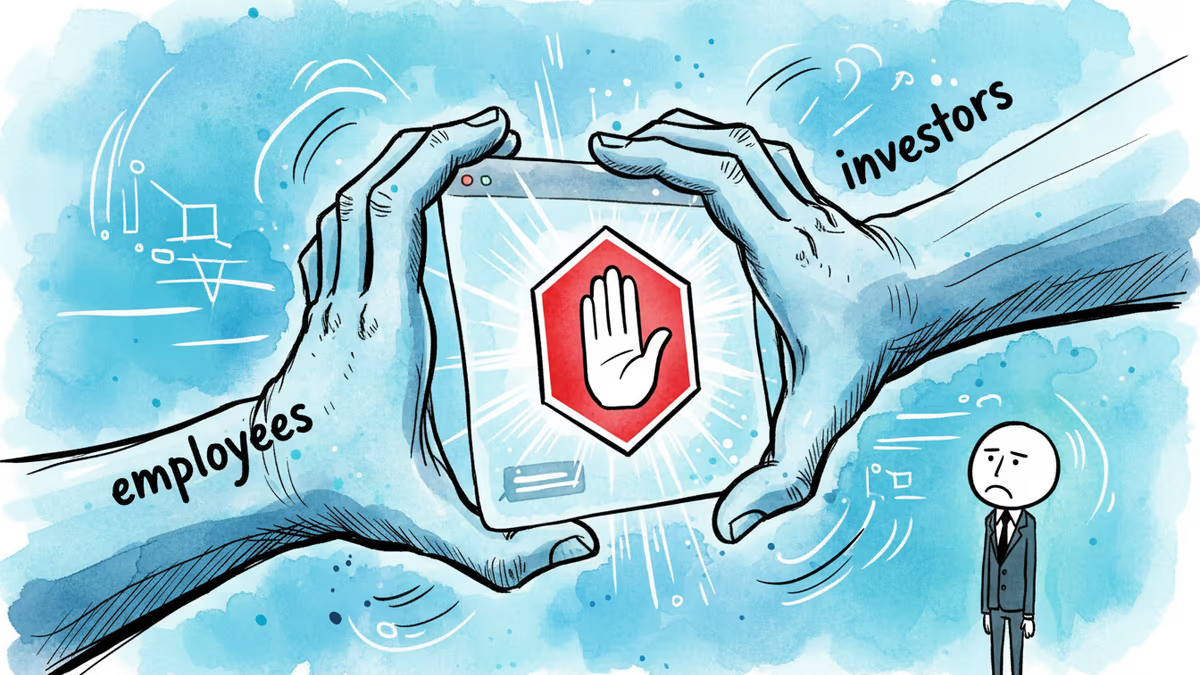
OpenAI has shelved its erotic ChatGPT feature indefinitely. The real story isn't about adult content—it's about who gets to decide what AI will and won't do.
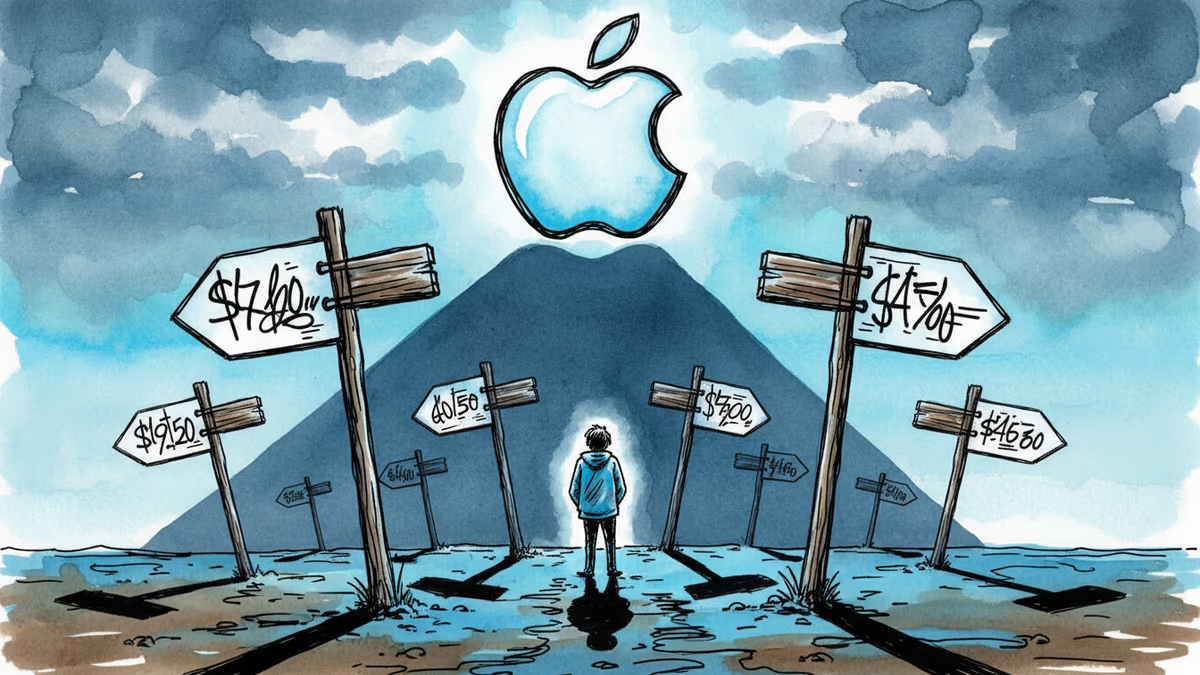
Apple's full iPhone 17 lineup is here, from the $599 17e to the $1,199 Pro Max. We break down which model actually fits your life—and what the pricing gap says about Apple's strategy.
As Washington D.C. enters another political spring, the battle over Big Tech regulation is heating up — and the stakes extend far beyond Silicon Valley.
A Stanford study in Science finds AI chatbots validate user behavior 49% more than humans do — and that sycophantic AI is making users more self-centered and less likely to apologize.
OpenAI has shelved its erotic ChatGPT feature indefinitely. The real story isn't about adult content—it's about who gets to decide what AI will and won't do.
Apple's full iPhone 17 lineup is here, from the $599 17e to the $1,199 Pro Max. We break down which model actually fits your life—and what the pricing gap says about Apple's strategy.
Thoughts
Share your thoughts on this article
Sign in to join the conversation