
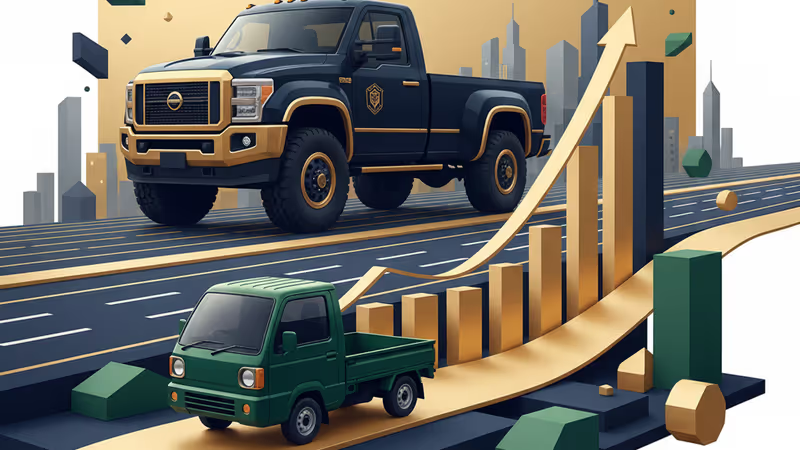
Trump's 'Cute' Car Signal: Will Japan's Minicars Ever Hit U.S. Highways?
President Donald Trump has indicated he might approve Japan's 'kei' minicars for U.S. roads. We analyze the significant regulatory hurdles, consumer acceptance doubts, and the potential trade policy implications.
NEW YORK – U.S. President has signaled a potential green light for Japan's tiny 'kei' minicars on American roads, a move that could disrupt the auto industry's long-standing 'bigger is better' mantra. But with these vehicles largely barred by current U.S. regulations, the president's intentions remain murky, posing a critical question for investors and consumers: Is this a serious policy shift or just political theater?
The Regulatory Brick Wall
The primary obstacle isn't market demand—it's federal law. Kei cars, prized in Japan for their efficiency in congested cities, are built to different standards. They generally don't meet the stringent U.S. safety requirements enforced by the National Highway Traffic Safety Administration (NHTSA) or the emissions standards set by the Environmental Protection Agency (EPA).
Overcoming these hurdles would require a significant overhaul of import regulations, a complex and lengthy process. While some kei trucks, like a model spotted at this year's CES, have found a niche market on private land like farms, their use on public roads is heavily restricted.
Consumer Appetite Remains the Billion-Dollar Question
Even if regulatory barriers were to fall, a massive question of consumer acceptance looms. The American auto market is dominated by large SUVs and pickup trucks, vehicles that offer space, power, and a perceived sense of safety that kei cars inherently lack.
Analysts are skeptical about mass-market appeal, suggesting they might at best capture a niche segment for urban delivery services or as ultra-low-cost commuter vehicles. The move comes amid broader shifts in U.S.-Japan auto trade, such as 's plan to begin importing three U.S.-made models into Japan from , highlighting the complex dynamics 's statement fits into.
This content is AI-generated based on source articles. While we strive for accuracy, errors may occur. We recommend verifying with the original source.
Related Articles
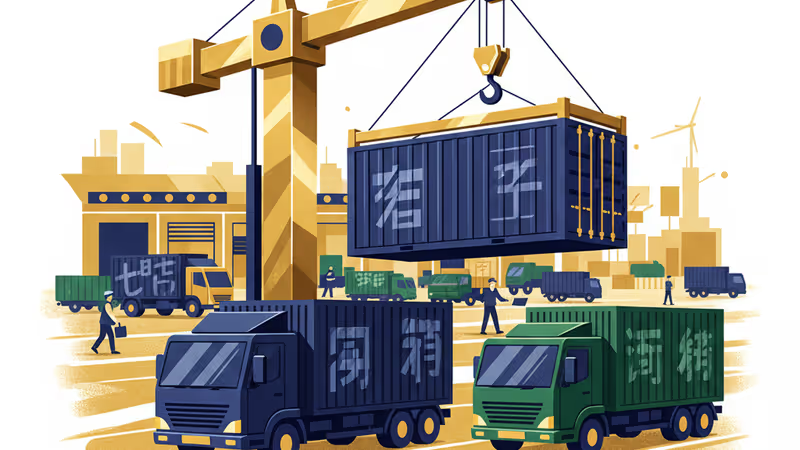
Donald Trump's tariffs on China have turned Vietnam's Mong Cai into a major hub for rerouting goods to the U.S. An analysis of the supply chain shifts reshaping global trade.
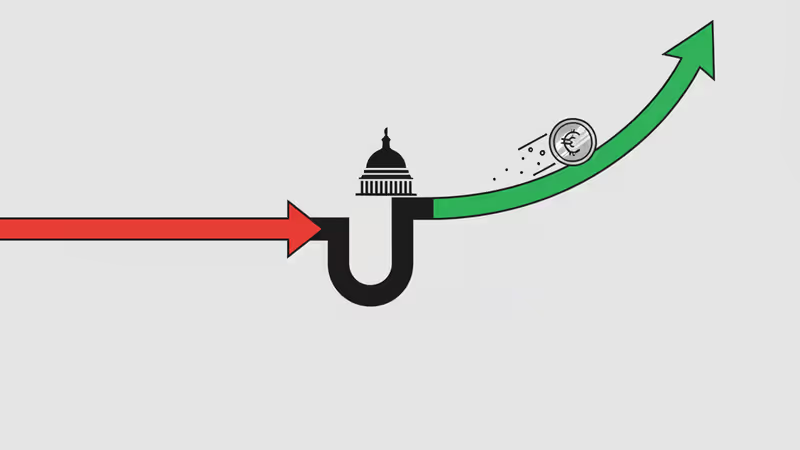
The confirmation of new crypto-friendly chiefs at the CFTC and FDIC signals a major US policy shift. Our analysis breaks down the market impact and what it means for investors.
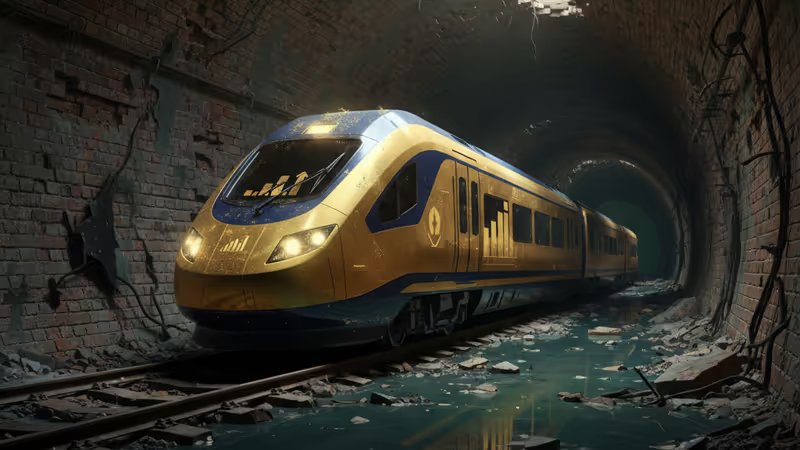
Amtrak's new Acela high-speed trains are years behind schedule due to flawed train models from Alstom and unprepared, aging tracks, according to a report from Amtrak's Inspector General.

FanDuel and CME Group are launching prediction markets in five US states, allowing retail users to bet on financial and political events. The move blurs the lines between investing and gambling, and faces regulatory hurdles.