
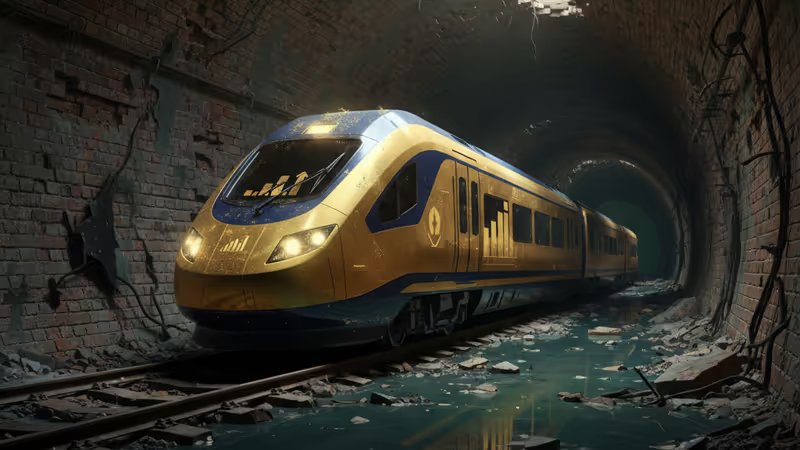
Amtrak's High-Speed Rail Dream Derailed by Flawed Trains and Aging Tracks, Watchdog Says
Amtrak's new Acela high-speed trains are years behind schedule due to flawed train models from Alstom and unprepared, aging tracks, according to a report from Amtrak's Inspector General.
A Multi-Billion Dollar Project Years Behind Schedule
Amtrak's multi-billion dollar bet on next-generation Acela trains for its profitable Northeast Corridor is years behind schedule, plagued by a toxic mix of flawed train models and track defects. A new report from the railroad’s Office of Inspector General (OIG), cited by Reuters, reveals that the long-awaited upgrade, initially promised for , now faces an uncertain future, threatening a key revenue stream and setting back U.S. high-speed rail ambitions.
The project was supposed to be a showcase for modern American infrastructure, promising faster journeys between Washington D.C., New York, and Boston. Instead, it has become a case study in project mismanagement, highlighting the immense difficulty of bolting new technology onto century-old infrastructure.
Who's to Blame? A Failure of Planning and Execution
The OIG report doesn't point to a single culprit, but rather a cascade of failures from both the train manufacturer and itself.
Alstom's Faulty Models
The French manufacturer, , is faulted for providing computer models of the trains that didn't match their real-world performance. According to the report, these modeling failures led to compatibility issues when the actual trains were tested on 's tracks. In short, the trains that worked on paper couldn't handle the physical realities of the old rail lines.
Amtrak's Lack of Preparation
At the same time, the OIG report criticizes for its own poor planning and failure to adequately prepare the Northeast Corridor's tracks for the new, higher-speed fleet. The agency knew about long-standing defects in its legacy infrastructure but failed to address them as a prerequisite for the new train rollout. This suggests a systemic failure in project management from the very beginning.
This isn't just about a delayed train; it's a classic case of new technology colliding with legacy systems. The Amtrak Acela fiasco underscores a critical challenge for any large-scale modernization: the shiniest new hardware is useless if the foundational infrastructure—in this case, century-old tracks and tunnels—can't support it.
This content is AI-generated based on source articles. While we strive for accuracy, errors may occur. We recommend verifying with the original source.
Related Articles

Power is restored in San Francisco after an outage hit 110,000 customers. We analyze the economic impact on the tech hub and what PG&E's grid instability means for businesses.

FanDuel and CME Group are launching prediction markets in five US states, allowing retail users to bet on financial and political events. The move blurs the lines between investing and gambling, and faces regulatory hurdles.
US business borrowing for equipment investment fell over 4% year-over-year in November, according to the ELFA. The drop signals corporate caution amid high interest rates and economic uncertainty.

Mitsui Sumitomo Insurance (MSI) is acquiring W. R. Berkley's reinsurance unit for $1.5 billion. The deal is a strategic move to expand MSI's international business and diversify away from Japan's natural catastrophe risks.