

When US Lawmakers Profit from Foreign Stocks They Regulate
US Congress members trade stocks in TSMC, Alibaba, and other foreign companies while making policies that affect these same firms. Where's the line?
Texas Republican Michael McCaul led an official congressional visit to Taiwan in April 2023, discussing ways to strengthen economic and defense ties. That same year, his wife bought up to $250,000 worth of Taiwan Semiconductor Manufacturing Company stock while he chaired the House Foreign Affairs Committee.
The timing wasn't coincidental. It's part of a broader pattern where US lawmakers and their families trade stocks in foreign companies while simultaneously crafting policies that directly impact those same firms.
A new analysis reveals that members of Congress are dealing in large volumes of foreign stocks—including Chinese companies like Alibaba and Tencent—even as they take hardline stances in US-China relations or champion "America First" agendas.
The Taiwan Semiconductor Connection
Rep. Ro Khanna, a California Democrat whose district includes Silicon Valley, sits on the Select Committee on the Chinese Communist Party. One of the committee's key functions is to "strengthen ties to the Taiwanese semiconductor industry." In February 2023, Khanna led a bipartisan delegation to Taiwan and China, meeting with TSMC founder Morris Chang.
That same month, his spouse bought $15,000–$50,000 worth of TSMC stock. The family has made 12 additional trades in TSMC since then, including his child purchasing another $15,000–$50,000 stake in August 2025.
Khanna told CNBC in 2022 that he doesn't trade stocks personally and supports a congressional trading ban. His office didn't respond to requests for comment about the apparent contradiction.
Selling Before the Crackdown
The most striking example might be Rep. Laurel Lee, a Florida Republican whose husband held Alibaba stock worth up to $250,000 in December 2023. Nine days after a House subcommittee—on which Lee serves—released a letter flagging privacy concerns about Chinese e-commerce companies including Alibaba, her husband sold his stake.
The kicker? Lee reported the sale 19 months later, well beyond the required 45-day disclosure deadline. Her office didn't respond to requests for comment.

The Legal Gray Zone
All of this is perfectly legal. Federal law requires lawmakers to disclose investments above $1,000 made by them, their spouse, or dependent children. But disclosure isn't prevention—it's just transparency after the fact.
Lawmakers routinely deflect responsibility, claiming their spouses manage investments independently or through third-party managers. McCaul's attorney insisted the congressman "did not purchase these stocks and had no advanced knowledge of the purchase."
But in an era where geopolitical tensions directly impact stock prices, can we really separate personal financial interests from policy decisions?
The Bigger Picture: Policy as Market Signal
This isn't just about individual ethics—it's about systemic risk in an interconnected global economy. When lawmakers who shape US-China policy hold stakes in Chinese companies, or when committee chairs overseeing semiconductor strategy trade in TSMC stock, the line between public service and private gain becomes dangerously blurred.
Consider the implications: A congressional hearing on Chinese data privacy could tank Alibaba's stock price. A bill supporting Taiwan's semiconductor industry could boost TSMC shares. When lawmakers' families profit from these moves, it raises fundamental questions about whose interests are really being served.
Former House Speaker Nancy Pelosi's husband generated 838% returns over the past decade—a performance that would make most professional investors jealous. Critics, including President Trump, have pointed to this as evidence of the system's problems, though Pelosi insists she's not involved in her spouse's trading activities.
The Transparency Paradox
The irony is that America's commitment to transparency might be creating new problems. Unlike many countries where such activities would be hidden, the US requires disclosure—but disclosure without restriction creates a different kind of corruption: legal conflicts of interest that everyone can see but no one can stop.
Several bipartisan bills to ban congressional stock trading have been proposed, but none have passed. The political class seems reluctant to give up what many consider a significant perk of public service.
Authors
Related Articles
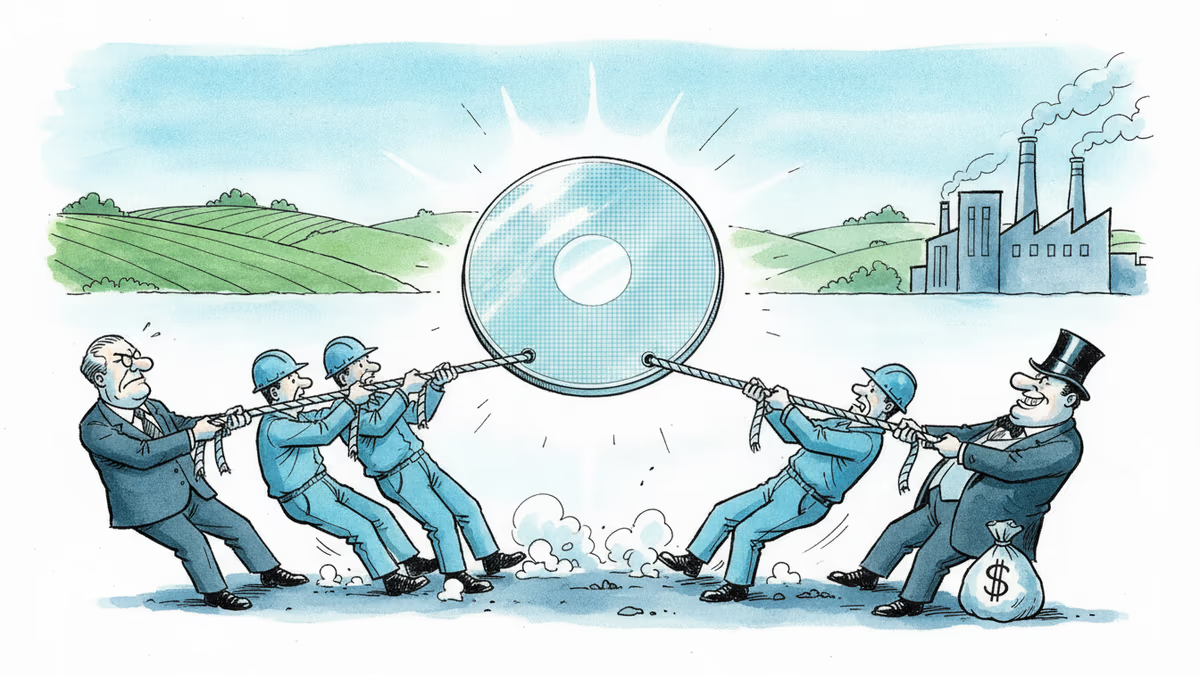
Samsung Electronics' union branch revealed that 84% of survey respondents oppose the government's roughly $290 billion (₩400 trillion) semiconductor megaproject in Gwangju. Government, management, the union and shareholders are all reading the same national project in sharply different ways.
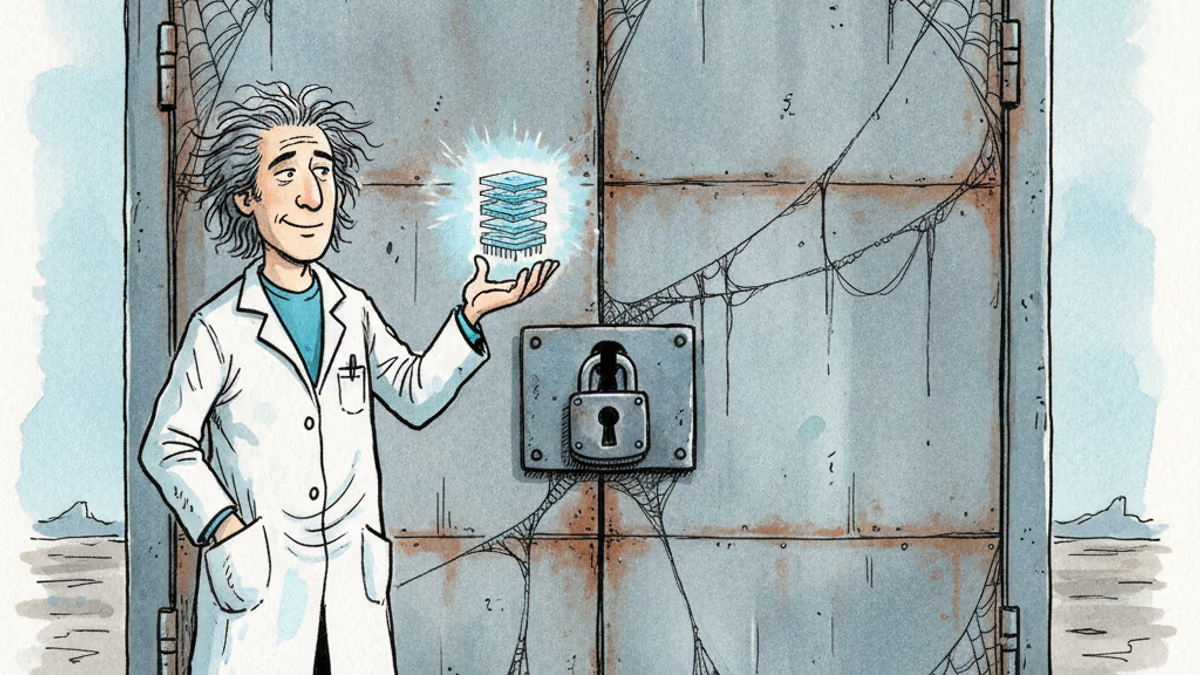
IBM has unveiled 'nanostack,' the world's first sub-1nm (0.7nm) chip research. Some say it adds a decade to Moore's Law; others say a lab demo is a long way from a fab. Either way, mass production isn't IBM's job.
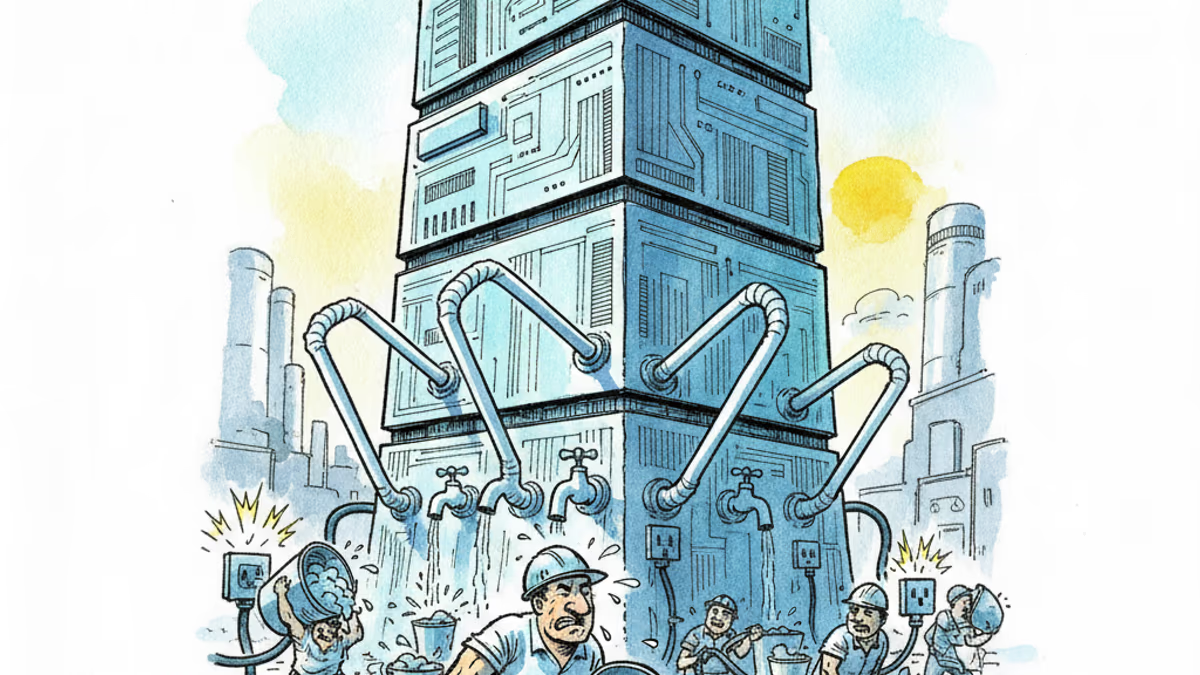
Samsung and SK unveiled a chip and AI investment package worth thousands of trillions of won on June 29. The headline number swings wildly by outlet, but the real contest isn't capital — it's water and power.
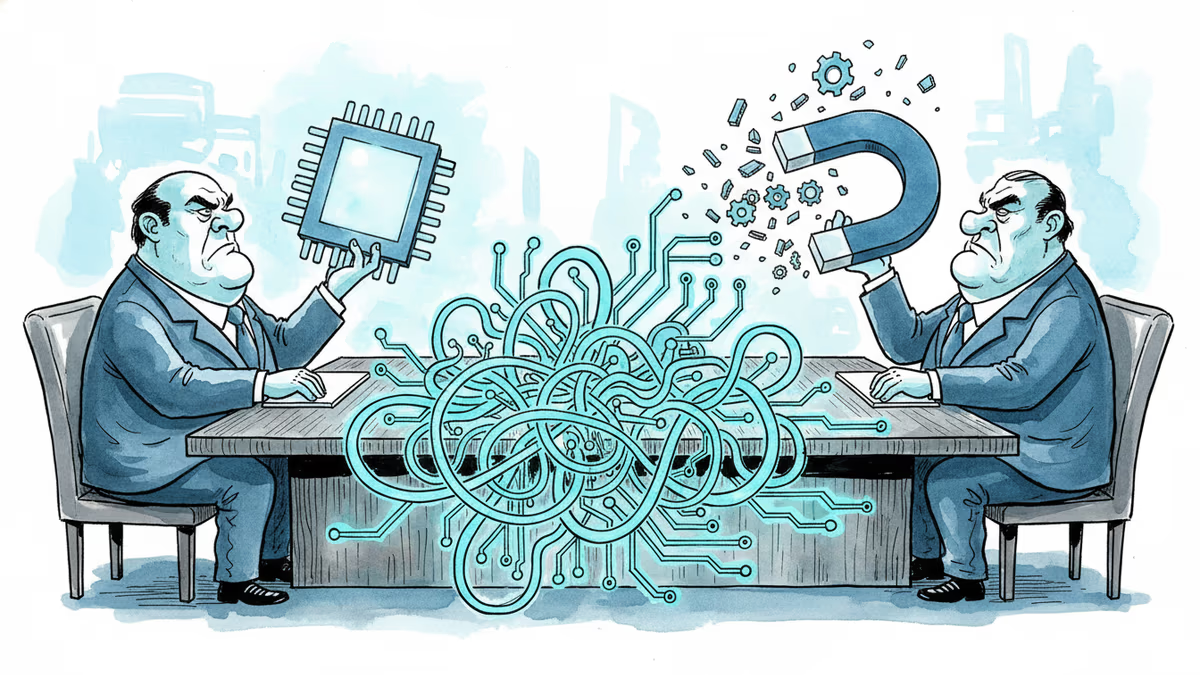
As Trump and Xi meet in Beijing, five tech flashpoints—chips, AI rivalry, supply chains, EVs, and rare earths—will quietly shape the global economy more than any diplomatic communiqué.
Samsung Electronics' union branch revealed that 84% of survey respondents oppose the government's roughly $290 billion (₩400 trillion) semiconductor megaproject in Gwangju. Government, management, the union and shareholders are all reading the same national project in sharply different ways.
IBM has unveiled 'nanostack,' the world's first sub-1nm (0.7nm) chip research. Some say it adds a decade to Moore's Law; others say a lab demo is a long way from a fab. Either way, mass production isn't IBM's job.
Samsung and SK unveiled a chip and AI investment package worth thousands of trillions of won on June 29. The headline number swings wildly by outlet, but the real contest isn't capital — it's water and power.
As Trump and Xi meet in Beijing, five tech flashpoints—chips, AI rivalry, supply chains, EVs, and rare earths—will quietly shape the global economy more than any diplomatic communiqué.
Thoughts
Share your thoughts on this article
Sign in to join the conversation