

3 Billion Targets: The Essential WhatsApp Security Settings 2026 Guide
Protect your chats from hackers. Our WhatsApp security settings 2026 guide covers 8 essential tips including GhostPairing defense, 2FA, and advanced IP protection.
With over 3 billion users, WhatsApp isn't just a communication tool—it's the ultimate target for attackers. In recent months, security researchers identified GhostPairing, a new hijacking method that tricks users into linking an attacker's browser to their device. Meanwhile, Austrian researchers recently exposed vulnerabilities in contact discovery that could leak billions of phone numbers and profile photos. It's time to lock down your account.
Critical WhatsApp Security Settings 2026 to Activate Now
Start with the 'Privacy Checkup' in your settings. This hub lets you control exactly who sees your profile picture, 'About' info, and online status. To defend against spyware or physical theft, enable 'Disappearing Messages.' You can set chats to vanish after 24 hours, 7 days, or 90 days, ensuring your digital footprint remains minimal even if your device is compromised.

The gold standard for account safety is Two-Step Verification (2FA). Setting up a security PIN prevents others from hijacking your account on a new device. Meta has also integrated Passkeys for seamless, secure logins. For sensitive conversations, use the 'Chat Lock' feature, which hides specific threads in a separate folder protected by FaceID or your fingerprint.
According to WIRED, WhatsApp spokesperson Ellie Heatrick stated that they "sweat the details to protect what matters most: private communication." However, the responsibility still lies with the user to disable 'Link Previews' and 'Save to Photos' to prevent IP leaks and unwanted local data storage.
Authors
Related Articles
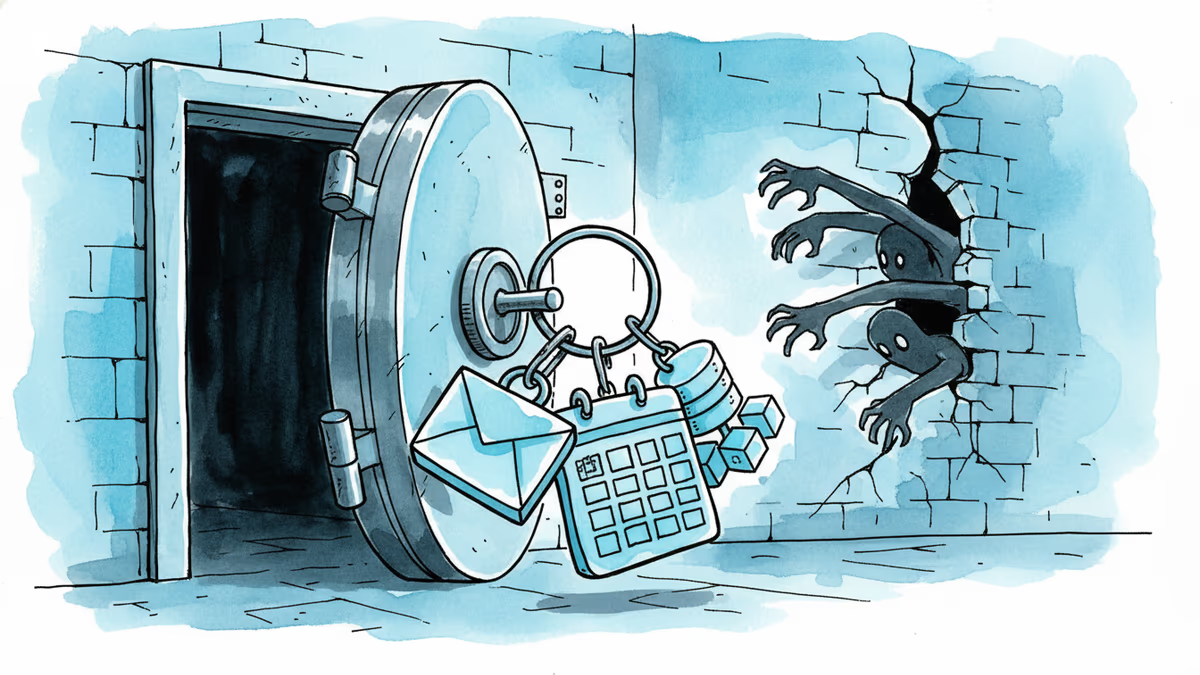
A critical vulnerability in Starlette—downloaded 325 million times per week—puts millions of AI agent servers at risk, exposing stored credentials for email, databases, and third-party services.

GitHub confirmed hackers stole data from 3,800 internal repositories via a poisoned VS Code extension. Here's why developer tools are now the most dangerous attack surface in tech.
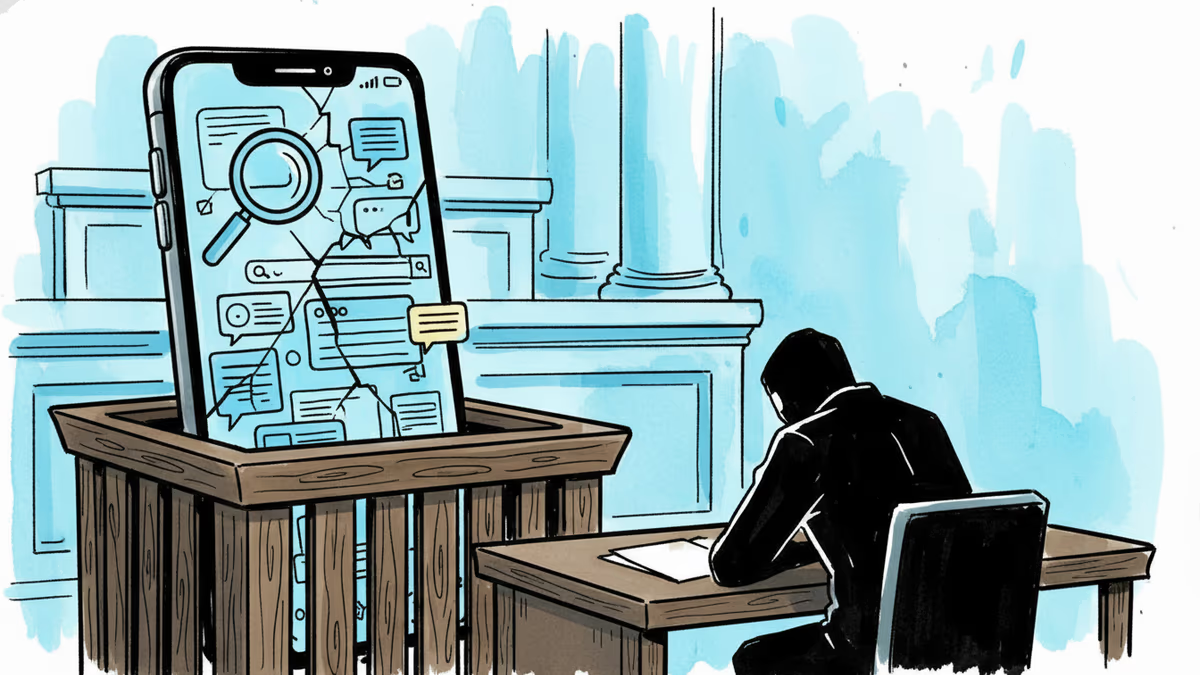
A Utah woman was sentenced to life in prison partly because of her Google searches and deleted texts. The Kouri Richins case reveals how digital footprints have become the courtroom's most reliable witness.
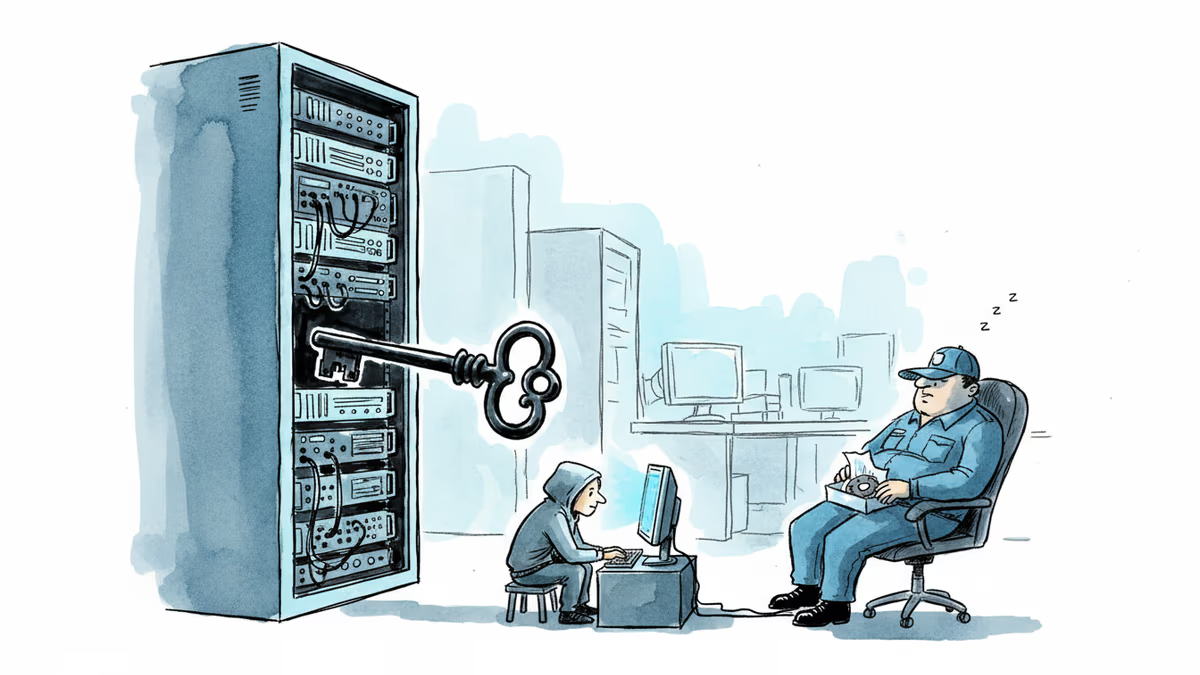
Dirty Frag gives low-privilege users root access on virtually every Linux distro. The exploit code leaked three days ago. Microsoft says attackers are already experimenting with it.
A critical vulnerability in Starlette—downloaded 325 million times per week—puts millions of AI agent servers at risk, exposing stored credentials for email, databases, and third-party services.
GitHub confirmed hackers stole data from 3,800 internal repositories via a poisoned VS Code extension. Here's why developer tools are now the most dangerous attack surface in tech.
A Utah woman was sentenced to life in prison partly because of her Google searches and deleted texts. The Kouri Richins case reveals how digital footprints have become the courtroom's most reliable witness.
Dirty Frag gives low-privilege users root access on virtually every Linux distro. The exploit code leaked three days ago. Microsoft says attackers are already experimenting with it.
Thoughts
Share your thoughts on this article
Sign in to join the conversation