
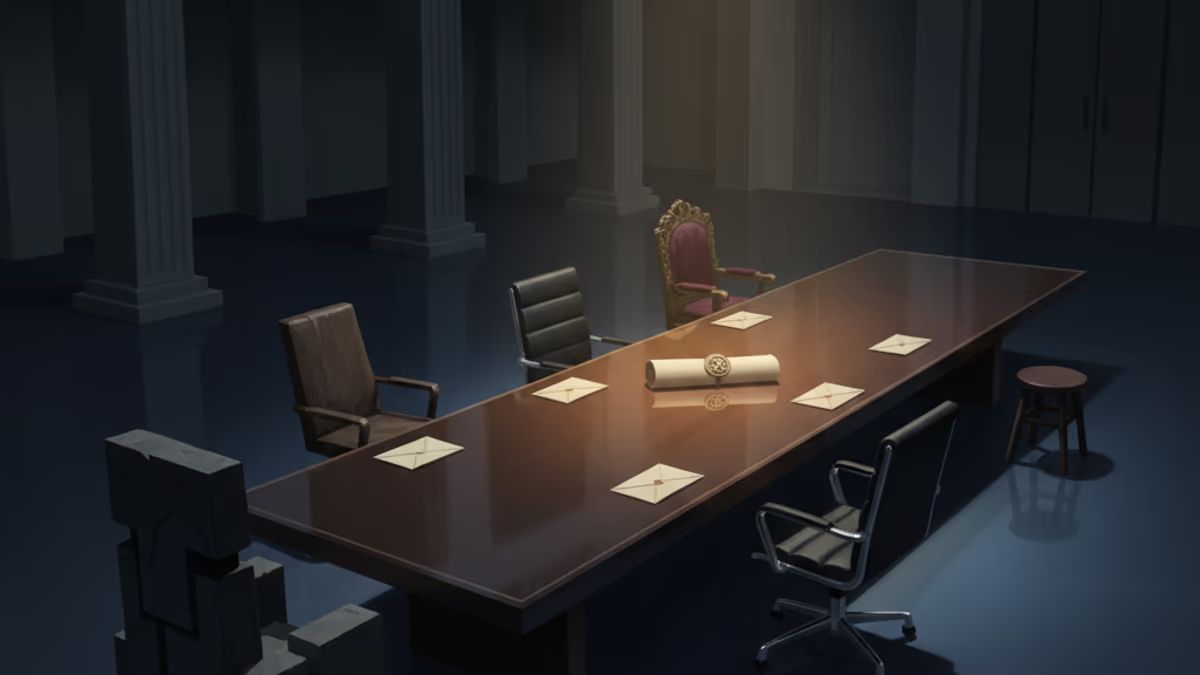
PRISM Weekly Digest: Fourth Week of May 2026
Trump announced substantial progress on a US-Iran peace deal and Hormuz reopened after six weeks. Bitcoin jumped from $74,000 to $76,700 in four hours. Xi seated Putin, Iran, and India at the same desk in one week. SpaceX opened its books for the first time in 23 years with the largest IPO in U.S. history; Nvidia conceded China to Huawei. BTS held the Billboard 200 top 10 for an eighth straight week.
Fourth Week of May 2026 | The Week They Sat at the Table
Saturday, May 23, before dawn. Trump announced a "substantial progress" on a U.S.–Iran peace deal. The Strait of Hormuz reopened after six weeks.
In the same week, Bitcoin jumped from $74,000 to $76,700 in four hours after the announcement. Xi Jinping hosted Putin, Iran's foreign minister, and India's deputy foreign minister at the same desk in Beijing — emerging as the new pivot between Washington, Moscow, and Tehran. SpaceX opened its books for the first time in 23 years, filing a 400-page S-1 with the SEC: $14 billion in 2025 revenue, $3.7 billion in losses — the largest IPO in U.S. history. Nvidia's revenue surged 85% for the quarter, yet its stock fell after Jensen Huang admitted Nvidia had "essentially conceded the ChinaAI chip market to Huawei."Google rolled out a full-stack AI strategy at I/O 2026, capping a 12-month run that lifted Alphabet's stock 140%. In K-pop, BTS's Arirang stayed in the Billboard 200 top 10 for an eighth consecutive week, and BTS's live appearance at the 2026 AMAs was confirmed. Last week's Trump–Xi handshake wrote the invoice. This week, five people walked into the room and sat down to negotiate it.
Iran Sat Down — Bitcoin Moved First
4:00 a.m., May 23. Trump posted a single line on Truth Social: "Iran deal — substantial progress, peace coming."
Twelve minutes later, Bitcoin trading volume detonated, and four hours after that, the price had moved from $74,000 to $76,700. The Strait of Hormuz reopened after six weeks of blockade. Global oil prices — up a cumulative 40% through the third week of May — opened 4% lower on May 23. But the story did not end there. The same week, OPEC+ approved a 1.3 million barrel/day production increase to recover the market share lost during the blockade. Then on May 22, Trump told his negotiators to "slow down." A line issued moments after reports of an imminent agreement — read in the market as a signal that slowing the deal preserves leverage on the price.
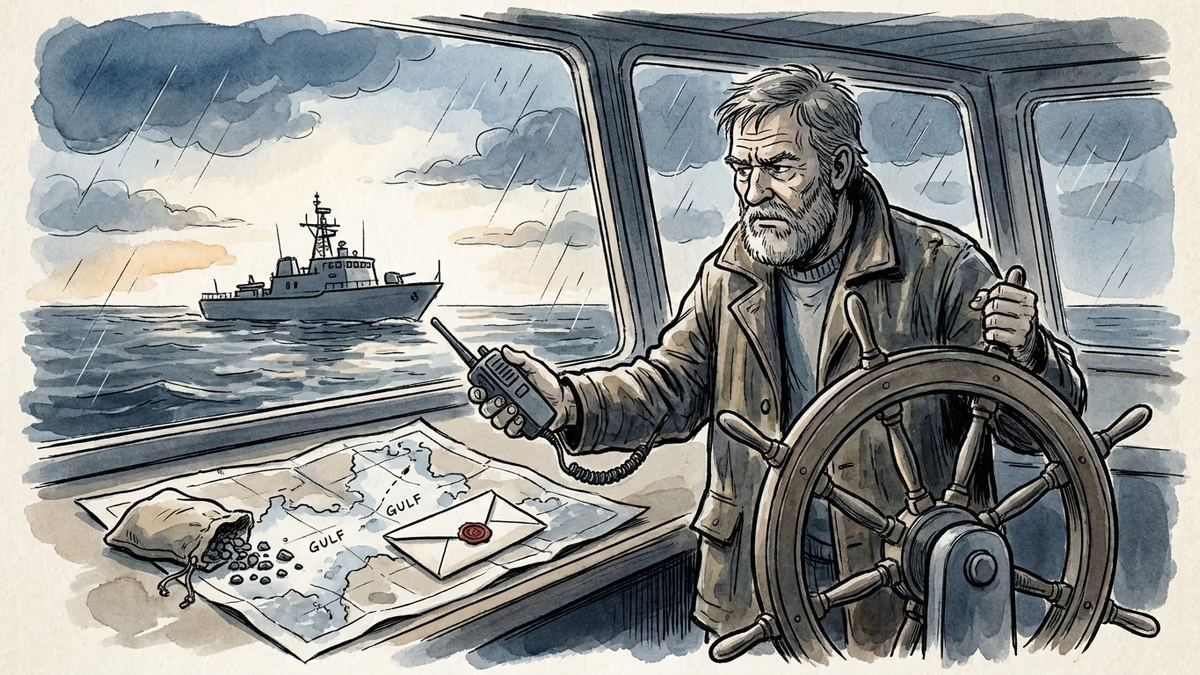
The real deals were elsewhere. On May 24, analysts revealed that Iran has proposed to collect part of its Hormuz transit fees in Bitcoin — a sanctions-evasion move. The same week, Abu Dhabi signaled a partial exit from the Gulf alliance, and reporting surfaced that Iran had been buying weapons from the very UAE firms it was attacking. For every line announcing the blockade has ended, five new bypass maps get drawn behind it — that is the real geometry of this week's negotiating table. Peace moves prices at the moment of the announcement; bypass routes move the market for everything after.
Xi's Desk, Three Chairs
The week Iran sat across from Washington, Beijing was even busier.
On May 20, Xi held a summit with Putin and issued a joint energy and technology declaration. On May 22, Iran's foreign minister sat in the same chair. On May 23, India's deputy foreign minister sat there too. In the seat Trump vacated, Xi placed three chairs at once. Analyses published May 21 confirmed that back channels for nearly every major multilateral negotiation — from the Ukraine ceasefire to the Iran nuclear talks — now route through Beijing.Moscow and Tehran reach Washington only through Beijing. Nine years after American academics warned of it, Xi himself invoked "the Thucydides Trap" at a foreign-ministry briefing on May 22. Was it a warning or an invitation?

The most telling signal came from energy. On May 22, China unveiled a plan to substitute Middle Eastern oil with its own coal piped through Xinjiang power plants. Six weeks of war in Iran, and China had already laid the bypass grid. May 20 reporting confirmed that Beijing had quietly added Nvidia gaming chips to its import ban list — the same week Jensen Huang sat next to Trump in the Great Hall. In the same window, the Pentagon disclosed that China is now building the world's largest naval logistics support ship.A handshake on one side, missiles on the other, and a pipeline behind both — three documents on Xi's desk, all at once.
SpaceX Opens the Books, Nvidia Walks Away from China
On May 21, SpaceX filed a 400-page S-1 with the SEC. The books, sealed for 23 years, finally opened: $14 billion in 2025 revenue, $3.7 billion in net losses.The largest IPO filing in U.S. history.Starlink accounted for 71% of revenue, and net losses had been narrowing for five straight years. On May 23, Starship V3 completed its first test flight — though the booster recovery failed. Musk's one-line tweet — "Doesn't have to be perfect to be enough" — was timed to land days before the roadshow.
The same week, Nvidia announced 85% year-over-year revenue growth for the quarter, and its stock closed lower. The reason was direct. On the earnings call, Jensen Huang admitted Nvidia had "essentially conceded the ChinaAI chip market to Huawei." The same week he had walked into Beijing alongside Trump, Beijing banned Nvidia's gaming chips. One quarter later, Nvidia gave up the market.Google's signal pointed the opposite way. At I/O 2026 on May 19, Google unveiled a full-stack strategy: Gemini, agent commerce, and external sales of TPU chips.Alphabet's stock is up 140% over the past twelve months. One infrastructure giant lost China and the market sold; another announced a full stack and the market bought. In one week, the coordinates of AI hegemony split open to opposite ends.
"The Commencement Speeches Sound Like Jokes Now"
In the same week, AI started cutting people directly.
A satirical column went viral on May 20: "This year's commencement speeches sound like jokes." It ran alongside Department of Labor data showing 34% of 2026 graduates leaving school without securing a first job. The same week, a U.S. court sanctioned a self-described "AI-powered" law firm for citing fake precedents — the lawyer had quoted a ChatGPT-fabricated Anthropic v. Apple case as if it were real, and the judge spent 30 minutes searching for a case that never existed. On May 18, reporting surfaced that more than 30% of LinkedIn comments are now ghostwritten by Filipino virtual assistants, the "expert" replies algorithmically engineered to produce ad revenue.
The heaviest signal came from security. On May 20, GitHub admitted that thousands of developer tokens had been stolen. The same week, Mercedes unveiled a 1,153-horsepower electric AMG, and Sony announced it was ending its push for PC ports — "PlayStation exclusives are not coming anymore," a one-liner read across the industry as a strategic signal. AI cut entry-level jobs, AI manufactured fake case law, AI ghostwrote comments, AI stole tokens — all in one week. Human seats shrank in five places at once. The efficiency equation ran one cycle faster.
BTS, Eight Weeks on Billboard — and the AMAs Stage
K-pop updated two more coordinates in one week.
Billboard charts dated May 18 showed BTS's studio album Arirang in the Billboard 200 top 10 for an eighth consecutive week. In the middle of the fourth-generation explosion, a third-generation flagship's catalog became the first data point that K-pop longevity holds inside the same chart. On May 20, BTS's live appearance at the 2026 AMAs was confirmed — alongside three nominations including Artist of the Year. Their first major awards stage since the post-enlistment full reunion. If the standard-contract reform made the fourth generation explode harder, then in the same week BTS answered with an eight-week graph that K-pop is not defined by short detonations alone.
The chart told a wider story. Following ILLIT and CORTIS's Billboard debuts on May 17, BTS's eighth week at the top 10 put four Korean acts on the Billboard 200 in the same week — a first. May 20 data from the Korea Creative Content Agency showed Q1 2026 K-pop global streaming up 27% year over year, with 41% of new listeners coming from the Americas and Europe. Rookies explode, veterans stay. That was the K-pop industry's answer this week, written on the same chart.
PRISM Weekly Digest publishes every week.
This content is AI-generated based on source articles. While we strive for accuracy, errors may occur. We recommend verifying with the original source.
Related Articles
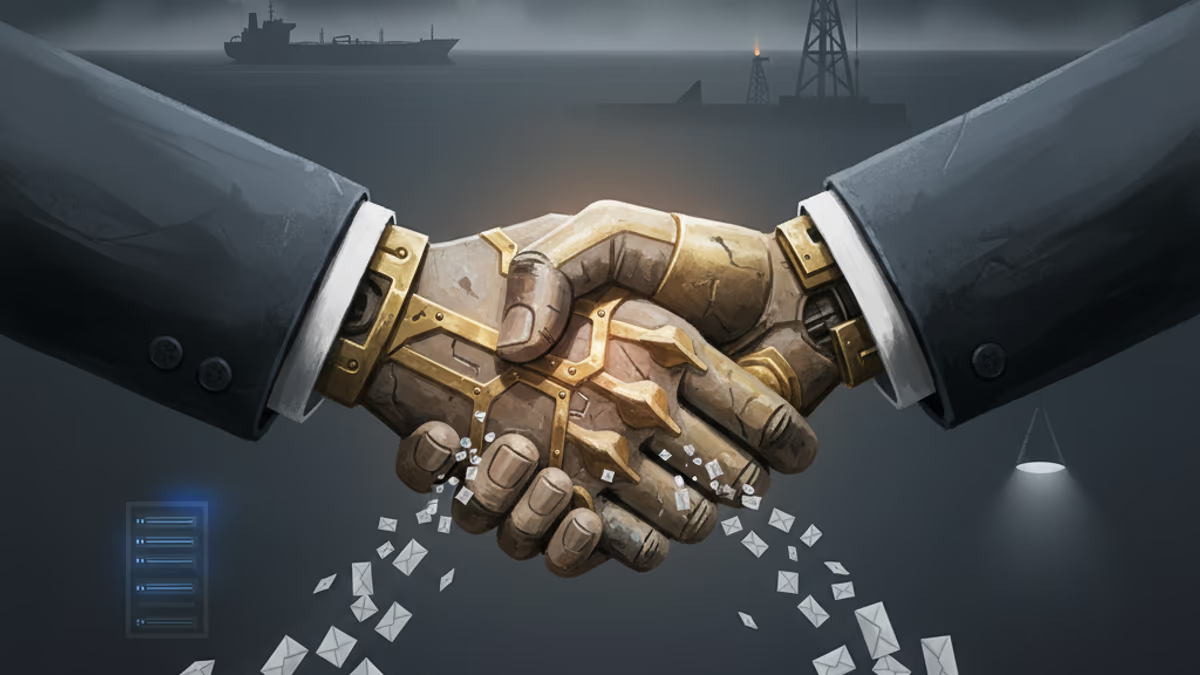
Trump and Xi met in Beijing for the first time in nine years. Microsoft poured $100B into OpenAI and became the supporting actor; Cerebras received $70B on day one. Hormuz entered week six. Cisco cut 4,000. ILLIT hit Billboard No. 1, CORTIS debuted at No. 3, and BTS is confirmed for the World Cup Final halftime stage.
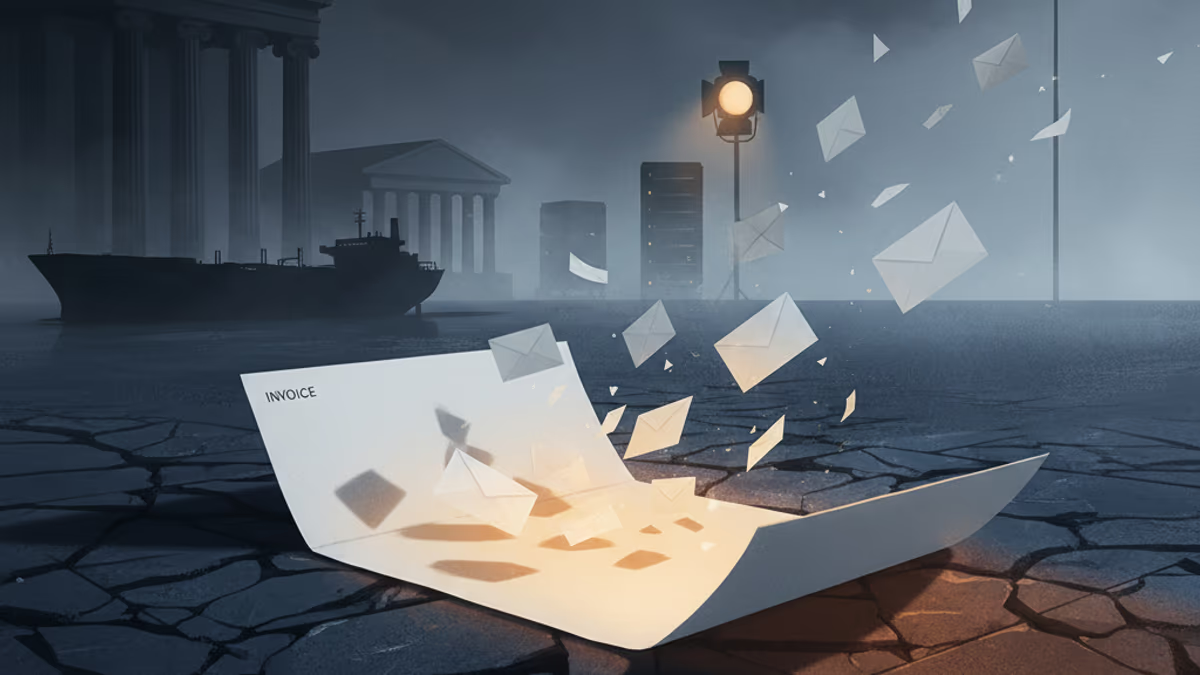
A closed Hormuz arrives at the kitchen table, Musk vs. Altman puts a trillion dollars on trial, the Big Four bet $650 billion on AI, and Trump sends 25% tariff invoices to long-time allies. K-pop's seventeen-year slave-contract era closes with a standard-contract reform.
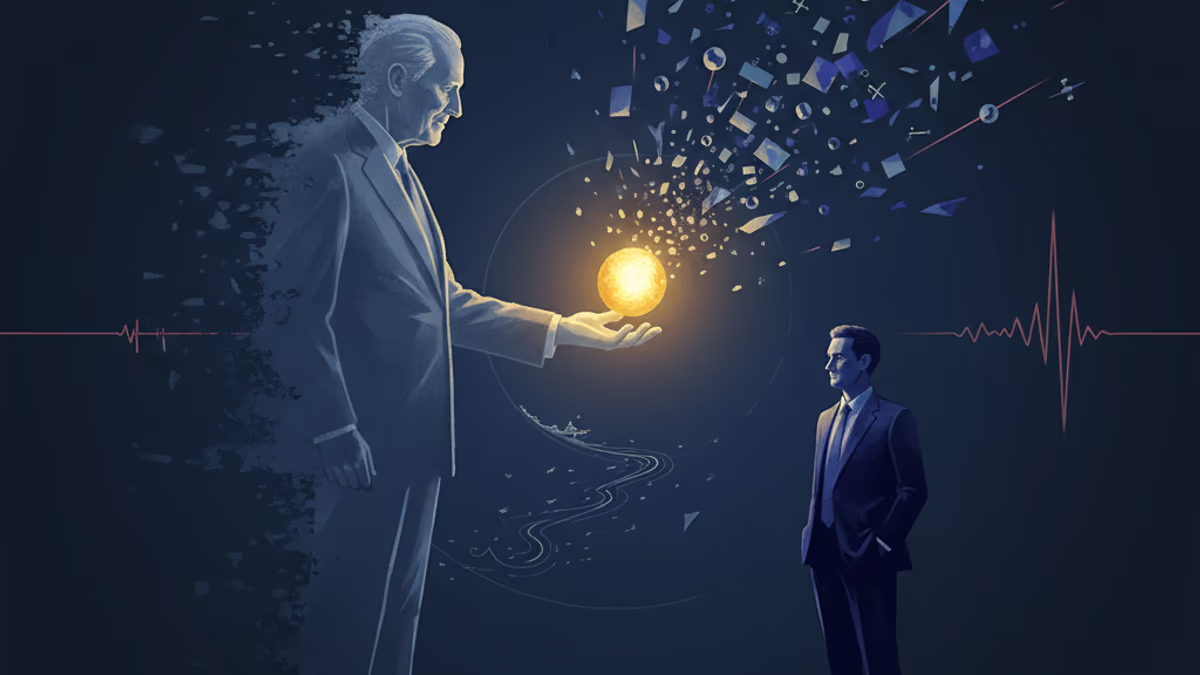
Tim Cook's 25-year goodbye, $40 billion poured into Anthropic, shots near the White House dinner, and TXT's first Grand Slam — a week of power handed over and crises distributed.
From the Hormuz blockade to K-pop's 12th Billboard week — seven days that rewrote the rules. Rare earth leverage, Anthropic's thaw, and a 46-minute DeFi heist point to the same shift.
Trump and Xi met in Beijing for the first time in nine years. Microsoft poured $100B into OpenAI and became the supporting actor; Cerebras received $70B on day one. Hormuz entered week six. Cisco cut 4,000. ILLIT hit Billboard No. 1, CORTIS debuted at No. 3, and BTS is confirmed for the World Cup Final halftime stage.
A closed Hormuz arrives at the kitchen table, Musk vs. Altman puts a trillion dollars on trial, the Big Four bet $650 billion on AI, and Trump sends 25% tariff invoices to long-time allies. K-pop's seventeen-year slave-contract era closes with a standard-contract reform.
Tim Cook's 25-year goodbye, $40 billion poured into Anthropic, shots near the White House dinner, and TXT's first Grand Slam — a week of power handed over and crises distributed.
From the Hormuz blockade to K-pop's 12th Billboard week — seven days that rewrote the rules. Rare earth leverage, Anthropic's thaw, and a 46-minute DeFi heist point to the same shift.
Thoughts
Share your thoughts on this article
Sign in to join the conversation